



Bharat’s quest for technological self-reliance is entering an exciting new frontier — the skies. The country’s ambition to design and develop its own fifth-generation stealth fighter aircraft is not merely about adding another combat aircraft to the Indian Air Force’s inventory. It is about demonstrating that Bharat’s scientists, aerospace engineers and defence technologists possess the intellectual capability and engineering determination to compete in one of the most sophisticated fields of modern military aviation. At the centre of this ambition is the Advanced Medium Combat Aircraft (AMCA), a fifth-generation, twin-engine, single-seat, all-weather stealth multirole fighter being developed by the Aeronautical Development Agency (ADA), under the Defence Research and Development Organisation (DRDO). In my view, the very conception and progression of this programme deserve appreciation, particularly when one considers the technological complexities involved and the formidable international competition from the United States, China and Russia. Developing a stealth fighter is no ordinary engineering achievement. It requires mastery over aerodynamics, advanced materials, propulsion, radar technology, electronic warfare, flight-control systems and sophisticated software. The AMCA’s proposed design incorporates low radar cross-section characteristics, radar-absorbent materials, specially configured air intakes, diamond-shaped wings and canted vertical stabilisers. Its internal weapons bays are intended to preserve stealth by carrying weapons without exposing them externally. These are not cosmetic innovations but essential features of an aircraft designed to operate in heavily contested airspace. The proposed aircraft, approximately 18 metres long, with an 11.1-metre wingspan and a maximum take-off weight of around 25 tonnes, will have a twin-engine configuration. Its intended capabilities include air superiority, deep-strike missions, suppression of enemy air defences and electronic warfare. Advanced active electronically scanned array (AESA) radar, sensor fusion, network-centric warfare capabilities and sophisticated electronic countermeasures are among the technologies envisaged for the platform. What makes the programme particularly interesting is its two-stage development philosophy. The AMCA Mk1 is planned around two GE F414 engines, while the Mk2 is intended to incorporate a more powerful, indigenously developed engine, with international collaboration being pursued. The longer-term objective is not simply to manufacture an aircraft but to acquire greater control over the technologies that determine its performance. Engine development, in particular, remains one of the most challenging frontiers for India’s aerospace industry.
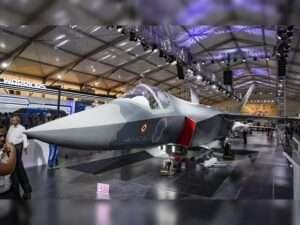
The proposed Mk2 also envisages incorporating more advanced technologies, including AI-assisted mission management and manned-unmanned teaming. Such capabilities could eventually take the aircraft beyond conventional fifth-generation requirements. However, these remain development ambitions, not operational capabilities that can already be claimed. It is equally encouraging that the AMCA programme is opening greater opportunities for India’s private defence industry. Tata Advanced Systems, an L&T-led consortium and a Bharat Forge-led consortium have submitted bids for the development of five prototypes. The proposals are under evaluation, marking an important step towards broadening India’s aerospace manufacturing ecosystem beyond its traditional public-sector base. The journey, however, must be viewed realistically. As of November 2026, AMCA has not entered prototype flight testing, let alone induction into the IAF. Prototype development, extensive flight trials, certification and eventual production lie ahead, with induction targeted for the mid-2030s. There is no virtue in confusing ambition with achievement. Equally, there is no justification for dismissing a programme simply because it demands time and painstaking technological effort. In our view, those who repeatedly argue that Bharat cannot match the technological capabilities of established aerospace powers should recognise the progress made by Indian scientists and engineers across defence aviation. From the Light Combat Aircraft Tejas to advanced missiles, radars and indigenous electronic systems, the country has steadily expanded its technological capabilities despite decades of dependence on foreign suppliers and technology restrictions. The United States has its F-35, China its J-20 and Russia its Su-57. Bharat’s AMCA will have to establish its own credentials through successful development, rigorous testing, and operational performance. Comparisons should inspire us, not tempt us into premature claims of superiority. Ultimately, the AMCA is about much more than an aircraft. It represents the aspirations of a nation determined to reduce strategic dependence, strengthen national security and create an indigenous defence manufacturing ecosystem. Our scientists and engineers deserve encouragement, adequate funding and institutional support rather than armchair criticism. Conquering the skies is not achieved through slogans or patriotic declarations. It requires scientific excellence, persistence, investment and the courage to innovate. Bharat’s aerospace community is undertaking precisely that challenge. The nation must stand behind them as they work towards turning this formidable ambition into a flying reality.

