


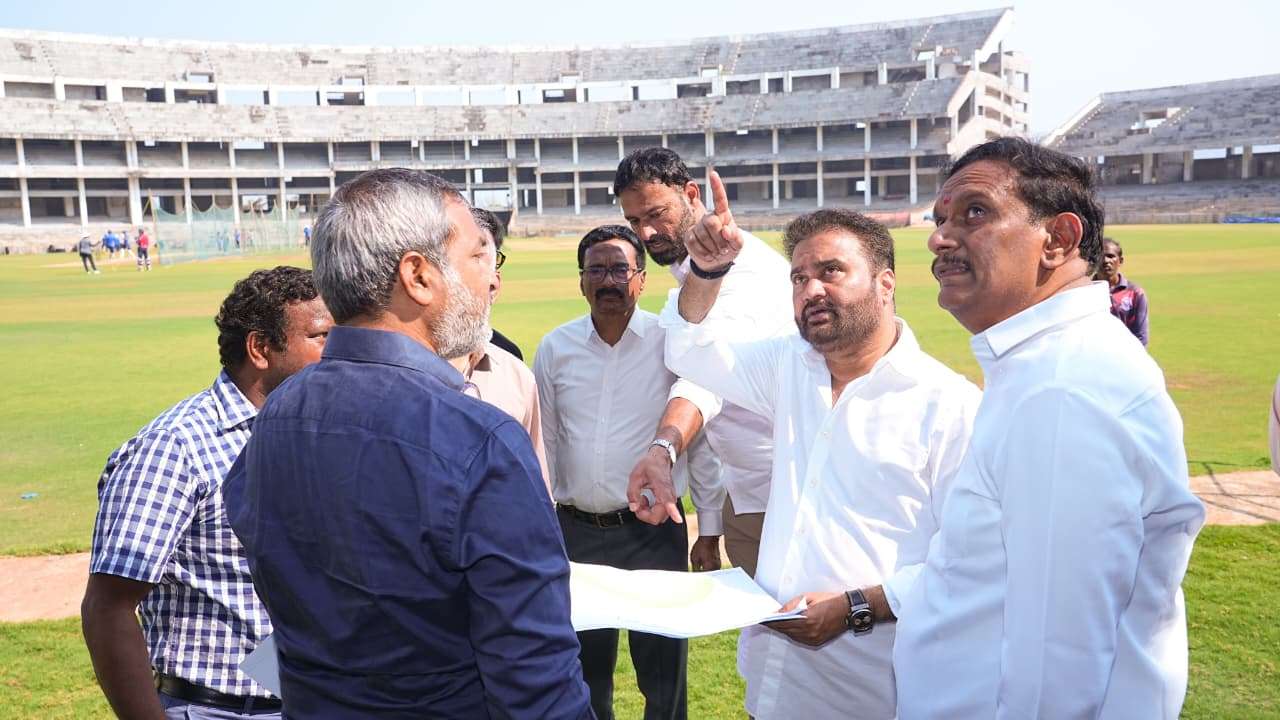
Visakhapatnam: For nearly a decade, the ACA-VDCA Cricket Stadium in Visakhapatnam remained an underutilised international venue, hosting barely 15 major matches. But within a year of Rajya Sabha MP Sana Satish Babu taking charge as Secretary of the Andhra Cricket Association (ACA), the stadium has witnessed a dramatic turnaround.
In 2025 alone, Visakhapatnam is set to host close to 10 marquee cricket events, including Women’s World Cup fixtures, international matches, and Indian Premier League (IPL) games — a development being described by sports observers as unprecedented in the venue’s history.
The rapid transformation has also triggered a larger conversation about the growing role of sports as an economic and developmental engine in Andhra Pradesh.
New Direction in Sports Administration
Political representatives in India are increasingly expected to move beyond legislative responsibilities and contribute to institutional growth in specialised sectors. In that backdrop, Satish Babu’s role in sports administration has attracted significant attention.
Since assuming office in the ACA, he has focused on improving infrastructure, streamlining administration, and strengthening coordination with the Board of Control for Cricket in India (BCCI). The results, according to sports administrators and local stakeholders, have become visible within a short period.
The revival of Visakhapatnam as a regular cricketing destination is being viewed as one of the strongest indicators of that shift.
Stronger Coordination with BCCI
Officials associated with Andhra cricket point to sustained coordination with the Board of Control for Cricket in India (BCCI) as a key factor behind Vizag securing a prominent place in the national cricketing calendar.
Satish Babu’s involvement in infrastructure-related committees and administrative engagement with the BCCI reportedly helped Andhra Pradesh push for more international and IPL fixtures.
The successful allocation of Women’s World Cup matches alongside international and IPL games in a single calendar year is being seen as a major achievement for the state’s cricket administration.
Sports Driving Economic Activity
Beyond sporting prestige, the influx of cricket matches has generated substantial economic activity in Visakhapatnam and surrounding regions.
Hospitality, transport, tourism, catering, event management, technical services, and local retail businesses have all reportedly benefited from the increase in sporting events.
Estimates indicate that nearly 1,500 to 2,000 people are receiving direct or indirect employment opportunities linked to match-related activities. Government revenues have also increased, with officials estimating nearly ₹5 crore in GST collections through sporting events and associated commercial activity.
Businesses in tourism, transport, food services, and even street vending sectors are understood to have witnessed growth ranging between 80 and 95 percent during major cricket fixtures.
Economic analysts increasingly argue that the Andhra model demonstrates how sports infrastructure can function as a long-term economic asset rather than merely a recreational investment.
Complementing Vizag’s Growth Plans
The developments also align with the broader vision of Andhra Pradesh Chief Minister N. Chandrababu Naidu to position Visakhapatnam as a major investment and technology hub.
Urban development experts believe that sports-led growth can complement sectors such as IT, tourism, hospitality, and infrastructure, helping create a multi-dimensional urban economy.
The emergence of Vizag as a regular venue for high-profile sporting events is therefore being seen as part of a wider strategy to elevate the city’s national profile.
Cricket Beyond the Stadium
One of the notable public outreach initiatives under ACA’s current administration has been the organisation of IPL fan parks in Kakinada.
Featuring giant LED screens, entertainment zones, food courts, and family-oriented activities, the fan parks allowed cricket enthusiasts to experience live IPL action free of cost outside traditional stadium environments.
The initiative drew large public participation and reflected efforts to turn cricket into a broader social and cultural experience rather than limiting it to ticketed audiences.
Focus on Grassroots Sports Infrastructure
Alongside event hosting, Satish Babu has also raised several issues related to long-term sports infrastructure and athlete development in Parliament.
Among his key demands are increasing the number of sports hostels in Andhra Pradesh from four to ten and establishing international-standard residential academies for young athletes.
He has also advocated for:
- A National Centre of Excellence for Hockey in Kakinada.
- Expansion of Khelo India centres across Andhra Pradesh.
- Establishment of Sports Authority of India (SAI) training centres in Rayalaseema.
- Enhanced athlete funding and training infrastructure.
These interventions have brought greater attention to Andhra Pradesh’s sporting requirements at the national level.
Building a Long-Term Sports Ecosystem
Sports administrators and policy observers say the larger significance of the current developments lies not merely in attracting cricket matches but in creating a sustainable sports ecosystem.
The Andhra model increasingly reflects an integrated approach combining infrastructure development, athlete welfare, event management, public participation, and economic generation.
With Visakhapatnam rapidly emerging as a major cricketing destination once again, Andhra Pradesh’s ambitions of becoming a national sports hub now appear to be moving from vision to reality.


Andhra always had an amazing sports vulture. But with Chandrababu Naidu now at the helm of affairs and as a man on a mission and with a vision, Andhra sports will certainly look up. The M P is also on the right track and with the Board and Federations looking out for newer avenues Andhra will certainly become the next sports hub of the country after Punjab and Kerala.