MS Shanker
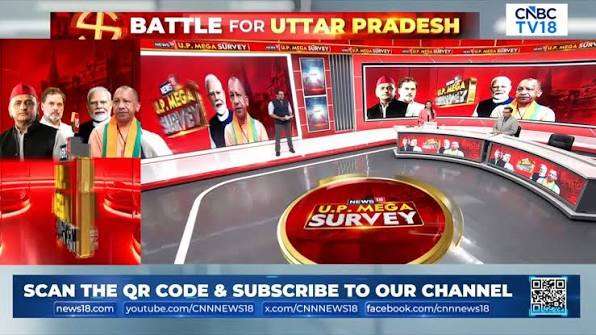
The battle for Bharat is not merely about regime change; it is also about ideology, national identity, political credibility, and the forces seeking to shape the country’s future.
Independent Bharat emerged from the trauma of Partition in 1947, when Muhammad Ali Jinnah’s demand for Pakistan culminated in the division of the country on religious lines. The decisions taken by the Congress leadership, particularly Mahatma Gandhi and Jawaharlal Nehru, continue to invite historical debate. Critics question the acceptance of Partition, the political compromises made at the time and the subsequent approach to secularism.
The declaration of Bharat as a secular republic was intended to protect the rights of citizens belonging to every faith. Yet, the manner in which successive governments interpreted secularism has remained a contentious political issue. Critics argue that Congress governments often practised selective secularism, accommodating certain religious constituencies while treating the cultural and civilisational concerns of the Hindu majority as politically inconvenient.
That criticism deserves to be examined on its merits. The debate over secularism is strongest when it rests on policies, documented decisions and demonstrable political conduct rather than speculation about individuals’ religious identities or ancestry.
The Nehru-Gandhi dynasty remains a legitimate subject of political scrutiny. From Jawaharlal Nehru to Indira Gandhi, Rajiv Gandhi and Rahul Gandhi, the Congress has repeatedly revolved around one family. Indira married, a Parsi, and adopted Mohandas Karamchand Gandhi’s surname. Rajiv, a commercial pilot before entering politics, married Sonia Maino, who was born in Italy. Rahul, subsequently emerged as the principal face of the family’s fake ‘Gandhis’ political succession.
The central question is not the personal background of any member of this family. It is whether a party that repeatedly invokes democracy has adequately democratised its own internal functioning. Since 2014, the Congress has suffered repeated electoral setbacks at the national level, although it has also secured victories in several state elections. The contrast between its democratic rhetoric and its continued dependence on dynastic leadership remains a valid subject for political analysis.
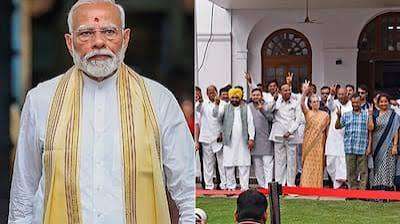
The larger ideological contest has become sharper with the rise of Narendra Modi and the BJP-led NDA. The argument advanced by nationalist critics is that the Modi era has challenged an established political ecosystem in which Congress dominance, influential media narratives and a particular interpretation of secularism often reinforced one another. They contend that the BJP’s emphasis on national security, civilisational identity and cultural confidence has unsettled this arrangement.
The allegation that certain political and intellectual networks seek to transform Bharat into an Islamic nation by 2047 is a serious charge. Efforts were clearly seen to undermine national sovereignty which indeed exist.
The question of political masks becomes particularly relevant when influential commentators move from criticism of government policy to demanding regime change.
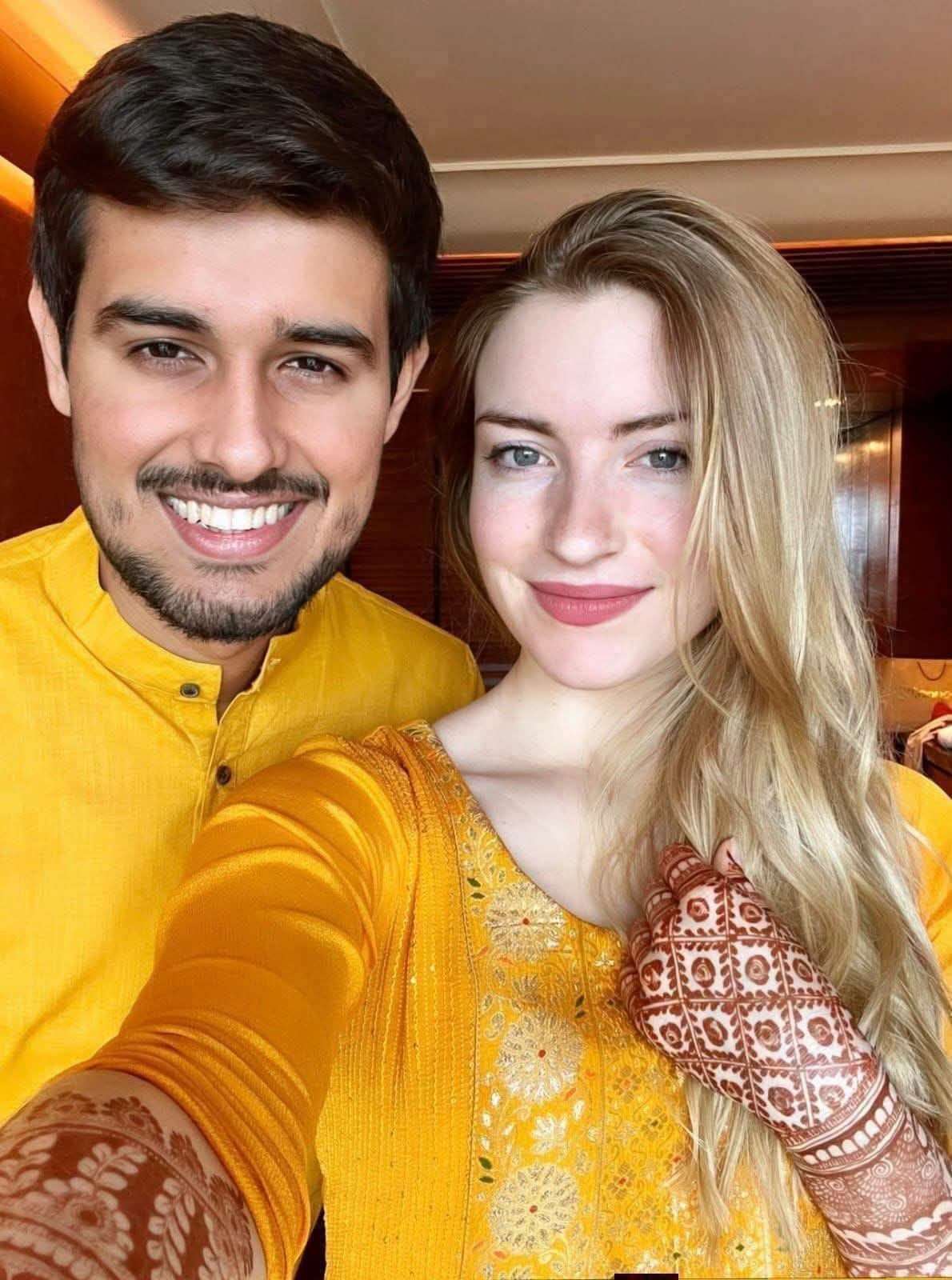
Among the prominent critics of the Modi government is YouTuber Dhruv Rathee, whose videos regularly target the BJP, the RSS and the government’s policies. His critics accuse him of presenting a one-sided account of Indian politics and contributing to an anti-Modi narrative. His supporters, in turn, regard his videos as political commentary and scrutiny of those in power. His arguments must ultimately be judged by their accuracy, evidence and omissions.
The Dhruv Rathee controversy
A message circulating on social media, attributed to Dr Anand Ranganathan’s Facebook wall, makes extraordinary allegations about Rathee’s identity, family background, alleged residence in Karachi and purported foreign funding. The message attributes these claims to Israel’s intelligence agency, Mossad.
According to the message, Rathee’s alleged real name is Badru Rashid, or Badaruddin Rashid Lahori, and he was born in Lahore, Pakistan. It further claims that his wife, Julie, is actually named Julekha, and that the couple lives in a luxurious property associated with underworld don Dawood Ibrahim in Karachi, allegedly under the protection of Pakistan’s ISI and army. The message also alleges that Rathee receives funding from Pakistan, China, Dubai, the Maldives, Canada, Russia, Turkey and Pandora, sometimes through accounts linked to George Soros.
These are extraordinary allegations. The original intelligence report, documentary evidence establishing the claims and independent verification of the alleged funding sources have not been established from the material presently available. The attribution to a prominent commentator does not, by itself, authenticate the claims or establish that the purported intelligence report exists.
That qualification does not make the broader questions irrelevant. Who funds influential political communication? Are financial relationships adequately disclosed? Do foreign interests seek to influence domestic political narratives? Are there undisclosed relationships between political campaigners, media platforms and external organisations?
These are legitimate questions in any democracy. If documentary evidence establishes foreign funding, concealed financial arrangements or unlawful political coordination, the facts should be brought into the public domain and examined by the appropriate authorities. The identity and affiliations of those involved must be established through reliable evidence, not inferred from names, appearances or political positions.
The same standard must apply to everyone. A commentator’s criticism of the government, however relentless, does not by itself establish disloyalty. Equally, the invocation of free speech cannot exempt influential political communicators from scrutiny of their factual claims, financial disclosures or possible conflicts of interest.
For the Congress, its allies and the wider opposition, the challenge is to demonstrate that their criticism of the Modi government amounts to more than an attempt to regain power. If they demand regime change, they must explain the alternative they offer to the electorate and demonstrate how their proposed political course would serve Bharat’s national interests.
For the BJP and its supporters, the corresponding responsibility is to expose genuine wrongdoing through verifiable evidence rather than unsubstantiated allegations. Credibility is an asset in political combat; careless claims can weaken even a legitimate argument.
Bharat’s democratic contest is ultimately about competing visions of the nation. One side emphasises secularism as interpreted through the Congress tradition; another places greater emphasis on civilisational identity, national security and the cultural inheritance of Sanatan Bharat. Voters have every right to assess both visions, scrutinise the records of political parties and reject leaders they consider unconvincing.
The political and religious masks, wherever they exist, must be exposed through documentary evidence, transparent funding, consistent political conduct and public accountability.
In the battle for Bharat’s future, the strongest weapon is not a viral allegation but verifiable