Thiruparankundram controversy could trigger a Hindu vote realignment, challenging the Dravidian political monopoly
MS Shanker
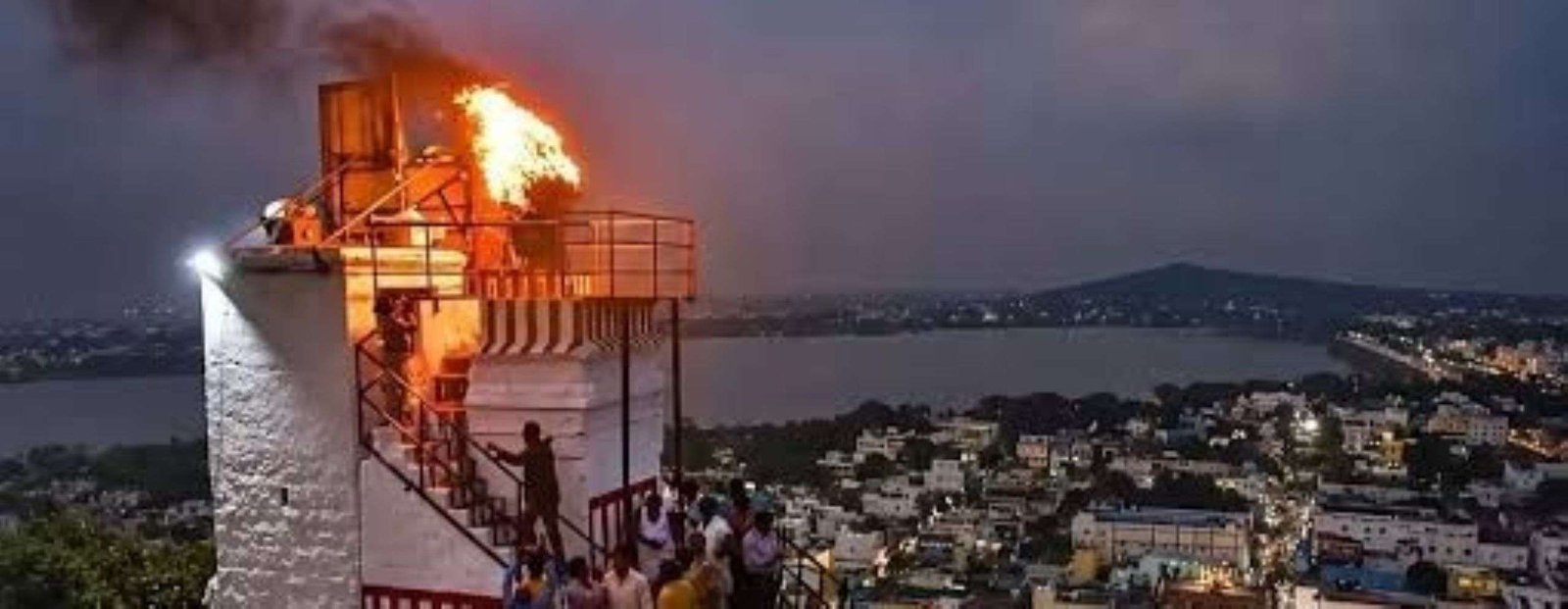
Joseph Vijay’s biggest political setback as Tamil Nadu Chief Minister may well have come from his government’s handling of the emotionally charged Thiruparankundram Karthigai Deepam controversy. What could have been an opportunity to demonstrate religious neutrality, respect for judicial authority and political maturity has instead turned into a potentially damaging confrontation with a section of Hindu devotees. More importantly, it could accelerate a political realignment that the state’s entrenched Dravidian parties have long considered unlikely: the consolidation of Hindu voters behind the BJP.
Had Vijay’s government implemented the Supreme Court’s November 20 interim direction permitting the ceremonial lamp to be lit at the Deepathoon on the hill, subject to safeguards, it could have strengthened its secular credentials. Instead, the lamp was not lit at the designated spot on November 24. The Supreme Court’s November 27 order subsequently made scathing observations about the apparent disobedience by officials, issued show-cause notices, appointed joint receivers to administer the temple and directed the CRPF to take charge of security. It also ordered the lamp to be lit on November 28. The Chief Secretary was directed to disclose official communications preceding the episode, with the matter listed for December 15.
This is no longer merely a dispute over a religious ceremony. It has become a question of constitutional accountability, the authority of the judiciary and the government’s willingness to respect the sentiments of devotees while protecting the rights of all communities.
Vijay may have underestimated the political consequences. His spectacular electoral debut was built substantially on the appeal of a new generation seeking an alternative to the DMK-AIADMK establishment. Many Hindu voters who had traditionally supported one or the other Dravidian formation also appeared willing to give his TVK an opportunity. They may not necessarily have endorsed the BJP’s ideology, but they expected a government that would not treat their religious sentiments with indifference.
The DMK had already alienated sections of Hindu opinion through controversial remarks on Sanatana Dharma, particularly the comparison of it with diseases that needed eradication. Vijay had an opportunity to distance himself from that confrontational approach. Instead, his government’s handling of the Deepam issue risks creating the impression that the change of political leadership has not brought a corresponding change in attitude.
The electoral arithmetic makes this development particularly interesting. In the 2021 Assembly elections, the DMK secured 37.70 per cent of the vote, AIADMK 33.29 per cent and BJP just 2.62 per cent. In the 2024 Lok Sabha elections, however, the BJP demonstrated that it could expand its independent appeal, polling approximately 11.24 per cent across the State. The latest 2026 Assembly results tell another story: TVK secured 34.92 per cent, DMK 24.19 per cent, AIADMK 21.21 per cent, while the BJP polled 2.97 per cent.
These figures underline the fluidity of Tamil Nadu’s electorate. They also establish that the BJP has yet to convert its 2024 momentum into a sustainable statewide Assembly base. There is, however, no credible official religion-wise breakdown of these votes. Consequently, the precise Hindu vote shares of the Dravidian parties and the BJP cannot be stated as established facts.
Nevertheless, the political opportunity is substantial. Hindus constitute approximately 80 per cent or more of the electorate, depending on the demographic estimate used. If the BJP, through sustained grassroots mobilisation, credible leadership and a broader social coalition, eventually manages to attract even 30-35 per cent of Hindu voters, its statewide vote base could potentially reach 24-28 per cent. That would transform its political standing and make it a formidable contender for power. Such a shift is not inevitable, but neither can it be dismissed.
The BJP’s challenge is to convert religious sentiment into a wider political programme encompassing development, employment, education, economic opportunity and social justice. It must also reach beyond its traditional support base and build alliances that reflect Tamil Nadu’s diverse social composition. The contributions of leaders such as Dr Tamilisai Soundararajan and legal voices such as J. Sai Deepak have helped bring the Thiruparankundram issue into the national spotlight. But sustained political organisation, rather than individual interventions, will determine the outcome.
Even Vijay’s political allies and rivals would be watching the coming by-elections closely. If the BJP can multiply its present vote share and begin capturing a meaningful 30-35 per cent of Hindu votes, the possibility of its eventual dominance in Tamil Nadu politics cannot be ruled out. The Dravidian parties may discover that the political constituency they once took for granted is no longer permanently committed to them.
It is premature to declare the emergence of a consolidated Hindu vote or celebrate a BJP breakthrough. Hindu voters are not a monolithic bloc, and caste, region, class, welfare delivery and leadership will continue to influence electoral choices. But the Thiruparankundram episode could prove to be a catalyst. The real question is whether Vijay has merely mishandled a sensitive religious issue or inadvertently opened the door to a political realignment that could reshape Tamil Nadu’s electoral landscape for years to come.