
Our Science Desk
Hyderabad: Researchers at the CSIR-Centre for Cellular and Molecular Biology (CCMB), Hyderabad, have identified promising compounds that could help combat deadly fungal infections by preventing pathogens from transforming into their disease-causing forms, offering a potential alternative to conventional antifungal treatments.
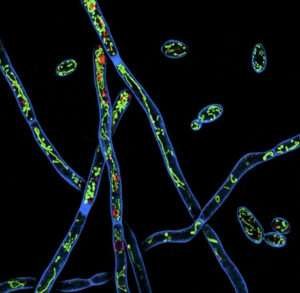
The study, led by Dr. Sriram Varahan, focuses on Candida albicans, a fungus commonly found on human skin but capable of causing serious infections when it enters the bloodstream or internal organs. The fungus can change from a round-shaped cell into an elongated filamentous form, which helps it evade immune defences and invade tissues.
Instead of killing the fungus outright, the researchers explored an alternative approach: preventing this transformation while allowing the microorganism to survive. Screening a library of small molecules targeting glycolysis, the cellular pathway responsible for sugar metabolism, the team identified two compounds that effectively inhibited the formation of invasive filaments. The findings also highlighted pyruvate kinase, a key enzyme in glycolysis, as an important target for controlling fungal disease-associated behaviour.
The researchers found that one of the compounds also reduced biofilm formation, a protective mechanism that makes fungal infections harder to treat. It further increased the fungus’s sensitivity to existing antifungal medicines, including fluconazole and amphotericin B. In a mouse model of systemic Candida infection, treatment with a lead compound significantly improved survival, providing encouraging preclinical evidence.
Dr. Varahan said the identified compounds offer promising starting points for investigating how metabolic pathways can be targeted to disrupt infection-associated fungal behaviour. He cautioned that further research is required to establish their mechanisms, improve their properties and assess their safety and suitability for therapeutic development.
Dhrumi Shah, first author of the study, said the findings demonstrate the potential of blocking the transition into the invasive form without necessarily stopping fungal growth. Such an approach could eventually complement existing antifungal treatments.
The research is particularly significant amid growing concerns over antifungal drug resistance and the limited availability of effective medicines against fungal pathogens. By targeting the processes that enable fungi to cause disease, rather than simply attempting to eliminate them, the study opens up an alternative avenue for antifungal development.
The findings have been published in the journal ACS Infectious Diseases. The research was conducted by scientists at CSIR-CCMB in collaboration with researchers from the BRIC-Translational Health Science and Technology Institute (THSTI).