MS Shanker
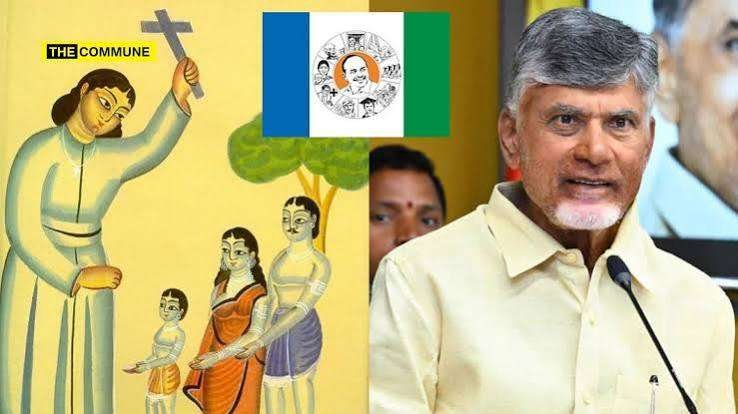
Andhra Pradesh Chief Minister N. Chandrababu Naidu’s decision to flag alleged forcible religious conversions in tribal areas has opened up a politically sensitive debate that goes beyond religion. Coming in the wake of the recent local body elections, his suggestion that conversions and possible inducements may have influenced voting patterns raises questions about both the seriousness of the allegations and the political motives behind highlighting them now.
Naidu has said his party will examine whether forcible conversions and deliberate inducements played a role in its setbacks in certain tribal pockets, particularly in Alluri Sitharama Raju district. The concern deserves attention if vulnerable tribal communities are being subjected to coercion, financial inducements or intimidation to change their faith. But the more important question is: where is the evidence, and why should electoral outcomes be treated as an indicator of religious conversions?
The TDP has sought to link the alleged phenomenon to the five-year tenure of former Chief Minister Y.S. Jagan Mohan Reddy. Its spokesperson reportedly claimed in a television debate that the Christian population, earlier estimated at around 1.2 per cent, had increased fifteen-fold under the YSRCP government. Such a dramatic assertion demands credible demographic evidence. The 2011 Census recorded Christians at approximately 1.34 per cent of the population of undivided Andhra Pradesh. The corresponding figure for the reorganised Andhra Pradesh was around 1.38 per cent. There has been no subsequent Census religion-wise enumeration to establish a fifteen-fold increase. Nor can a change in voting patterns or the presence of Christian candidates in panchayat elections establish that conversions have taken place, let alone that they were forced.
There are, nevertheless, policy decisions during Jagan’s tenure that merit scrutiny. His government introduced a monthly honorarium of Rs 5,000 for eligible Christian pastors, reportedly covering 5,196 beneficiaries in 2022. The scheme was presented as parity with assistance extended to Hindu temple priests and Muslim religious functionaries. The government subsequently expanded the number of beneficiaries. But this was a publicly announced welfare measure, not proof of an organised conversion campaign. If there were violations, they should be established through records and investigations rather than political rhetoric.
Similarly, allegations that hundreds of temples were attacked, that religious conversions were encouraged through political patronage, or that cabinet positions were linked to embracing Christianity require independent verification. The figure of 350 temple attacks, often cited in political arguments, should not be casually attributed to one government. In fact, then DGP Gautam Sawang had reported 228 temple-related cases in 2020, compared with 305 in 2019, while cautioning against attempts to give unrelated incidents a communal colour. The allegation concerning Rs 150 crore in public expenditure on Jerusalem pilgrimages also needs documentary substantiation before it can be treated as established fact.
This is not to suggest that forcible conversions should be overlooked. The Constitution guarantees freedom of conscience and the right to profess, practise and propagate religion, but that freedom does not legitimise conversion through force, fraud or inducement. Tribal communities, often deprived of education, healthcare and economic opportunities, are particularly vulnerable to exploitation by anyone seeking to manipulate their circumstances. The law must protect them without turning legitimate religious activity into a suspect enterprise.
However, Naidu must answer a larger question about consistency. If coercive conversions are a concern, why should the government’s scrutiny appear focused predominantly on Christian organisations? What about allegations of coercion or inducement involving other religious communities, including Muslims? A government committed to constitutional equality cannot apply different standards depending on the identity of the organisation or the political constituency involved.
There is also an unmistakable political dimension. Is Naidu responding to genuine intelligence and complaints from tribal communities, or reacting to the YSRCP’s continuing influence in pockets where the TDP-led alliance underperformed? Is he attempting to reclaim political space from Jana Sena chief Pawan Kalyan, who has been more vocal on religious conversion issues? Or is the controversy being used to consolidate sections of the Hindu electorate ahead of future political contests? These are legitimate questions, particularly when the ruling alliance has otherwise registered a sweeping victory in the local body elections.
Naidu’s own Kuppam constituency also makes the need for political consistency worth examining. His government must demonstrate that its approach is guided by law and not electoral arithmetic. Selective outrage can undermine an otherwise legitimate concern.
Ultimately, the issue is not whether a person chooses Christianity, Hinduism, Islam or any other faith. It is whether that choice is genuinely voluntary. Naidu should order an impartial, evidence-based inquiry wherever credible complaints exist, publish its findings and prosecute proven violations, irrespective of the perpetrators’ religion or political connections. Protecting tribal identity, religious freedom and social harmony are complementary responsibilities, not competing political slogans. The test of Naidu’s sincerity will not be the number of speeches he makes about conversions, but whether he applies the same law and the same yardstick to everyone.