Well, India’s ambition to become a semiconductor manufacturing nation might not have begun with Prime Minister Narendra Modi’s India Semiconductor Mission. But who sabotaged the pioneering semiconductor manufacturing facility at Mohali, Punjab, which was reportedly reduced to rubble in a devastating fire in February 1989? The incident remains a defining setback in the country’s technological journey and raises an uncomfortable question: Did India lose a major opportunity through sheer misfortune, institutional failure or something more sinister? The time has come to revisit the case and establish what happened, whether there were saboteurs and who, if anyone, let the nation down.
The Semiconductor Complex Limited (SCL), established in 1976, was conceived to reduce India’s dependence on imported electronic components and build indigenous capabilities in microchip manufacturing. With technical collaboration from American Microsystems Inc. (AMI), the facility commenced commercial production in 1984 using 5-micron technology. Through indigenous research and development, it progressed to more advanced 3-micron, 2-micron, 1.2-micron and eventually 0.8-micron processes. India had made a promising beginning in an industry that was rapidly transforming the global economy.
Then came February 7, 1989.
A massive fire engulfed the Mohali complex, destroying its principal wafer fabrication facility and a substantial part of its research and development infrastructure. The preliminary damage assessment placed the financial loss at approximately Rs. 60 crore, an enormous amount at the time. The disaster was not merely the destruction of buildings and machinery; it wiped out years of accumulated technical expertise, manufacturing capability and research investment.
Naturally, suspicions of sabotage surfaced. The circumstances surrounding the fire, its devastating consequences and the strategic importance of the facility fuelled speculation that India might have been deliberately deprived of an emerging technological advantage. But suspicion must not be confused with proof. An inquiry headed by retired Major General S.A. Mohile examined the incident. In Parliament, the government subsequently described the fire as accidental, although the precise technical cause was not conclusively established in the initial proceedings. There is no publicly established evidence proving deliberate sabotage or identifying anyone responsible.
That, however, does not absolve the system of the larger questions. Were adequate safeguards in place? Were the investigation and subsequent rebuilding efforts sufficiently transparent? Could the country have recovered its technological position faster? These are legitimate questions that deserve answers, particularly when public money and a strategic national asset were involved.
The consequences were substantial. Rebuilding the facility took years, and by the time manufacturing was restored, the international semiconductor industry had moved considerably ahead. Countries such as Taiwan were rapidly building globally competitive fabrication capabilities. TSMC, established in 1987, would go on to become a defining force in the global chip industry. India, meanwhile, lost precious ground in commercial semiconductor manufacturing.
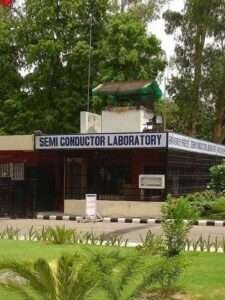
Yet the Mohali story was not entirely one of defeat. The facility survived in a restructured form and eventually became the Semi-Conductor Laboratory (SCL), now under the Ministry of Electronics and Information Technology. It continues to manufacture specialised chips using 180-nanometre technology, besides undertaking research, fabrication, packaging and testing. Its contribution to India’s strategic electronics and space programmes remains significant.
India also developed considerable strength in semiconductor design. Indian engineers and research teams became important contributors to global chip development, while domestic enterprises began exploring specialised chip technologies. But designing a chip and manufacturing it in a sophisticated fabrication plant are two very different capabilities. India excelled in the former while remaining heavily dependent on overseas foundries for the latter.
The Narendra Modi government has now placed semiconductor manufacturing at the centre of its technological and economic strategy. The India Semiconductor Mission, with substantial financial incentives, seeks to build an integrated domestic ecosystem. Tata Electronics’ proposed Rs. 91,526-crore fabrication facility at Dholera, Gujarat, in partnership with Taiwan’s PSMC, represents a major step in that direction. Commercial production is targeted around 2028. Apart from this several other places like Surat, Sanand, Bhubaneswar etc facilities are being created. At Tirupati in AP, an exclusive semiconductor park is planned. Now, with high incentives provided by both the Centre and states, the semiconductor industry is all set to progress well in times to come.
The lesson from Mohali is unmistakable. Technological self-reliance cannot be achieved through announcements alone. It demands sustained investment, institutional accountability, protection of critical infrastructure, and continuity of national policy.
Who sabotaged India’s first major chip dream? The evidence available publicly does not establish that anybody did. But the country has every right to ask why a promising national enterprise was allowed to lose so much ground after one catastrophic event. The real national failure would be to repeat that history. With the spread of units all over the country, it won’t be easy to sabotage and stop the progress of the industry.