Kartik Shuddha Dwadashi, a day of devotion, purity and new beginnings
Girja Shankar Dixit
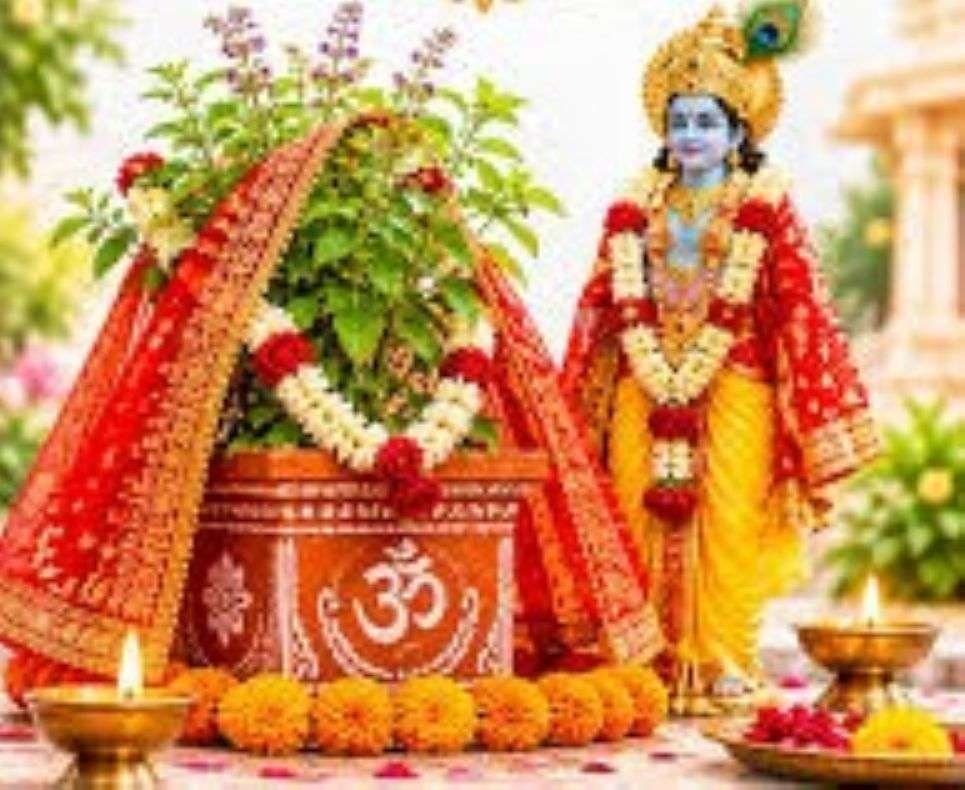
Today, on Kartik Shuddha Dwadashi, homes across India are glowing with lamps, rangoli and the fragrance of flowers. In courtyards and on terraces, the Tulasi Vrindavan is dressed like a bride, for today is *Tulasi Pooja and Tulasi Vivah*, the sacred wedding of Mother Tulasi with Lord Vishnu. It is one of the most tender and joyful festivals of the Hindu year.
Why This Day Is Special
Kartik is among the holiest months in the Hindu calendar. On Prabodhini (Devutthana) Ekadashi, Lord Vishnu is believed to awaken from his four-month yogic sleep, the Chaturmas. The Dwadashi that follows is the first full day of a world once again watched over by its preserver. Devotees bathe early, fast or eat simply, and worship Vishnu and Tulasi together. In Telugu-speaking regions the day is also called *Kshirabdi Dwadashi* and *Chilaka Dwadashi*, recalling Vishnu’s rest on the Ocean of Milk and his awakening.
Tulasi Vivah can be performed from Prabodhini Ekadashi up to Kartik Purnima, but Dwadashi is the most widely chosen day. The scriptures, including the Padma Purana and Skanda Purana, speak of its great merit. It is said that one who performs the wedding with devotion receives the same punya as one who gives away a daughter in marriage (kanyadaan).
The Legend of Vrinda
The festival rests on the story of *Vrinda*, a woman of unshakable devotion to Vishnu and wife of the powerful Jalandhara. Her chastity protected her husband so completely that even the gods could not defeat him. To restore balance, Vishnu took Jalandhara’s form, and Vrinda’s vow was broken. Jalandhara fell in battle.
Grieved, Vrinda cursed Vishnu to become stone. That is why the Lord is worshipped as the Shaligrama, the sacred black stone. Moved by her devotion, Vishnu blessed her: she would be born again as the **Tulasi* plant, and he would never accept worship without her leaves. That is why Tulasi leaves are always offered to Vishnu, and why the Shaligrama is married to Tulasi each year.
Many see in this story the triumph of devotion over power. Others see a reminder of how deeply the divine honours a devotee’s love.
Tulasi Vivah is a real wedding, full of the joy of a family celebration:- *The Tulasi Vrindavan* is cleaned, painted and decorated with rangoli, flowers and mango leaves. A small mandap of sugarcane stalks is often built around it.- *The bride* is adorned with a saree or red cloth, bangles, a bindi, turmeric and kumkum, and sometimes a symbolic mangalsutra.
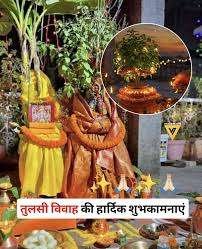
The groom is Lord Vishnu, in the form of a Shaligrama stone, a small idol of Krishna, or in many Telugu homes a branch of the ‘amla (usiri)’ tree, planted in the Vrindavan to represent him. ‘Rituals’ include sankalpa, invocation of the deities, mantras, the tying of the sacred thread, and the chanting of mangalashtaka verses. Lamps (deepams) are lit all around, and aarti is offered.- ‘Prasad’ such as fruits, sugarcane pieces, sweets and panchamrit is shared with family, neighbours and children.
Evening is the favoured time, when the courtyard fills with lamps and the whole neighbourhood gathers.
Across India, One Festival in Many Colours
The festival wears a different face in each region while keeping the same heart.
In Andhra Pradesh and Telangana, Tulasi Kalyanam is performed in homes and temples, with the lamp-lit Kshirabdi Dwadashi worship. In Maharashtra and Gujarat, it is a full ceremonial wedding, with a procession, music, and invited guests. In Karnataka, it is celebrated as Tulasi Habba, with the plant decorated and worshipped with lamps and sweets. In *Odisha, Rajasthan, Uttar Pradesh and the Braj region, devotees sing bhajans, hold night-long vigils and take part in temple celebrations. In “Vaishnava temples” everywhere, grand Tulasi Kalyanam and Utsavams are conducted for the community.
Tulasi Vivah also carries a social meaning. With the Lord awake, auspicious occasions are no longer held back, and by tradition the Hindu wedding season begins from this day. Marriages, housewarmings and other shubha karyas are planned after Tulasi Vivah, which is why families regard it as a blessing for every new household and every future marriage.
Beyond ritual, Tulasi Vivah has gentle lessons for our times. Tulasi is a plant of great medicinal value, purifying the air and strengthening health, so the festival is also a celebration of nature and reverence for the environment. The story of Vrinda teaches that sincere devotion and steadfast faith are dear to God. And the ceremony itself brings families, neighbours and children together, passing on culture from one generation to the next.
Kartik Shuddha Dwadashi reminds us that the divine is found not only in temples but in the humble Tulasi plant growing in our own courtyards. As we light the lamps and offer our prayers today, let us remember the devotion of Vrinda, the grace of Lord Vishnu, and the blessing of a tradition that joins faith, family and nature. May Mother Tulasi and Lord Vishnu bless every home with health, harmony and prosperity.
Tulasi Vivah ki hardik shubhakamnayein.