



The 2024 Lok Sabha election in Baharampur offered a political lesson that went far beyond one constituency, yet very few seemed interested in reading it.
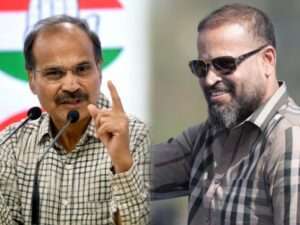
Yusuf Pathan, a 41-year-old cricketer from Vadodara, Gujarat, entered West Bengal politics as an outsider and defeated Adhir Ranjan Chowdhury, the 68-year-old Congress veteran who had represented Baharampur for five consecutive terms and held the seat for 25 years.
Look beyond the victory and defeat. There was something far more revealing happening beneath the surface.
For a quarter of a century, Baharampur had repeatedly elected a Bengali-speaking Congress leader who was deeply rooted in the constituency. Yet when the political equation changed, voters were prepared to embrace an outsider from Gujarat. Local identity, language and years of political service did not prove to be permanent barriers.
That should make those who constantly reduce Indian politics to language, region, caste and state identities pause.
The larger lesson is that communities and political constituencies can be remarkably pragmatic when they perceive a larger objective. Internal differences may exist, but they can be set aside when a common political or social interest takes precedence.
Meanwhile, Indians continue fighting among themselves over whether one is Bengali, Marathi, Telugu, Tamil, Kannada, Gujarati, “North Indian” or “South Indian”. Political rhetoric routinely turns these identities into permanent fault lines.
But there is another fault line that deserves far greater attention: demography.
Ask a simple question: what is the biggest structural challenge India could face over the next 20 to 25 years?
The answer may not be unemployment, inflation or even artificial intelligence. It could be the demographic consequences of sharply declining fertility.
India’s replacement-level fertility is conventionally placed at around 2.1 children per woman. Several states have already fallen significantly below that level. Kerala, Tamil Nadu, Andhra Pradesh, Telangana, Karnataka, Maharashtra, West Bengal and other economically advanced states have fertility rates below replacement level, while some relatively younger states continue to record higher fertility.
This does not mean that one community or state will simply “replace” another. Such claims oversimplify demographic reality. Fertility declines across communities as education, urbanisation, rising incomes and changing family preferences spread. Migration and inter-state marriages further complicate the picture.
But the broad demographic trend is undeniable: India is ageing, and the transition is occurring at very different speeds across states.
That has enormous implications.
States that achieved rapid economic growth through urbanisation, salaried employment and higher educational participation have generally experienced dramatic fertility declines. The very economic transformation celebrated as development can eventually produce an ageing population and a shrinking workforce.
That is not an argument against development. It is an argument for understanding its demographic consequences.
The answer is certainly not to attack so-called “BIMARU” states or mock people from poorer regions. That rhetoric could become self-defeating. Younger states will increasingly supply workers to ageing and economically advanced states. India’s internal migration may therefore become one of the country’s greatest economic strengths.
Nor should demographic anxiety become an excuse for communal hostility.
Instead, the lesson should be about national cohesion and long-term thinking.
If some states age faster while others retain younger populations, India will need greater mobility of labour, more inter-state marriages, better social integration and a national economic framework that allows people to move without being treated as outsiders.
Language will survive. Regional cultures will survive. State identities will survive. They should be celebrated.
But turning them into walls is dangerous.
The Baharampur election demonstrated something Indians often forget: when people believe there is a larger objective, traditional boundaries can disappear remarkably quickly.
The same principle should apply to India as a whole.
The challenge before the country is not which state is superior to another, nor which language should dominate. It is whether 1.4 billion people can recognise that their demographic and economic futures are interconnected.
The real danger is not that one state will defeat another.
It is that while Indians fight each other over identity, the demographic clock will keep ticking.



This piece is indeed a case for One Nation -One Identity. Given the diversity across geography and demography on one hand and the vision for positioning Bharat in the league of developed countries homogenisation is imperative even as citizens hold on to their individual and community identities. It is also time to revisit our perception of state, the political abstract, as external to our identity. For aeons we have been anchored in ‘jati dharma’. Rajya Dharma remained outside our consciousness. That explains the disconnect between individual and citizen. Post independence politics did little and as a result this disconnect remained unbridged. On the contrary politics found a fertile ground to keep the gap intact and did everything possible to keep communities apart.
The case of Yusuf Pathan breathes a whiff of fresh air and serves as a huge promise for fostering national identity and a common citizen code.