MS Sparsha
Hemendra Mohan Bose turned the emerging technology of sound recording into an instrument of the Swadeshi movement—and helped preserve a historic voice of nationalism
When Indians hear the surname Bose, several towering names immediately come to mind. Satyendra Nath Bose revolutionised quantum physics; Jagadish Chandra Bose pioneered groundbreaking work in plant science and wireless communication; Netaji Subhas Chandra Bose raised the Indian National Army against British rule; and Bose Corporation became a globally recognised name in audio technology.
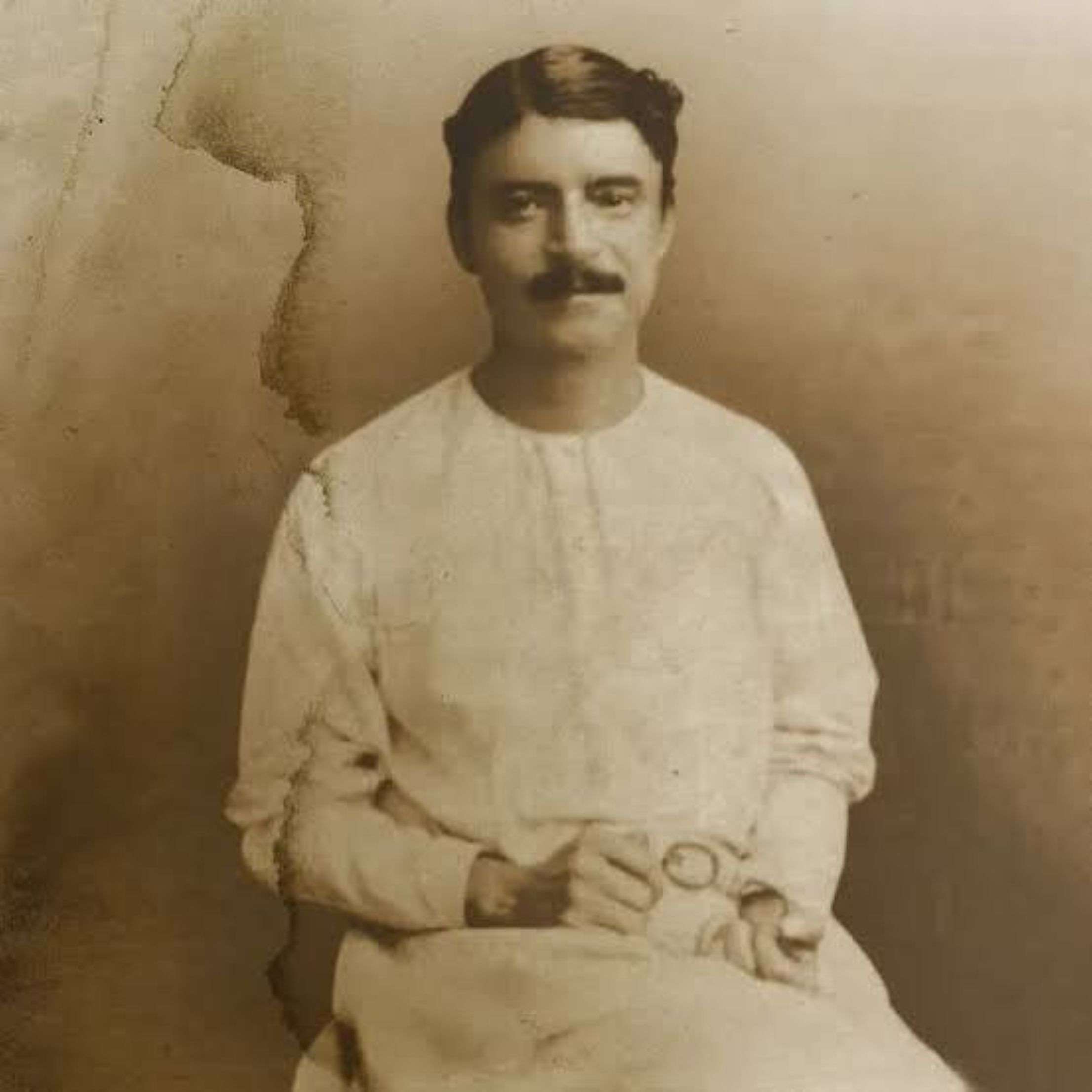
But there was another Bose—Hemendra Mohan Bose (H. M. Bose)—whose contribution to India’s freedom struggle came through a rather unusual weapon: sound.
At a time when the British colonial government was tightening its grip over nationalist expression, Bose understood something remarkable—the human voice, captured and reproduced through the emerging technology of sound recording, could travel where political speakers could not.
His story is intertwined with Vande Mataram, which had become a powerful symbol of resistance during the Swadeshi movement following Lord Curzon’s decision to partition Bengal in 1905.
The British authorities viewed the song with deep suspicion and attempted to suppress its public use. For the nationalist movement, however, Vande Mataram was far more than a song. It had become an expression of defiance, unity and patriotism.
Hemendra Mohan Bose refused to allow technology to remain merely a commercial novelty.
A pioneering entrepreneur, chemist and inventor in Calcutta, Bose had access to early phonographic recording equipment based on wax cylinders. He recognised its potential to preserve and disseminate nationalist voices at a time when the British-controlled recording industry was unlikely to promote patriotic material.
Among the voices he sought to preserve was that of Rabindranath Tagore.
Tagore recorded Vande Mataram using Bose’s recording equipment, creating a precious audio document from the early years of the nationalist movement. The recording was technically primitive by modern standards, but its historical value was immense: a pioneering attempt to capture the voice of one of Bengal’s greatest literary figures performing a song that had become synonymous with the struggle against colonial rule.
Bose went a step further.
Rather than depend upon British-controlled commercial channels, he established his own indigenous recording enterprise, H. Bose’s Records. At a time when India lacked the sophisticated industrial infrastructure required for large-scale manufacture of shellac records, Bose looked overseas.
Master recordings were sent to European facilities, including Pathé in France and pressing plants in Belgium, where copies could be manufactured before being brought back to India.
It was an extraordinary example of technological ingenuity meeting nationalist determination.
The records could then circulate outside the conventional colonial-controlled distribution system. Bose’s establishment on Bowbazar Street in Calcutta became associated with this pioneering indigenous recording enterprise.
But the British authorities were not oblivious to what was happening.
Colonial surveillance and repression eventually targeted Bose’s business. His nationalist recordings and other historically significant material became vulnerable to confiscation and destruction. Much of the early recorded heritage associated with the Swadeshi era was consequently lost.
That loss was enormous.
Among the material recorded during this pioneering period were voices and speeches of prominent nationalist figures, along with literary and cultural recordings. Much of this fragile early audio history disappeared, leaving historians with only scattered references to what had once existed.
Yet Bose’s decision to send masters abroad produced an unexpected historical dividend.
Copies preserved in European collections had a chance of surviving even when originals and domestic copies were destroyed or lost in India. The very international network created by Bose to overcome India’s technological limitations ultimately helped preserve fragments of India’s nationalist audio heritage.
This is what makes Hemendra Mohan Bose’s story so fascinating.
He was not a revolutionary in the conventional sense. He did not command an army or lead an uprising. His weapon was neither the sword nor the gun. It was technology—and his understanding of how technology could serve national consciousness.
At a time when the British Empire controlled newspapers, public spaces and much of the emerging communications infrastructure, Bose sought another route: record the voice, reproduce it and make it travel.
The significance of his contribution therefore extends beyond one recording or one song.
He belonged to a generation of Indians who understood that Swadeshi was not simply about rejecting foreign goods. It was also about creating Indian capabilities, Indian enterprises and Indian channels of communication.
The gramophone may have arrived in India as an imported technology, but Bose sought to make it serve an Indian purpose.
And that is why Hemendra Mohan Bose deserves a place among the unsung pioneers of India’s freedom movement.
Long before digital audio could preserve a voice indefinitely, he understood the power of recorded sound.
The British could silence a gathering.
They could disperse a rally.
They could seize a printing press.
They could smash fragile records.
But they could not completely silence a voice that had already travelled beyond their reach.
In the story of Vande Mataram, that forgotten Bose legacy deserves to be heard again.