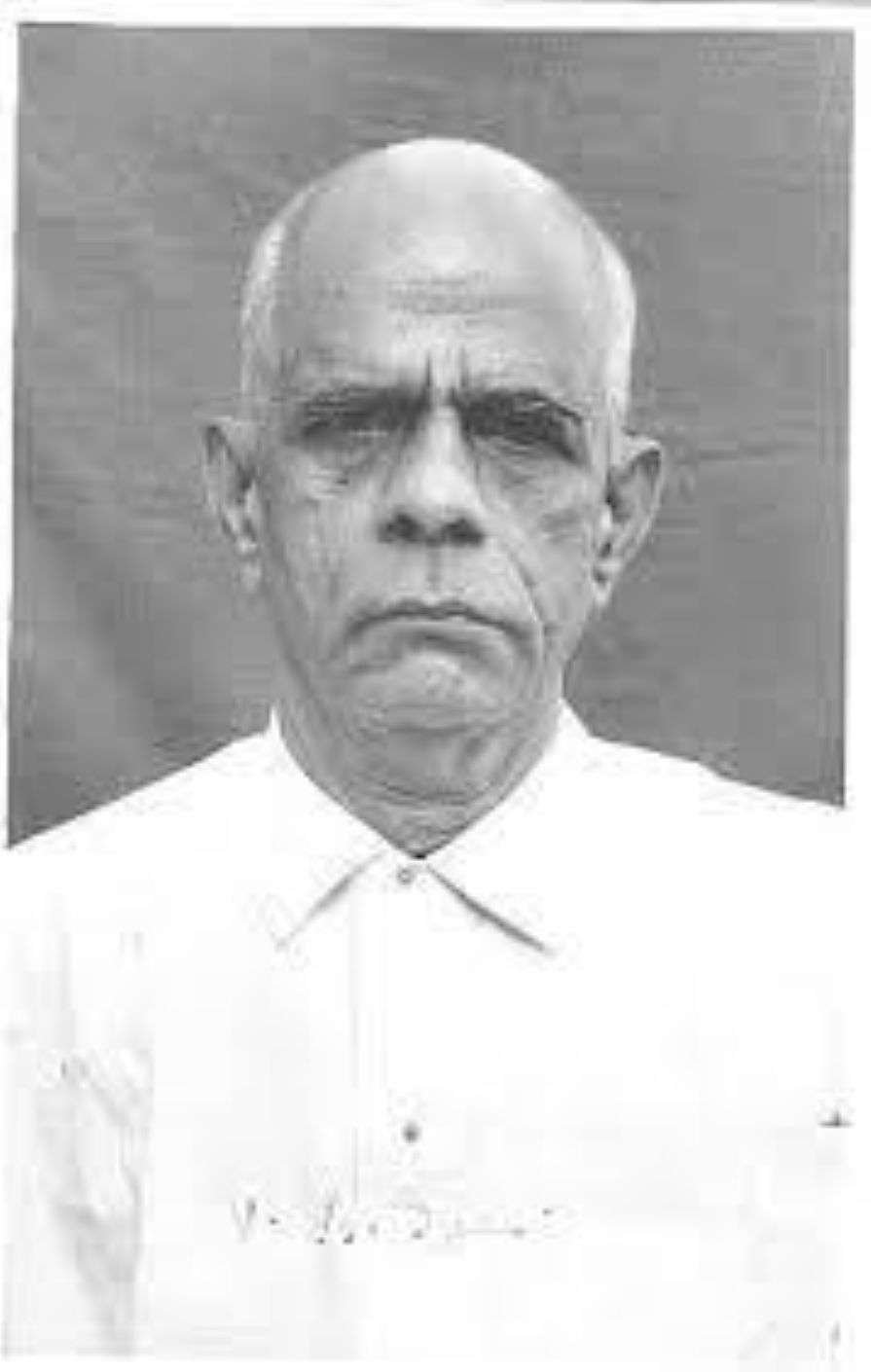


J. Thirumalachar: The Indian mycologist who put Pimpri on the global scientific map
MS Sparsha
Every time a microbiologist anywhere in the world writes the scientific name Streptomyces pimprina, an Indian town near Pune quietly finds a place in scientific history. But behind this unusual distinction lies the remarkable story of an Indian scientist whose contributions to medical science, antibiotics and mycology remain largely unknown outside specialist circles.
J. Thirumalachar was not merely a scientist who discovered new organisms. He was a pioneering researcher who demonstrated how India’s rich and diverse soil could become a source of life-saving medicines and valuable scientific discoveries.
Born in Bangalore in 1914, Thirumalachar was the son of M. J. Narasimhan, one of India’s pioneering plant pathologists. Growing up in an environment shaped by scientific inquiry, he developed an early interest in biological sciences. He went on to earn his PhD from the University of Wisconsin in the United States before returning to India to pursue his research career.
In 1953, he joined the newly established Hindustan Antibiotics at Pimpri, near Pune, as its chief mycologist. His assignment was both challenging and ambitious: to explore Indian soil for microorganisms capable of producing new antibiotics. At a time when India was striving to build its scientific and pharmaceutical capabilities, this was pioneering work with enormous potential.
His research team made discoveries that would establish his place in the history of Indian microbiology. Three of its important findings were Hamycin, Dermostatin and Aureofungin, all antifungal antibiotics. These discoveries were particularly significant because fungal infections posed serious medical challenges, and the search for effective antifungal agents was an important frontier in pharmaceutical research.
The story of Hamycin is especially remarkable. The microorganism that produced this antibiotic was isolated from a soil sample collected at Pimpri. Recognising the significance of the discovery, Thirumalachar named the new species Streptomyces pimprina, giving the town an enduring identity in the international scientific vocabulary. It was a rare distinction: a place in India becoming immortalised through the scientific nomenclature of a microorganism.
Hamycin and Aureofungin subsequently went into commercial production at Hindustan Antibiotics, translating laboratory research into practical pharmaceutical applications. His work also extended beyond human medicine. Another discovery, Antiamoebin, found application in the Armed Forces for deworming military dogs. When incorporated into animal feed, it was also reported to improve milk production in cattle and egg production in poultry, demonstrating the wider agricultural and veterinary potential of his research.
The significance of his contribution received national recognition when he was awarded the prestigious Shanti Swarup Bhatnagar Prize in 1967. The citation acknowledged his discoveries and their practical applications, placing him among India’s distinguished scientific achievers.
His international recognition was equally noteworthy. In 1966, the United States granted him a patent for Hamycin. The inventor’s address recorded in the patent was particularly revealing: “Mandayam J. Thirumalachar, Pimpri, near Poona, India.” At a time when India’s scientific achievements rarely received international visibility, an Indian researcher securing a US patent for an antibiotic was a considerable accomplishment.
Thirumalachar’s contributions were not confined to antibiotic research. A prolific taxonomist, he described 20 new genera and approximately 200 new species of fungi, expanding the scientific understanding and classification of fungal diversity. In a touching tribute to his father, he also named a genus Narasimhania, honouring the pioneering plant pathologist who had influenced his early scientific journey.
He passed away in 1999, leaving behind a remarkable scientific legacy. Yet, outside the world of mycology and microbiology, his name remains relatively unfamiliar, even in his own country.
That is precisely why his story deserves to be retold. India’s scientific history is not built only around celebrated physicists, space scientists or Nobel laureates. It also rests on dedicated researchers who worked patiently in laboratories, examined samples of ordinary soil and discovered extraordinary possibilities.
J. Thirumalachar was one such scientist. He transformed microorganisms found beneath our feet into discoveries with medical, commercial and agricultural significance. While his name may not occupy public memory, every scientific reference to Streptomyces pimprina keeps his contribution alive.
Some heroes build monuments. Others leave their names embedded in the very language of science.