When disaster strikes a neighbour, there are two kinds of countries: those that calculate the diplomatic advantage and those that simply ask, “How can we help?” Bharat has traditionally belonged to the second category—and its swift response to the catastrophic floods in Nepal is a reminder of what genuine neighbourhood solidarity should look like. The devastating flash floods that struck Nepal after a massive glacial collapse in the Himalayas have left behind an appalling trail of death and destruction. The disaster has killed hundreds, left many more missing and devastated homes, roads, bridges, hydropower projects and vital infrastructure. The United States Geological Survey has identified a glacial collapse in the Langtang region as the likely trigger, with the resulting debris flow travelling nearly 100 kilometres downstream. But even before the full scale of the catastrophe became clear, Bharat moved. Prime Minister Narendra Modi spoke to Nepal’s Prime Minister Balendra Shah and conveyed Bharat’s readiness to provide all possible humanitarian assistance. The Indian Air Force swiftly began airlifting relief material. Within 24 hours, two IAF transport aircraft had carried around 47.5 tonnes of relief supplies, including temporary shelters, blankets, hygiene kits, solar lamps and medicines. The Army and NDRF were also kept on standby for further assistance, including engineering support. That is not merely foreign policy. That is neighbourliness. And in Nepal, perhaps nowhere is the emotional connection with Bharat deeper than in the civilisational memory shared by the two peoples. The relationship predates modern borders, republics, governments and diplomatic treaties. For millions of Hindus, Nepal is not merely a neighbouring country on a map. It is the sacred land of Janakpur, associated with Mata Sita, while Ayodhya is the birthplace of Bhagwan Rama. The Ramayana itself provides a cultural bridge that no political boundary can erase. The marriage of Rama and Sita is not simply an episode of an ancient epic; it is part of the civilisational memory binding the people of Nepal and Bharat. That bond survived Nepal’s transformation from a Hindu kingdom into a democratic republic. Governments may change. Political ideologies may change. Borders may be administered differently. But civilisational relationships do not disappear because a constitution changes. There is another practical dimension. The open border, enormous people-to-people movement, religious pilgrimages and centuries of social and familial interaction make Bharat-Nepal ties fundamentally different from ordinary bilateral relations.
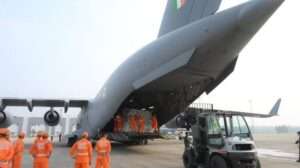
When Nepalis suffer, Bharatiyas do not need a geopolitical briefing to understand why they should care. The same applies when Bharatiya pilgrims are stranded in Nepal. Nepal’s security forces have been involved in rescuing stranded pilgrims and other foreigners, while Bharat has made it clear that it is prepared to provide whatever assistance Kathmandu seeks. That is precisely how neighbours are expected to behave. But Bharat’s responsibility should not end with sending relief aircraft. The Himalayan disaster should become a warning about what lies ahead. The region is among the world’s most fragile ecological and seismic environments. Glacial instability, landslides, extreme weather, seismic activity and poorly understood changes in high-altitude terrain can combine to produce disasters with almost no warning. The answer must therefore be early-warning systems, satellite monitoring, glacial-lake surveillance, disaster-resilient infrastructure and coordinated Bharat-Nepal Himalayan risk management. There is also a larger strategic question involving upstream infrastructure in Tibet. China is developing the world’s largest hydropower project on the Yarlung Tsangpo, which becomes the Brahmaputra downstream. It would be reckless, however, to declare that Chinese construction caused this particular flood. There is presently no credible scientific evidence establishing such a connection. The immediate evidence points to the glacial collapse. But that does not mean Bharat should ignore the strategic implications of massive infrastructure development in one of the world’s most geologically sensitive regions. If anything, the lesson is the opposite: Bharat, Nepal, Bhutan and other Himalayan stakeholders need much stronger mechanisms for sharing hydrological, geological and disaster-warning information. Where necessary, Bharat should be willing to help Nepal build resilient bridges, protective infrastructure, early-warning networks and flood-management systems in vulnerable upper reaches. Relief saves lives today. Preparedness saves lives tomorrow. And that is why Bharat deserves credit. Not because it sent an aircraft. Not because it delivered tonnes of relief material. But because, when Nepal was hit by an unimaginable tragedy, Bharat did what a true civilisational neighbour should do. It stood up. It reached out. It helped.