



Shekhar Maramgarju
History often acquires meaning in hindsight. Political observers, historians and even strategists frequently look for patterns that may have gone unnoticed in real time. One such intriguing pattern emerging over the past decade is the apparent significance of the month of August in the governance journey of Prime Minister Narendra Modi.
It may well be a coincidence. It may simply be the outcome of careful political planning. Yet, when one looks at the timeline of several transformative decisions and landmark events associated with the Modi government, August—and more specifically August 5—appears with surprising regularity.
Traditionally, August has held a singular place in India’s collective memory because of Independence Day on August 15, 1947. However, in the last decade, the month has increasingly become associated with major political, diplomatic, strategic and civilisational milestones under the Modi government.
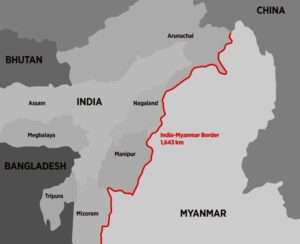
The latest addition came on August 5, 2026, when Myanmar reportedly agreed to exchange certain stretches of land along its border with Bharat, marking yet another significant development in bilateral relations and border management. Though technical in nature, such agreements contribute to long-term regional stability and reinforce India’s neighbourhood diplomacy.
Exactly a year earlier, on August 5, 2025, India further strengthened the internationalisation of the rupee by removing the requirement for prior approval from the Reserve Bank of India for opening Special Rupee Vostro Accounts for international settlements. The move was widely viewed as another step towards reducing dependence on the US dollar in global trade and expanding India’s financial influence.
The list becomes even more fascinating when viewed chronologically.
On August 5, 2023, Chandrayaan-3 successfully entered lunar orbit before eventually scripting history with India’s first soft landing near the Moon’s south pole. The mission elevated India into an elite club of space-faring nations and showcased the country’s rapidly advancing technological capabilities.
On August 5, 2022, Chinese Special Representative Yue Xiaoyong visited India amid evolving regional dynamics, even as Pakistan’s decision to wind up the China-Pakistan Economic Corridor (CPEC) Authority reflected growing economic and strategic realities in the region.
In 2021, August 5 became memorable for an entirely different reason. India celebrated its historic Olympic bronze medal in men’s hockey after a gap of four decades. On the same day, the Modi government announced that the country’s highest sporting honour would henceforth be named after hockey legend Major Dhyan Chand instead of former Prime Minister Rajiv Gandhi, a decision that generated widespread public debate and support.
The symbolism was even stronger in 2020. On August 5, Prime Minister Modi performed the Bhoomi Pujan for the Ram Mandir at Ayodhya, marking the culmination of one of independent India’s longest and most politically sensitive disputes. For millions of devotees, the ceremony represented the fulfilment of a decades-old aspiration.
If 2020 was civilisational, 2019 was constitutional.
On August 5, 2019, Parliament abrogated Articles 370 and 35A, ending Jammu and Kashmir’s special constitutional status and fully integrating the erstwhile state with the Indian Union. Whether one views the move through the prism of national integration or federal politics, there is little disagreement that it ranks among the most consequential constitutional decisions in post-independence India.
The earlier years also reveal notable milestones. August 5, 2018, witnessed the renaming of Mughalsarai Junction after Jana Sangh ideologue Deen Dayal Upadhyaya, symbolising the government’s broader effort to reshape historical narratives. In 2017, Venkaiah Naidu assumed office as Vice-President, replacing Hamid Ansari. In 2015, the Centre accelerated Aadhaar integration across government employee systems, strengthening digital governance and welfare delivery. In 2014, shortly after assuming office, the Modi government announced a strategic India-Arab Partnership, laying the foundation for dramatically expanded ties with West Asia over the next decade.
Viewed individually, each of these events belongs to a different domain—national security, constitutional reform, diplomacy, technology, governance, sports, culture or economic policy. Yet together, they present an intriguing calendar of milestones centred around the same period each year.
Whether August is genuinely Narendra Modi’s “lucky month” is, of course, open to interpretation. Governments plan major announcements around parliamentary sessions, administrative readiness, and political timing, making repeated August decisions entirely plausible without invoking fortune.
Still, politics often thrives on symbolism as much as substance. And if the past decade is any indication, August has undoubtedly evolved from being merely the month of India’s Independence to one that repeatedly witnesses decisions shaping the nation’s future. Whether by design, timing or coincidence, the “August Factor” has become another fascinating chapter in the political story of the Modi era.


