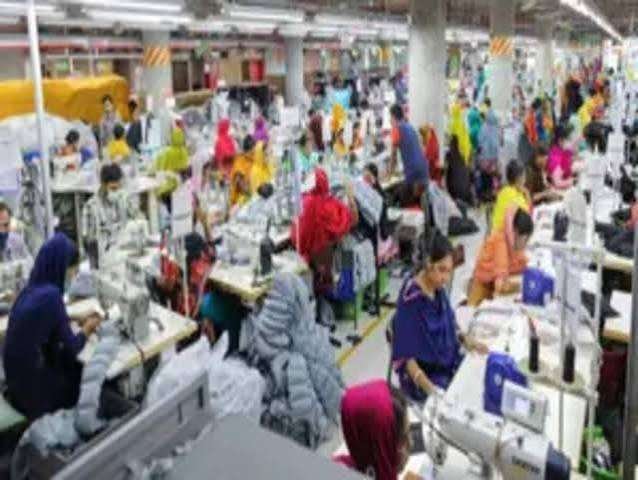
New Delhi: India’s textiles and apparel exports need to grow by over 20 per cent annually to reach the USD 100 billion ambition by FY31, requiring a significant expansion in garment manufacturing, productivity improvements and stronger global buyer partnerships, according to a joint report by CII and Boston Consulting Group (BCG) released on Monday.
India’s USD 190-200 billion textiles and apparel industry must grow by 10 per cent plus annually to reach its FY31 ambition. Exports face an even steeper climb, requiring growth of over 20 per cent a year to move towards USD 100 billion, the report said.
Titled ‘Winning the Global Wardrobe: India’s Roadmap to Textile and Apparel Leadership’, the report was launched at TEXCON ’26 in New Delhi.
India accounts for more than 6% of global textile exports but only around 3% of global apparel exports. The report identifies finished apparel as a key area for expansion, arguing that the country needs to build on its existing strengths in textiles and move further down the manufacturing value chain.
A 2–3 percentage-point increase in India’s share of global apparel exports could generate an additional $10–15 billion in exports, the report said.
The sector employs more than 45 million people, with women accounting for 50% of its workforce. It contributes 13% to India’s industrial output, around 11% to manufacturing gross value added and 12% to the country’s total exports. The domestic textiles and apparel market is estimated at approximately $157 billion and is expected to grow by 9–10% annually through FY31.
The report identifies focused product and market selection, long-term partnerships with global buyers, integrated manufacturing and higher factory productivity as priorities for improving India’s competitiveness.
It recommends building larger manufacturing operations by bringing fabric suppliers, processors and garment manufacturers closer together. Expanding integrated clusters from spinning to garmenting could help improve coordination and reduce structural costs.
The report also points to opportunities in synthetic fibres and performance apparel. Synthetic fibres account for 74% of the fibre mix in global outerwear trade and 72% in sportswear trade, while India’s share in these categories stands at just 0.1% and 0.4%, respectively.
Technology adoption is another focus area. The report identifies more than 100 potential applications for artificial intelligence across the apparel value chain, covering design, procurement, manufacturing and supply chains. It also highlights the need for investment in modern machinery, workforce skills, affordable finance and shared infrastructure.
AI-led interventions could increase manufacturing productivity by more than 20%, reduce defect rates by over 20% and lower material waste by 6–9%, according to the report. In other functions, they could enable 15–20% faster design cycles, procurement savings of up to 10% and up to twice as short order-to-dispatch lead times.
The report further highlights the importance of market access and buyer relationships. The European Union and the UK together account for around $140 billion, or 26%, of global apparel trade. However, improved access through free trade agreements will need to be matched by competitive costs, speed, quality and delivery reliability.
It also identifies affordable fibre availability and financing as important requirements for the sector. India’s per-capita fibre consumption is projected to rise from around 5 kg to 10–15 kg over the next 20 years, requiring domestic fibre production to increase from 14–15 million metric tonnes to 22–26 million metric tonnes over the next eight years.