Lakshmanrao Upadhyayula
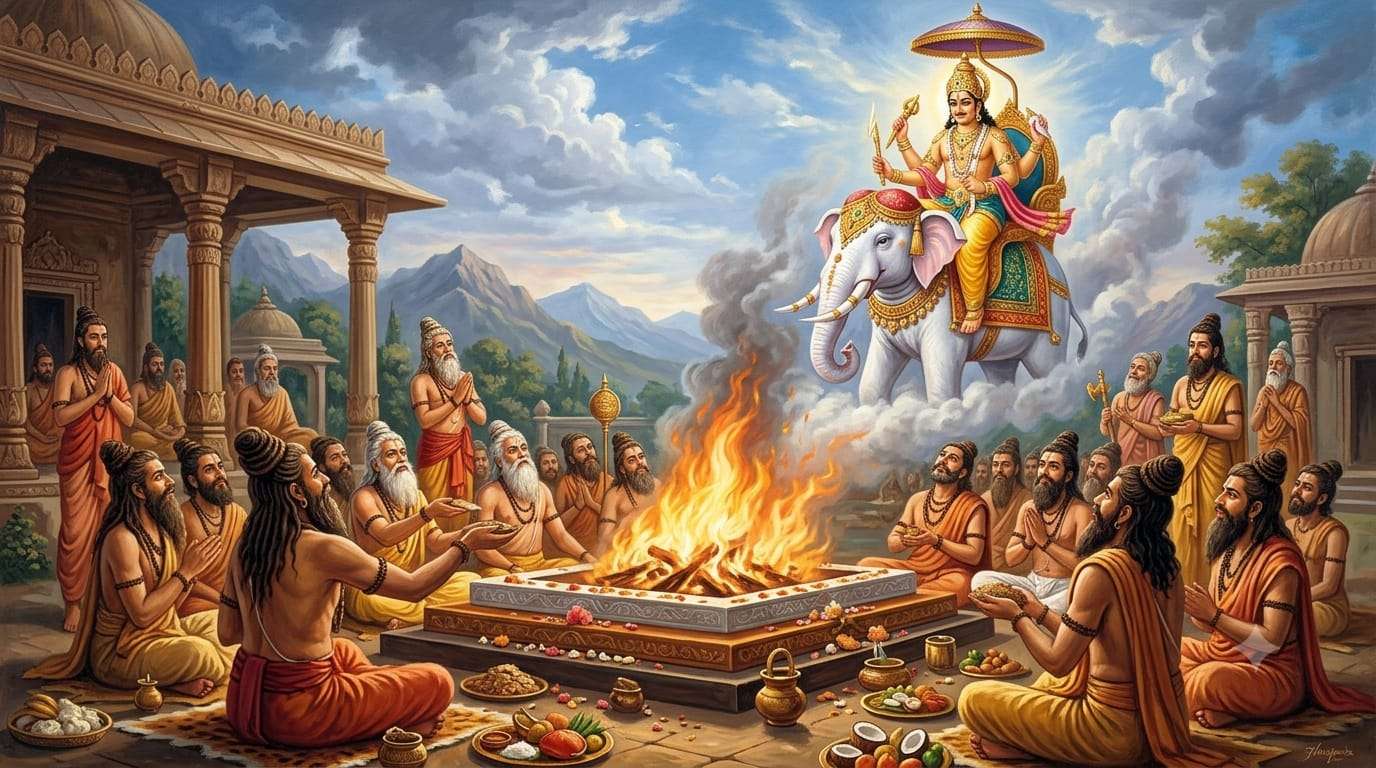
In the sacred tradition of the Rigvedic hymns, the sage Vishwamitra of the revered Kusika lineage raises his voice in prayer to Indra through the exalted Gayatri Chandas. This invocation is not merely a request directed toward a celestial deity; it is a profound expression of harmony between humanity, nature, and the divine order. The seer calls upon Indra, the lord of strength, wisdom, and victorious energy, inviting him to approach the sacrificial ground in his radiant chariot yoked with swift horses. The imagery reflects the Vedic understanding that divine powers move dynamically through the cosmos, responding to sincere devotion, disciplined ritual, and righteous intention.
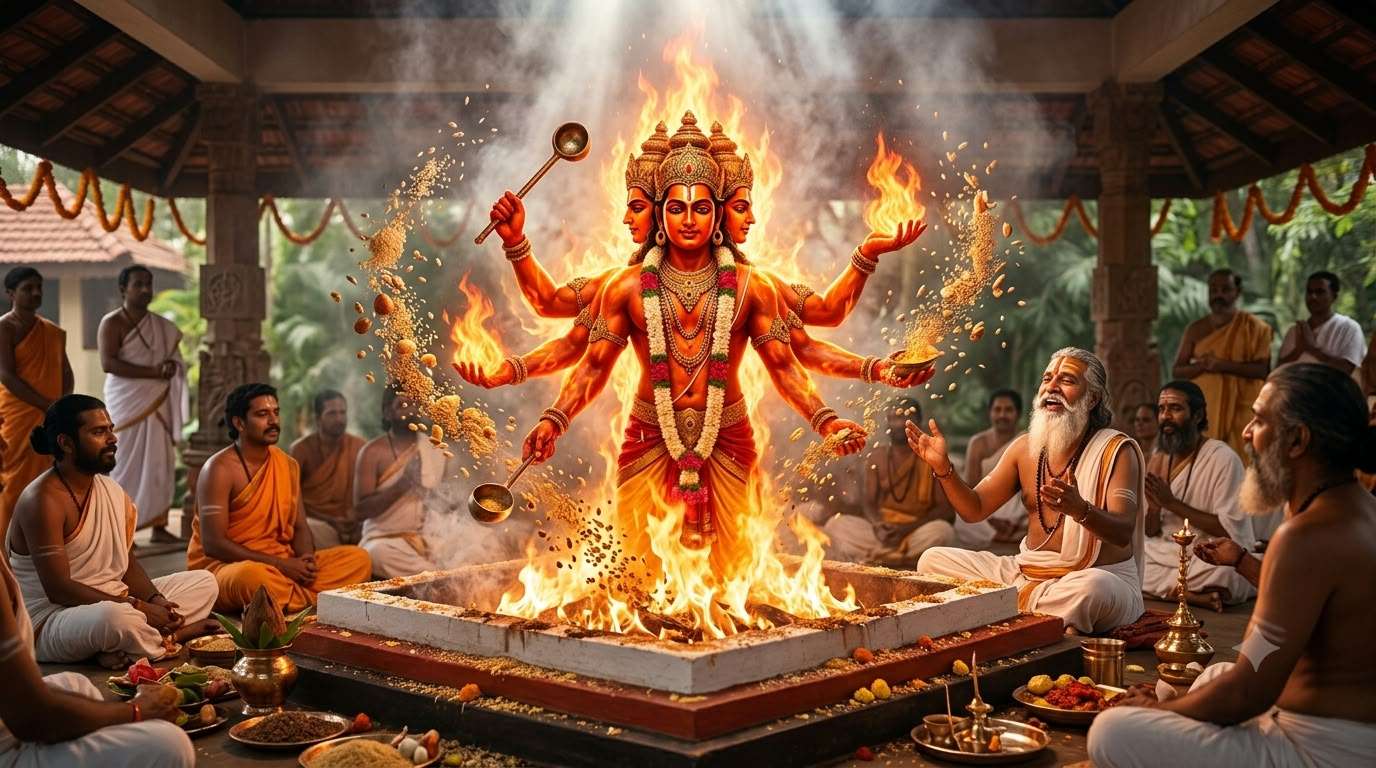
The Soma has been carefully purified according to sacred injunctions and reverently blended with nourishing cow’s milk. Prepared with devotion and precision, it stands ready within the sanctified precincts of the yajna. The offering symbolizes more than a ritual drink; it represents the refinement of consciousness, the transformation of earthly elements into vehicles of spiritual elevation, and the dedication of human effort to divine purposes. The sage invites Indra to partake of this sacred Soma, that it may delight his heart and abundantly satisfy him, thereby strengthening the bond between the worshipper and the divine protector.
The hymn itself becomes a sacred vehicle carrying the intentions of the sacrificers. The Vedic seers understood sound as a fundamental force permeating creation. Therefore, every syllable of the mantra is carefully measured and pronounced, generating vibrations that align the human mind with cosmic rhythms. The voice of this hymn rises toward Indra, bearing praise, reverence, and invitation. Through the power of sacred speech, the distance between the earthly and celestial realms is bridged, and the worshippers express their faith that their call will surely reach the divine recipient.
Indra has been invoked by countless seekers throughout the ages, yet each sincere prayer retains its unique value. The assembled worshippers recount his mighty deeds and celebrate his victories over forces that obstruct righteousness and prosperity. Through chants and praises, they invite him once again to accept the Soma offering. In the Vedic worldview, remembrance of divine actions strengthens faith and awakens courage within the hearts of devotees. Thus, the recitation of Indra’s exploits serves both as worship and as spiritual instruction.
The hymn glorifies Indra as the possessor of the merit earned through a hundred yajnas, a symbol of inexhaustible spiritual excellence and divine authority. He is described as the lord of abundant resources and sustenance, holding within his power the energies that nourish life and uphold cosmic order. The Soma prepared for him is offered with reverence, symbolically placed within his being as a source of delight and strength. Such imagery reflects the Vedic conviction that offerings made with purity become instruments of communion between the visible and invisible dimensions of existence.
The worshippers further praise Indra as a poet, scholar, and wise sovereign whose intellect is as mighty as his strength. He is celebrated as the vanquisher of adversaries and the protector of those who uphold truth. His victories in battle symbolize not only physical triumphs but also the conquest of ignorance, disorder, and destructive tendencies. Resplendent with wealth and glory, Indra embodies the radiant abundance that flows from alignment with divine law. Therefore, the devotees seek from him prosperity, strength, wisdom, and the resources necessary to fulfill righteous duties.
The sacred Soma, purified and delightfully prepared, is offered exclusively to Indra. The seers envision it invigorating his divine energies and filling his heart with joy. On a deeper level, Soma represents the bliss experienced through spiritual realization, disciplined living, and communion with higher truths. The Vedic sages perceived that genuine happiness arises when human aspirations harmonize with the cosmic order. Thus, the offering of Soma becomes a symbolic act of surrendering the fruits of human effort to the sustaining powers of the universe.
As descendants of the noble Kusika lineage, the worshippers humbly acknowledge their dependence upon divine protection. They recognize Indra as timeless, transcending the limitations of age and change. Through the chanting of Vedic hymns, they seek his guardianship, guidance, and blessing. Their prayer reflects a profound understanding that spiritual progress is achieved through devotion, disciplined action, and reverence for eternal principles. The sacred sounds of the Gayatri meter become a bridge connecting generations of seekers to the timeless wisdom preserved within the Vedas.
From a scientific perspective, the hymn reveals the remarkable intellectual temperament of the Vedic seers. The meticulous preparation of Soma, the precise structure of the chants, and the disciplined performance of the yajna demonstrate an early appreciation for order, observation, and systematic practice. The sages recognized the transformative influence of sound, rhythm, concentration, and collective participation upon human consciousness. Their rituals united spiritual aspiration with careful methodology, revealing a culture that sought both inner enlightenment and harmonious engagement with the natural world.
Thus, this venerable hymn of Vishwamitra stands as a luminous testimony to the depth of Vedic spirituality. It portrays a universe alive with sacred relationships, where divine forces respond to sincerity, wisdom, and disciplined devotion. Through praise, offering, and sacred sound, the worshippers seek communion with Indra, the radiant lord of strength and prosperity. The hymn continues to inspire seekers by revealing that true wealth lies not merely in material abundance but in the harmonious union of knowledge, devotion, courage, and reverence for the eternal order that sustains all creation.