
Lakshmanrao Upadhyayula
The sage Vamadeva invokes the Ribhus through the disciplined metres of the Trishtubh and Anushtubh, giving the hymn both poetic rhythm and philosophical depth. In the Vedic imagination, the Ribhus are not merely celestial beings who receive offerings; they represent extraordinary intelligence, refinement of skill, creative transformation, and the disciplined application of knowledge. Their presence in the yajna signifies the human aspiration to convert ordinary existence into a more ordered, luminous and purposeful life.
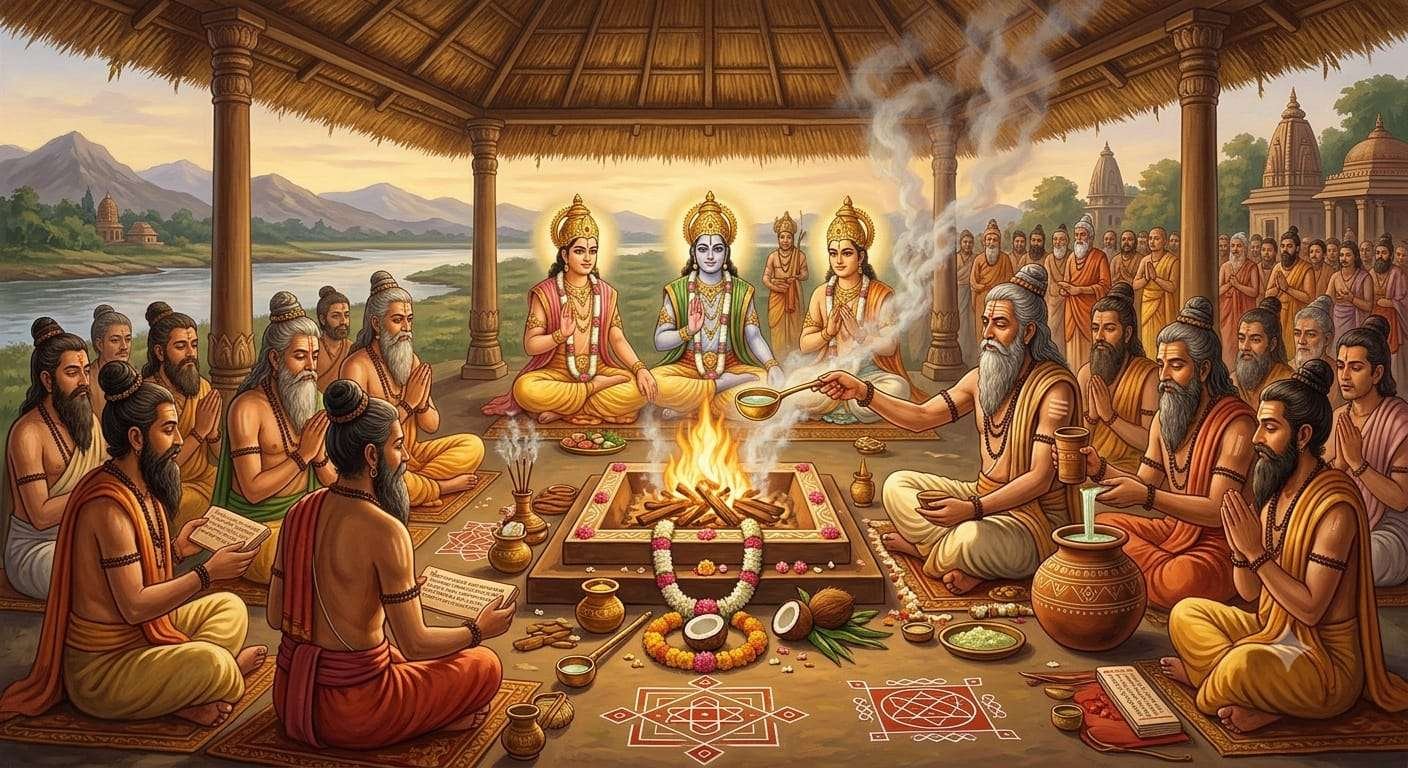
The sage invites the charming and radiant Ribhus to the yajna, praying that their presence may make every day auspicious for humanity. The invitation to travel by the divine path is significant. The divine path can be understood not simply as a supernatural road but as a disciplined movement from ignorance towards knowledge, from disorder towards harmony, and from instinctive existence towards conscious living. The yajna therefore becomes a symbolic meeting point between human aspiration and higher intelligence.
The offering is prepared with great care. Soma, mixed and purified with clarified butter, is described as waiting for the divine guests. At the literal level, this reflects the ritual preparation of an offering; at the philosophical level, purification represents the refinement of consciousness. Just as an impure substance must be separated from unwanted elements before it becomes useful, human thought must be cleansed of confusion, selfishness and destructive impulses before knowledge can become effective. The Soma thus becomes an image of concentrated vitality, clarity and inspiration.
The hymn asks that this Soma reach the hearts of the Ribhus and satisfy them. The deeper meaning is that knowledge must not remain merely intellectual. It must reach the centre of human motivation and inspire constructive action. The true measure of wisdom is not the amount one knows, but the quality of conduct that knowledge produces. The Soma is therefore presented as an energising principle that encourages further good deeds, suggesting a continuous cycle in which disciplined action generates greater clarity, and greater clarity produces more purposeful action.
The reference to Vajas and the Ribhus, and to the elixir prepared for the divine participants at the third ritual, reinforces the Vedic concern with preparation, timing and precision. The repeated purification of Soma suggests that valuable results require carefully controlled processes. From a scientific temperament, this can be read as an early recognition of the importance of refinement, preparation and transformation. Nothing worthwhile is achieved merely by possessing raw material; it must be processed intelligently before its full potential can be realised.
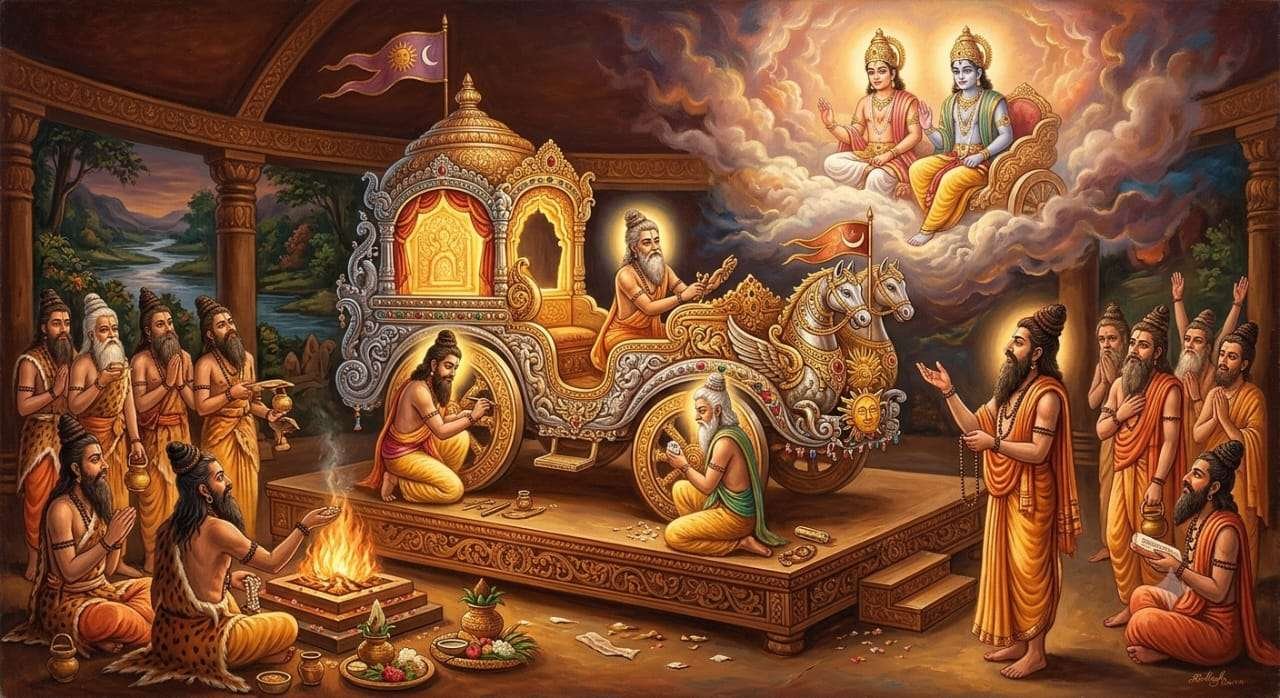
The Ribhus are praised for possessing strong horses, radiant chariots and powerful jaws like iron. Their horses symbolise energy and controlled movement, while the chariot represents an organised system capable of directing that energy towards a destination. The comparison of their jaws with iron conveys strength, resilience and precision. These images together create a picture of beings whose physical power is governed by intelligence. The Vedic ideal is therefore not brute force but strength under disciplined control.
Their possession of abundant food and nourishment and their reputation as generous donors add another dimension. Wealth in the Vedic vision acquires value when it circulates and sustains life. Prosperity is not portrayed as something to be accumulated selfishly but as a resource that should nourish the community. The generous donor becomes greater precisely because his resources contribute to the well-being of others. This principle has enduring relevance: economic strength becomes meaningful when it produces social stability, nourishment, opportunity and knowledge.
The third ritual is arranged for the joy of the Ribhus, and the sage invokes intelligent riches. This expression deserves particular attention. Wealth is not limited to gold, cattle, food or material possessions. Intelligence itself is a form of wealth, perhaps the most enduring one. Material resources can be exhausted, but knowledge can generate new resources when applied creatively. The prayer for intelligent riches therefore represents a sophisticated understanding of prosperity as a combination of material abundance, intellectual capability and ethical purpose.
The sage further seeks protection from the strongest in battle and invokes the generous, nourishing powers and the companions of Indra. The reference to strength in war should not be understood merely as a glorification of violence. Within the broader Vedic framework, protection represents the preservation of order against destructive forces. The strongest warrior is valuable when strength is placed in the service of protection rather than aggression. Courage, discipline, self-control and responsibility must therefore accompany power.
The invocation of self-controlled divine powers is especially significant. The Vedic mind repeatedly connects strength with restraint. An individual who possesses enormous energy without self-control can become destructive; one who combines energy with discipline can become creative and protective. The hymn therefore places inner mastery alongside external power. Self-control is not weakness but the mechanism through which strength acquires direction and purpose.
The prayer declares that the person protected by the Ribhus and Indra will become fortunate and distinguished. He will become rich through yajna and prosperous with horses through sacred activity. Here again, prosperity is linked with participation in an ordered and meaningful system of action. Yajna can be interpreted as a principle of reciprocal contribution: one receives from the world and therefore has an obligation to give back. Human prosperity becomes sustainable when it is connected with responsibility, cooperation and service.
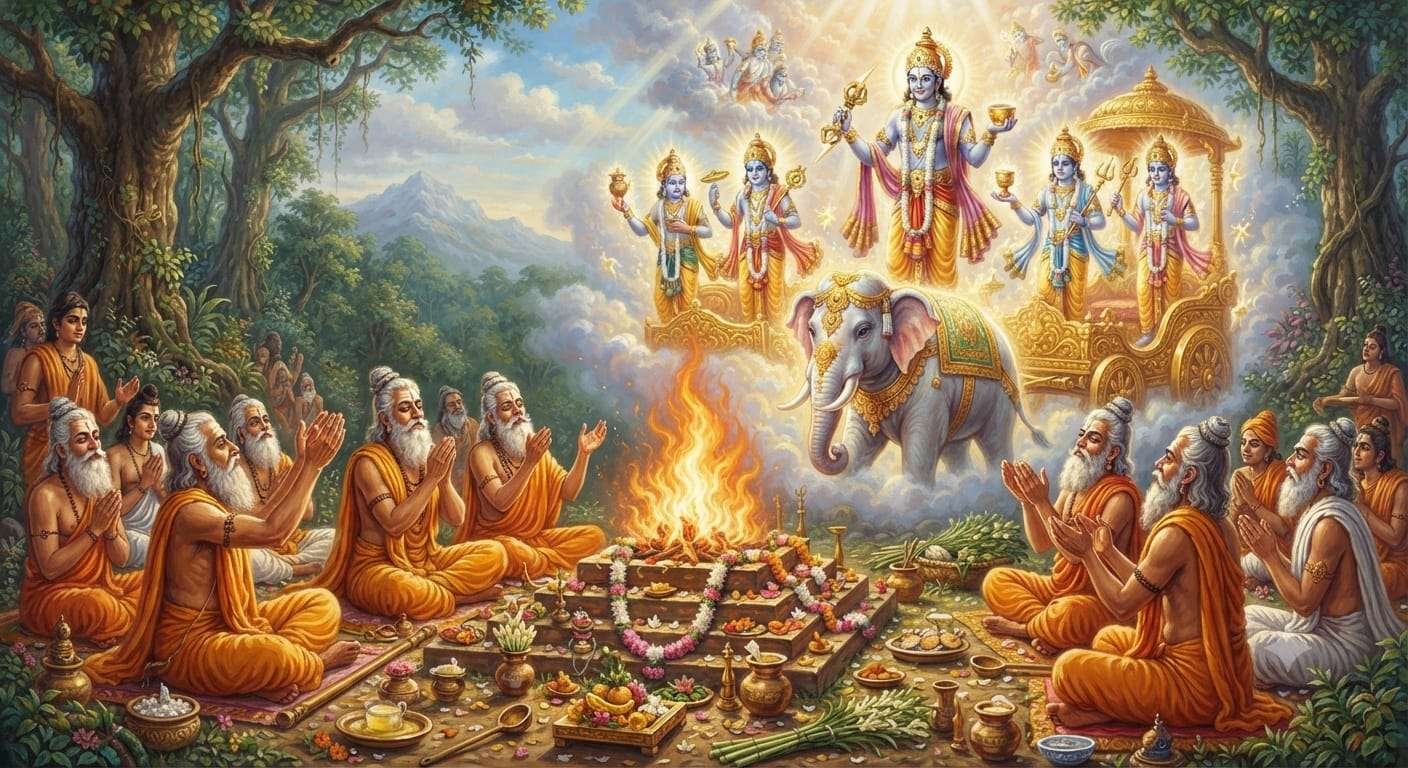
The sage then asks the Ribhus to guide humanity through the way of yajna towards the throne of knowledge. This is perhaps the most profound movement in the hymn. The purpose of ritual is not ritual itself. The external ceremony becomes meaningful only when it leads the mind towards understanding. The throne of knowledge represents a state in which wisdom governs action. The Ribhus, described as intellectual and skilful beings, are therefore invoked as guides in the transformation of ritual experience into enlightened understanding.
The hymn also recognises the power of sacred speech. When the Ribhus chant the hymns of prayer, they are expected to fulfil the directions contained in their spirit. The Vedic tradition gives extraordinary importance to accurately formulated speech, rhythm, sound and intention. A mantra is not merely a collection of words; its significance lies in the relationship between sound, meaning, disciplined recitation and consciousness. The precision of the metres reflects an intellectual culture that valued structure, memory, phonetic accuracy and systematic transmission.
The concluding invocation brings together Vajas, the Ribhus, Indra and the twin horses, while the worshippers offer hymns and seek horses and riches sufficient for their needs. The imagery creates a complete picture of Vedic aspiration: energy must be directed by intelligence; intelligence must be supported by resources; resources must be shared through generosity; strength must be governed by self-control; and ritual must ultimately lead towards knowledge.
Seen through a scientific temperament, the hymn presents an intriguing model of human development. It repeatedly moves from raw energy to controlled energy, from raw material to purified substance, from wealth to productive wealth, from strength to disciplined strength, and from ritual action to knowledge. This resembles a fundamental principle of scientific thinking: observation alone is insufficient; phenomena must be organised, tested, refined and interpreted before they yield useful knowledge. The Vedic poet may employ sacred symbolism, but beneath the symbolism lies a persistent fascination with transformation, order, causality, discipline and the productive use of intelligence.
The Ribhus consequently emerge as archetypes of the creative intellect. They are associated with craftsmanship, refinement, abundance, technical ability and the intelligent transformation of nature’s resources. Their horses, chariots, nourishment and radiant qualities are not merely ornamental descriptions. They construct a symbolic vocabulary in which energy, technology, prosperity, discipline and knowledge operate together. The ideal human being is not one who rejects material life, nor one who pursues material wealth without restraint, but one who harmonises resources with wisdom and action with ethical purpose.
The hymn of Vamadeva can therefore be understood as a prayer for the complete development of human potential. It seeks prosperous resources, but also intelligence; physical strength, but also self-control; ritual accomplishment, but ultimately knowledge; divine protection, but also responsible action. Its central insight is that civilisation advances when energy is refined by intelligence and prosperity is governed by responsibility. The Ribhus symbolise this creative ascent—the transformation of what is ordinary into something excellent through skill, discipline, purification and knowledge.
In this sense, the yajna becomes much more than an ancient ritual. It becomes a metaphor for life itself. Every thought is an offering, every disciplined action is a form of yajna, every purified intention becomes Soma, and every act of generosity sustains the larger order of existence. The journey of the Ribhus from the sacred invocation to the throne of knowledge ultimately mirrors humanity’s own journey: from instinct to intelligence, from possession to sharing, from power to responsibility, and from ritual performance to enlightened understanding.