
An Appreciation Beyond Awards
P.A. Rama Rao
Sometimes, the most cherished rewards in a journalist’s career do not come in the form of prestigious awards, citations or public recognition. They arrive unexpectedly, through a few heartfelt words from an ordinary person whose life has been touched by a newspaper report.
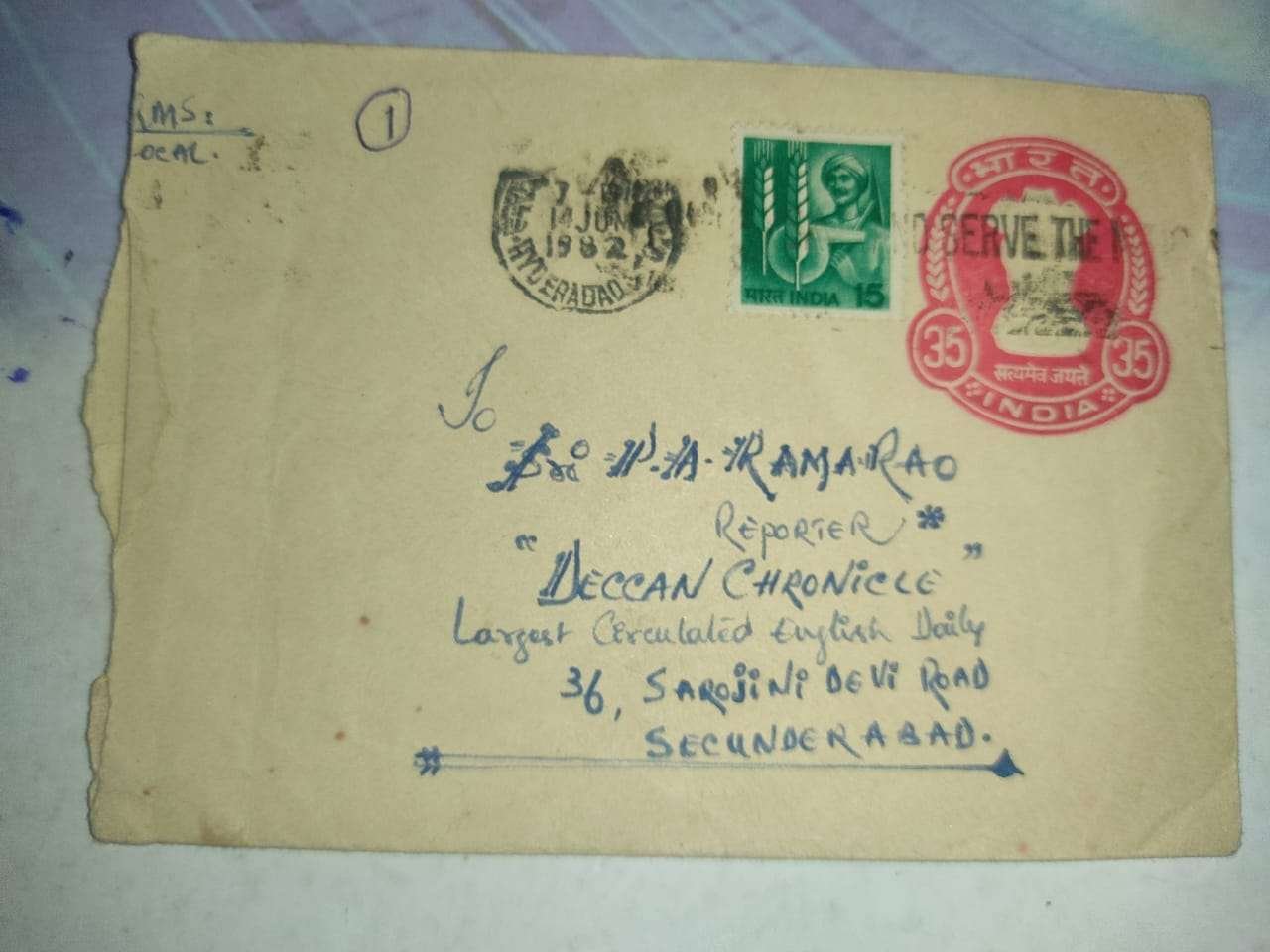
One such unforgettable moment in my journalistic journey came on June 14, 1982, when I received a letter that remains among my most treasured professional mementoes. Even the artistic engraving of my name on the postal cover (Pic 1) suggested that it carried something special.
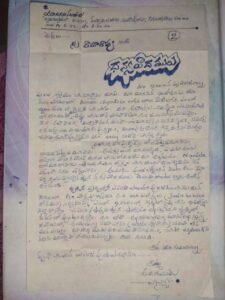
But what awaited me inside was far more precious than I could have imagined. On opening the envelope, I was pleasantly surprised to find the word “DHANYAVADAMULU” (Thanks) beautifully embellished with an engraving. As I read the letter (Pic 2), I was overwhelmed by the warmth, sincerity and depth of appreciation expressed in every sentence.
It was an entirely unexpected encomium, and one that made me feel immensely proud of my profession. My colleagues in the Editorial Department of Deccan Chronicle, after reading the letter, congratulated me and remarked that such genuine appreciation from a reader was rare in a journalist’s career. They felt it was more valuable than many prestigious awards and advised me to preserve it as a memento. I have cherished that advice ever since.
The story behind this appreciation began on an ordinary working evening at the Deccan Chronicle office. I was busy typing a report when a young man approached me, saying that he wished to meet a reporter. Introducing myself, I asked him what had brought him there. He explained that he was among the hundreds of candidates selected by the Andhra Pradesh State Public Service Commission for Junior Lecturer posts. However, instead of celebrating their success, the selected candidates were caught in a state of uncertainty, confusion and desperation.
A series of Government Orders and conflicting press statements had left them bewildered about their appointments and future prospects. Having successfully cleared a competitive examination, they had naturally expected to begin a respectable career. Instead, they found themselves struggling to understand the government’s changing decisions and announcements.
After listening to him, I collected the relevant information, examined the Government Orders and gathered the necessary details before preparing a special report highlighting the plight of the selected candidates. The report was prominently published on the front page of Deccan Chronicle, bringing their grievances into the public domain. It was this report that prompted Yadagiri Sankoju, a Junior Lecturer from Secunderabad, to write the memorable letter dated June 14, 1982.
Expressing gratitude, he wrote: “You have done justice to our cause more than what we expected. Through your pen, you have most effectively reflected our mental agony through the first-page story.” He went on to acknowledge their apprehension that the difficulties faced by ordinary people might not always be properly understood or represented by journalists. However, the report had reassured them that newspapers and scribes continued to stand by the common man, bringing their problems to public attention and helping identify possible solutions. He clarified that the candidates had no intention of creating a ruckus, but merely wanted their grievances to reach the authorities concerned. The Deccan Chronicle report, he said, had considerably eased their burden by taking their concerns to the appropriate platform. Having worked hard to clear the examination and eagerly awaited their appointments, they were deeply distressed by the uncertainty created by official announcements. He concluded by saying that they felt duty-bound to convey their heartfelt thanks without delay.
Looking back after more than four decades, I realise that this letter represents something far greater than a compliment for one particular report. It is a reminder of the fundamental responsibility of journalism: to listen to people, understand their difficulties, present facts and give a voice to those who might otherwise go unheard. A journalist may write hundreds of stories, but the knowledge that one report has brought relief, reassurance or hope to someone is satisfaction beyond measure. Awards may recognise professional achievement, but such spontaneous appreciation from an affected reader touches the heart. For me, Yadagiri Sankoju’s letter remains an enduring reminder that the real worth of a newspaper story lies not merely in where it is published, but in how meaningfully it serves society. (The author is a veteran journalist who served as Special Correspondent at the Deccan Chronicle in New Delhi.)