



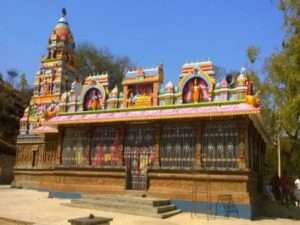
Sri Lakshmi Narasimha Swamy Temple is situated at Veyyinuthula Kona near Dasaripalle in Pendlimarri Mandal of Andhra Pradesh. Surrounded by rocky hills and a peaceful natural landscape, this is a lesser-known and spiritually significant Narasimha Kshetra. The name Veyyinuthula Kona is associated with the many natural water pits found among the surrounding rocks, which give this beautiful place its distinctive identity.
The temple is considered an ancient shrine, with local traditions connecting its history to the Vijayanagara period. However, a precise date for the original shrine is not firmly established.
The presiding deity is Sri Lakshmi Narasimha Swamy, the man-lion incarnation of Lord Vishnu. The Lord appeared as Narasimha to protect his devotee Prahlada and destroy the demon king Hiranyakashipu.
The deity at Veyyinuthula Kona is traditionally associated with the peaceful form of Narasimha after his fierce anger had subsided. Goddess Lakshmi is worshipped along with the Lord, giving the deity the form of Lakshmi Narasimha.
The temple is modest in comparison with the great Narasimha temples of Andhra Pradesh, but its setting amidst the rocky hills gives it a special charm. The natural landscape is an important part of the sacred character of the temple.
The surrounding hills contain numerous natural depressions or water pits where rainwater collects. These water formations are closely associated with the identity and traditions of Veyyinuthula Kona.
Veyyinuthula Kona has been regarded as a sacred place of worship for generations. Local traditions connect the development of the temple with the Vijayanagara period, when several important Vaishnava centres in this region received royal patronage.
The secluded hills are also believed to have attracted sages and devotees who came here for meditation and worship. Over the centuries, the natural beauty of the valley, its water sources, and the presence of Lord Narasimha made the place an important local pilgrimage centre.
According to the Sthalapurana, after Lord Narasimha appeared from the pillar and destroyed Hiranyakashipu, his fierce anger did not immediately disappear. The Lord had taken this terrifying form to protect Prahlada and destroy evil, but even after the demon was killed, Narasimha continued to remain in his Ugra form.
The Devas and sages prayed to the Lord to become peaceful and bless the world once again. It is believed that the sacred waters of this region were used for the Lord’s abhishekam. As the cool waters flowed over Narasimha, his anger gradually subsided and the fierce Lord became calm and compassionate.
This tradition is closely connected with the natural character of Veyyinuthula Kona. The surrounding rocky hills contain countless small pits in which rainwater gathers. These natural water formations are believed to be one of the reasons the place came to be known as Veyyinuthula Kona, meaning the valley of a thousand water pits or wells.
Another local tradition connects the region with the Ramayana. It is believed that during their exile, Lord Rama and Sita passed through the forests of this region, which was traditionally regarded as part of the ancient Dandakaranya. Thus, the sacred landscape is associated with both the Narasimha tradition and the journey of Lord Rama.
The combination of the ancient Narasimha worship, the sacred water formations, and the peaceful hill surroundings gives Veyyinuthula Kona a unique place among the lesser-known Narasimha Kshetras of Andhra Pradesh.
Narasimha Jayanti is the principal festival celebrated here with special prayers and abhishekam to Lord Narasimha. The annual celebrations also include special pujas and other traditional rituals. Saturdays and the Kartika month are considered particularly auspicious, attracting devotees seeking the blessings of Sri Lakshmi Narasimha Swamy.


