



Padhay Mata Temple is situated near Marwar Baliya village, about 12 km from Didwana in Didwana-Kuchaman district (formerly Nagaur district), Rajasthan.This temple is one of the most ancient and revered Shakti temples in Rajasthan. Located near the historic Didwana Salt Lake, this sacred shrine has been a centre of Devi worship for nearly twelve centuries. Revered as the Kuldevi by several Rajput, Brahmin, Maheshwari, Pareek and other communities, the temple is a symbol of unwavering faith, divine protection and Rajasthan’s rich spiritual heritage.
According to the temple inscription, the shrine was built in Vikram Samvat 902 (845 CE), making it nearly 1,180 years old. Another inscription mentions renovations carried out during Vikram Samvat 1765, showing that the temple has been continuously worshipped and preserved for over eleven centuries.
The temple is dedicated to Goddess Padhay Mata, worshipped as an incarnation of Adi Shakti. The sanctum enshrines Padhay Mata along with Mahishasuramardini, representing the Divine Mother’s power to destroy evil and protect her devotees. Bhairavnath, the guardian deity of the temple, is also worshipped within the complex. Thousands of devotees visit the shrine to seek the Goddess’s blessings before marriages, childbirth, housewarming ceremonies and other important occasions.
Built in the traditional Nagara style, the temple reflects the architectural beauty of early medieval Rajasthan. Beautifully carved sandstone pillars, ornamental entrances and intricate stone carvings display the remarkable craftsmanship of the period. Despite damage caused over the centuries, the sanctum and many original features continue to preserve the temple’s ancient glory. The sacred Kair tree associated with the temple’s divine legend is also worshipped within the temple premises.
Padhay Mata Temple was established in the 9th century CE by the wealthy merchant Bhainsa Seth, whose name is recorded in the temple inscription dated Vikram Samvat 902. His deep devotion to the Divine Mother led to the construction of this sacred shrine, which gradually became one of the most important centres of Shakti worship in the Marwar region.
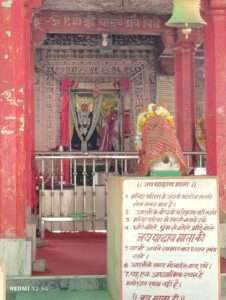
Although parts of the temple suffered damage during medieval invasions, devotees protected the sacred idols and preserved the tradition of worship. Later renovations strengthened the temple while retaining its original sanctity. Today, it continues to be one of Rajasthan’s most respected Kuldevi temples.
Temple tradition narrates that the region around present-day Didwana was once covered with forests and grazing lands. At the heart of the forest stood a sacred Kair tree where divine energy was believed to reside.
Bhainsa Seth, a wealthy merchant and devoted worshipper of the Divine Mother, owned several cows. He noticed that one of his cows returned home every evening without any milk. Wondering where the milk had gone, he quietly followed the cow into the forest.
The cow walked straight to the Kair tree and, without anyone touching it, lovingly poured its milk upon the ground beneath the tree. Witnessing the miracle for several days, Bhainsa Seth realised that the place was blessed with divine presence. He cleaned the spot and began offering daily prayers with complete faith.
One day, the Divine Mother appeared before him in the form of a radiant young maiden. She revealed that She was Adi Shakti and had chosen that sacred place as Her eternal abode. She instructed Bhainsa Seth to build a temple there and assured him that all devotees who worshipped her with sincere faith would receive her protection, prosperity and blessings.
Before disappearing, the Goddess blessed the surrounding land, saying that it would become rich in natural salt and provide livelihood to countless families. In time, the region became the famous Didwana Salt Lake, and devotees believe its prosperity is the divine blessing of Padhay Mata.
Obeying the Goddess’s command, Bhainsa Seth constructed the temple and installed her sacred idol. Since then, devotees have first offered prayers at the sacred Kair tree before entering the sanctum, a tradition that continues even today.
Chaitra Navaratri and Sharad Navaratri are the grandest festivals celebrated at the temple, drawing thousands of devotees from across Rajasthan. Special pujas, Durga Saptashati recitations, bhajans, homas and grand aartis are performed throughout the nine days. Durga Ashtami, Maha Navami and Vijayadashami are also celebrated with great devotion, while devotees continue to visit the temple throughout the year to seek the blessings of their Kuldevi.


