India’s ongoing Test tour of New Zealand has provided plenty of reasons for satisfaction. The team has displayed considerable character, particularly with the bat, and the results so far have been encouraging. However, cricket is not merely about celebrating victories or impressive individual performances. It is equally about examining decisions, identifying missed opportunities and understanding what could have been done better.
I am not a critic for the sake of criticism. I believe in balancing my thoughts whenever I sit down with my pen. In my assessment, while India have done several things right in the first Test at Wellington, a few selection and bowling decisions deserve closer scrutiny.
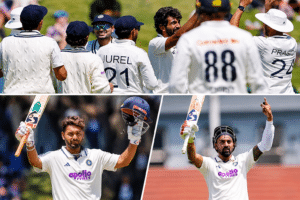
There is little doubt that KL Rahul and Shubman Gill produced outstanding batting performances. Rahul’s magnificent 136 and Gill’s fluent 98 were examples of composure, application and attacking intent. Their partnership-building and ability to negotiate challenging spells helped India take control of the contest. Devdutt Padikkal and Rishabh Pant also made valuable contributions, strengthening India’s position.
Yet, I cannot help feeling that Ravindra Jadeja should have been included in the playing XI. With several bowling options operating over the stumps, Jadeja’s accuracy, control and ability to extract assistance from the surface could have added another dimension to India’s attack. His experience as a left-arm spinner and his all-round capabilities might have helped India restrict New Zealand to a considerably smaller first-innings total. In conditions where patience and sustained pressure matter, leaving out a player of his calibre is a decision worth debating.
Prasidh Krishna’s performance is another area that merits attention. He has demonstrated his ability to bowl a testing three-quarter length, generate movement and trouble batters both ways. His previous performances, including a four-wicket haul, have shown that he possesses the tools to be effective. However, conceding 100 runs for just one wicket in New Zealand’s first innings was expensive.
I appreciate that he was introduced into the attack when the ball had lost much of its shine. Nevertheless, that was precisely when he needed to reassess his approach. Rather than persistently looking for wickets and offering scoring opportunities, he could have concentrated on a more defensive line and disciplined length, building pressure from one end. A fast bowler must understand that pace alone does not win battles. Krishna is no longer simply a tearaway fast bowler; he needs to use variations, movement and tactical awareness to become a more complete Test bowler.
I also find Mohammed Siraj’s omission from the playing XI surprising. He had recently demonstrated his value in India’s limited-overs campaign against New Zealand. More importantly, his ability to maintain a probing line and length, particularly bringing the ball back into right-handed batters after initially moving it away, has rescued India from difficult situations on several occasions. His experience and fighting spirit are valuable assets in overseas conditions. Whether the team management had workload or combination considerations is a different matter, but his absence certainly invites discussion.
Some selection decisions are difficult to reconcile with conventional cricketing logic. Of course, the team management has access to information about conditions, fitness and strategy that outsiders may not possess. But that should not prevent informed observers from questioning choices.
One particularly welcome development during this series is the presence of former India captain Ajinkya Rahane in the expert commentary panel. He brings a refreshing dimension to cricket analysis. Having experienced the pressures, disappointments and struggles of international cricket before earning his place among India’s respected players, Rahane speaks with humility and perspective. His explanations can be particularly valuable to aspiring cricketers trying to understand the finer aspects of the game.
Good cricket deserves appreciation, but constructive observations matter too. India have given their supporters plenty to cheer about in Wellington. With a strong batting platform and an opportunity to consolidate their advantage, the challenge now is to finish the job.
My best wishes to Team India for the remainder of the series. And a special word of appreciation to Ajinkya Rahane: thank you for bringing another thoughtful voice to the game.