My response to Orangenews9’s debate on ‘Who is to be blamed for judicial interventions?’

Ravinder Singh
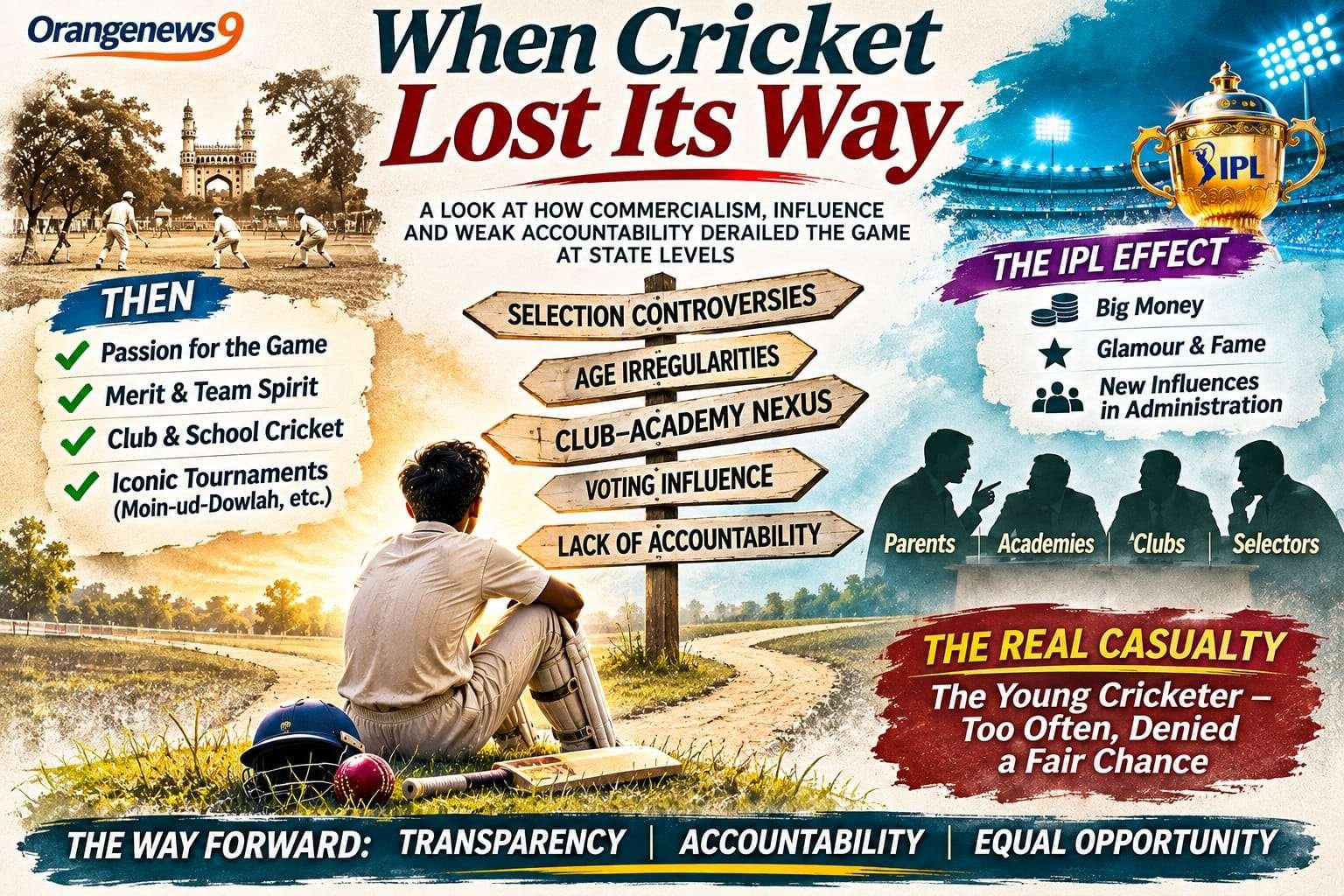
The decline in cricket administration, in my view, began gathering momentum with the advent of the IPL, which transformed what was once regarded as a gentleman’s game into a hugely commercialised enterprise. Cricket, which was traditionally driven by passion, sporting excellence and the pride of representing one’s team, increasingly became associated with money, glamour and influence. This transformation, though not entirely responsible, was one of the contributing factors behind the crisis confronting several state cricket associations today. The Hyderabad Cricket Association (HCA) is no exception.
The IPL, launched in 2008, revolutionised Indian cricket. It generated enormous revenues for the BCCI and opened up unprecedented financial opportunities for players. Cricket was no longer merely a sport offering recognition and achievement; it also promised wealth, celebrity status, glamour and fame, almost on the lines of the film industry.
Naturally, the excitement was immense. Youngsters began dreaming of becoming IPL stars, while parents increasingly viewed cricket as a possible route to financial success and recognition for their children. Coaches, academies and others associated with the game also found new opportunities.
However, this commercial transformation had an unintended consequence. The attraction of cricket administration began extending beyond those genuinely interested in developing the game. Money, influence and the opportunities associated with cricket administration attracted parents, politicians and other influential sections of society.
Also read: https://orangenews9.com/indian-cricket-is-winning-state-associations-must-catch-up/
Over the years, the consequences became increasingly visible. Controversies over team selections, age-related irregularities, administrative disputes and allegations of favouritism became recurring features in several associations.
With substantial funds flowing from the BCCI to affiliated state associations, the financial powers and responsibilities of office-bearers increased considerably. Unfortunately, the corresponding monitoring mechanisms and accountability standards did not appear to keep pace. The BCCI, in my view, should have established more effective checks and balances to ensure transparency in the utilisation of funds.
Money entered the system, but accountability did not grow at the same pace. This was one of the major administrative shortcomings of the post-IPL era.
THE CLUB-ACADEMY NEXUS
Around this period, cricket academies also began entering the club administration system in a more organised manner. Initially, some academies offered to manage clubs, and certain club secretaries accepted such arrangements, perhaps in good faith, to ensure the continuity of club activities and provide better coaching facilities to players.
However, over time, the relationship between clubs and academies became increasingly complicated.
Parents of aspiring cricketers also began taking an active interest in club administration. In certain instances, they reportedly acquired or assumed control of local clubs, potentially positioning themselves to gain a foothold in the administration of the association.
This assumes significance because, under the existing system, representatives of affiliated clubs exercise voting rights and play a crucial role in the election of office-bearers. Consequently, control over clubs can translate into considerable influence over the association itself.
Also read: https://orangenews9.com/introspection-not-blame/
What may have initially been intended to promote cricket and provide better opportunities to youngsters could, in some instances, have evolved into an exercise in securing administrative influence.
The possibility of a nexus involving parents, coaches, academies and individuals associated with the selection process is particularly disturbing. When these interests overlap, the danger of personal considerations taking precedence over sporting merit cannot be ignored.
Many players naturally prefer clubs backed by academies because they promise professional coaching, exposure and better opportunities to progress. There is nothing inherently wrong with such arrangements. However, concerns about financial inducements, preferential treatment and other benefits allegedly offered to clubs need to be examined impartially.
The desire of certain academies to secure promotion to higher divisions also raises questions. Performances in the higher divisions attract greater attention and can provide players with better visibility for selection to Hyderabad teams, Ranji Trophy competitions and, eventually, the IPL.
Meanwhile, the lower divisions, particularly B and C divisions, often appear neglected. Players performing consistently at these levels deserve equal consideration. Their performances should not be overlooked merely because they represent clubs competing in lower divisions. Merit must remain the only criterion for selection.
There have also been concerns about possible relationships between academies, selectors and umpires, particularly in matters concerning player selection and team promotions. Such concerns warrant independent scrutiny and transparent safeguards. They should neither be dismissed outright nor treated as established wrongdoing without evidence.
It would be unfair to paint every academy, parent or coach with the same brush. Many genuinely dedicated individuals have contributed enormously to nurturing young talent. Their efforts deserve appreciation. But the system must ensure that commercial interests, family connections and administrative influence do not compromise the fairness of the game.
Also read: https://orangenews9.com/beyond-groupism-and-greed/
THE REAL CASUALTY
The responsibility for correcting these shortcomings cannot rest with the BCCI alone. The leadership of individual state associations must also introspect and introduce transparent policies governing club affiliations, league promotions, selections and financial transactions.
The BCCI should strengthen its monitoring mechanisms, while state associations must ensure that their administrative structures remain accountable to the larger interests of cricket.
Ultimately, the frequent judicial interventions witnessed in cricket administration should be viewed in this broader context. Courts do not ordinarily enter the administration of sporting bodies without reasons. When internal mechanisms fail to resolve disputes, transparency is questioned and stakeholders lose confidence in the system, judicial intervention becomes almost inevitable.
The real casualty in this entire process is the ordinary cricketer — the youngster who simply wants an opportunity to play, perform and progress on merit.
Cricket must return to its fundamental principle: talent should determine a player’s future, not the financial strength of an academy, the influence of parents or the administrative connections of those around him. Unless cricket associations recognise this and put their houses in order, judicial interventions and administrative controversies will continue. (The author is Secretary of a club affiliated with the Hyderabad Cricket Association.)