
Dharam Guruva Reddy
As a keen follower of Orangenews9, which has consistently brought to light, with facts and documentation, what went wrong with the once-reputed Hyderabad Cricket Association (HCA), I was tempted to join its ongoing debate on who should be held responsible for the repeated judicial interventions in state cricket administration. Though I am fighting my own battle for the neglected cricketing talent of Telangana’s districts, I believe this debate deserves a wider perspective.
I wholeheartedly appreciate the observations of former Andhra Ranji cricketer Prasanna Kumar. His comparison with the Andhra Cricket Association (ACA) is particularly relevant. Ever since its formation, the ACA consciously invested in infrastructure and grassroots development, ensuring that geographical distance did not become a barrier to opportunity. Despite operating from Visakhapatnam, it reached out to aspiring cricketers across the length and breadth of Andhra Pradesh, from Srikakulam to Nellore and the central districts. The result was a more inclusive approach to identifying and nurturing talent.
Unfortunately, that vision was conspicuously missing in the HCA’s approach, despite its claim to being one of the oldest BCCI-affiliated associations in the country, dating back to the pre-Independence era. Its traditional outlook remained largely confined to Hyderabad’s urban cricketing circles, even after Telangana’s formation.
I say this from personal experience. Coming from an agricultural family in a rural background, pursuing cricket was never encouraged at home. Like several other talented youngsters, I could move to the city for higher education and pursue the game only because my family could afford it. Many others, equally talented but without such financial support, were simply left behind. I am certainly not alone in this experience.
I recall a conversation reportedly shared by a journalist with the present Telangana DGP, who was himself an accomplished cricketer but missed an opportunity to represent the state in the Ranji Trophy. The disappointment apparently prompted him to attempt the civil services examination, which he cleared in his first attempt. Yet, his passion for cricket remains undiminished, and he continues to play for Secunderabad Club and the Civil Services cricket team. Such examples underline how talent and passion can survive even when institutional opportunities fail.
My own frustration eventually took me to English league cricket for a couple of seasons. But that experience strengthened my resolve to fight for justice for rural Telangana’s aspiring cricketers. For this debate, however, I shall confine myself to the larger institutional issues rather than my personal or legal battles.
During my playing days, selections were considerably more transparent and merit-oriented. Much of the credit must go to administrators who understood the importance of professionalism and integrity. In particular, the era of P.R. Mansingh stands out. His contribution to Hyderabad cricket was immense, and his subsequent role as manager of India’s historic 1983 World Cup-winning team in England remains a matter of pride.
However, if my recollection is correct, the HCA’s subsequent decline gathered momentum when a players’ panel, comprising former state cricketers, entered the electoral arena following the mass removal of the Moin-ud-Dowlah Gold Cup state team. What began as an attempt to change the administration gradually became an unfortunate chapter of groupism and competing personal interests.
The decline that followed is now history. What is disappointing is that much of the mainstream media remained reluctant to examine the sequence of events. Orangenews9 deserves credit for taking up the subject and documenting the developments that contributed to the institution’s deterioration.
Corruption allegations surrounding stadium construction, nepotism, factionalism and the promotion of self-styled cricket administrators through private academies steadily damaged the credibility of the association. Even former HCA Secretary S. Venkateshwaran, in his contribution to this debate, acknowledged that groupism among former cricketers and compromises driven by personal agendas cannot be ignored. That admission from someone regarded as a credible administrator deserves serious consideration.
The neglect of district talent was equally damaging. I am aware of instances where a former Ranji cricketer and selector reportedly proposed the inclusion of a deserving district player, only to face resistance from fellow selectors and the management. Such incidents, which have also figured in Orangenews9’s reporting, raise uncomfortable but unavoidable questions about whether merit was ever the sole criterion.
Ultimately, persistent allegations of corruption, nepotism, factionalism and administrative manipulation invited judicial scrutiny. The HCA has become an unfortunate example of how an institution can repeatedly lose its autonomy when those entrusted with its administration fail to uphold accountability.
The Lodha Committee recommendations, particularly concerning conflict of interest, were intended to restore credibility and professional standards in cricket administration. The controversies surrounding the HCA’s Ranji selections and the involvement of prominent former players in administration demonstrate why these safeguards cannot be treated as mere formalities.
The present High Court-appointed Supervisory Management Committee (SMC) has an opportunity, and indeed a responsibility, to go beyond routine administration. It should examine the institutional weaknesses that enabled vested interests to flourish. The earlier Supreme Court-appointed SMC, headed by Justice L. Nageswara Rao, had also been entrusted with restoring order. The lessons from those interventions must not be lost.
The need of the hour is a thorough examination of the functioning of affiliated clubs, allegations of multiple club memberships and the possibility of individuals exercising disproportionate influence over the association through club-based voting arrangements. Allegations against influential former cricketers or administrators must be investigated impartially, and proven wrongdoing should invite appropriate action. No individual, however celebrated his cricketing credentials, should enjoy immunity from accountability.
Judicial intervention is a consequence, not the root cause. The real question is why those elected or appointed to administer cricket repeatedly fail to resolve their differences, uphold the rules and protect the interests of the game.
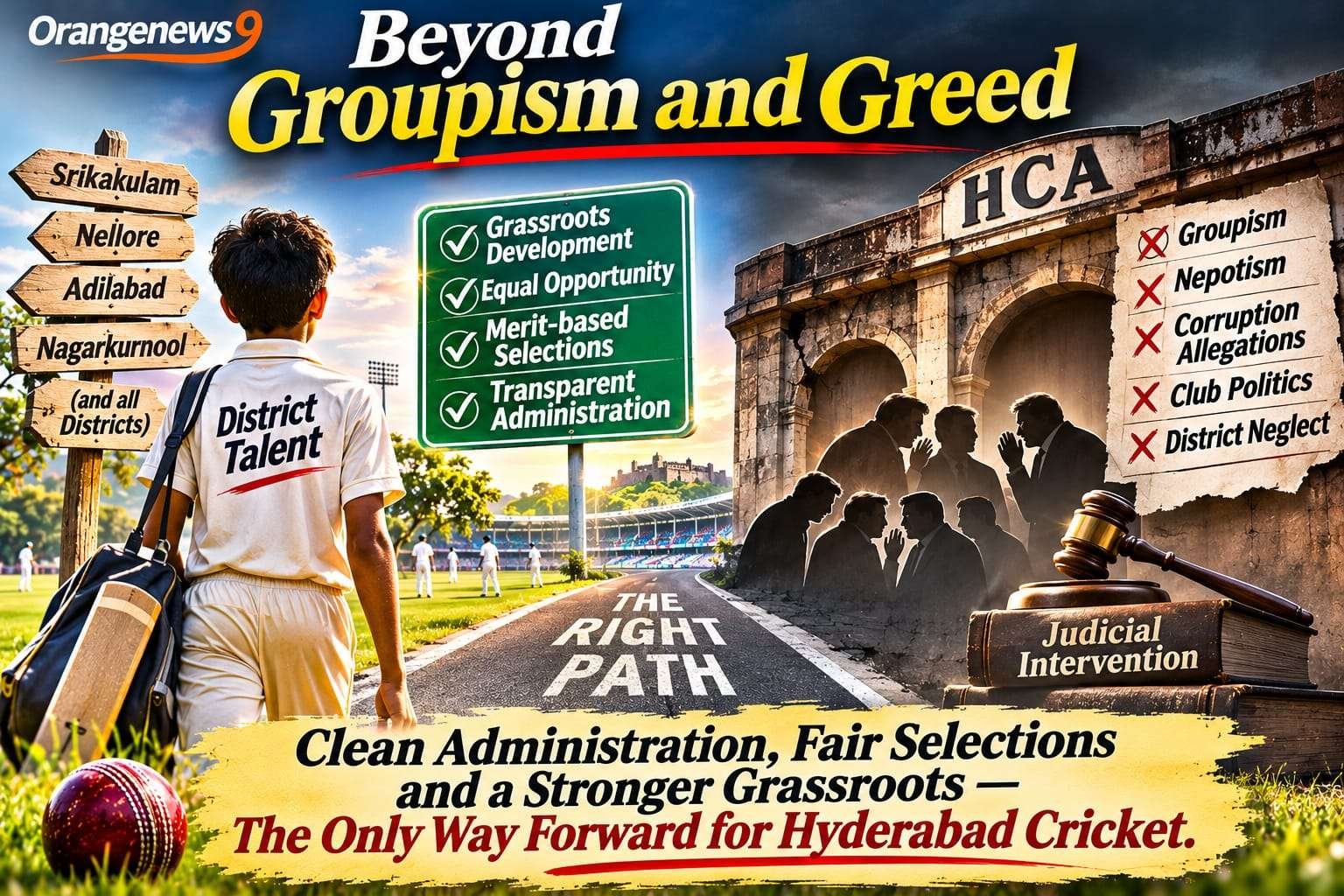
Hyderabad cricket does not need another change of faces or another round of factional consolidation. It needs institutional cleansing, transparent elections, merit-based selections and a genuine commitment to professionalism. Unless these fundamentals are restored, judicial interventions will continue, and the ultimate losers will remain the young cricketers whose dreams deserve better.
The game must come before individuals, and institutional integrity must prevail over personal interests. (The author is a former cricketer and General Secretary of the Telangana Cricket Association)