



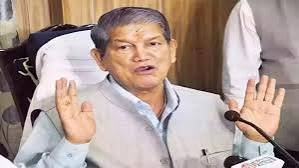
Former Uttarakhand Chief Minister Harish Rawat’s appeal to the Brahmin community to reconnect with the Congress ahead of the 2027 Assembly elections is not merely intriguing; it raises serious questions about political credibility. Before seeking the community’s support, shouldn’t Rawat introspect on what his party has actually done to safeguard Hindu interests and protect the dignity and concerns of Brahmins? Rawat must understand that political appeals cannot substitute for accountability. His party has, over decades, cultivated vote banks by selectively invoking caste identities, religious affiliations and social divisions. Now, when it finds its traditional political base weakening, it suddenly remembers the Brahmin community and its contribution to the Congress’s political tradition. Is this genuine outreach or simply another electoral calculation? The political significance of Brahmins in Uttarakhand cannot be underestimated. Although there is no official caste-wise electoral roll, various political estimates have placed their population at approximately 20–25 per cent. Together with Rajputs, who are estimated to constitute around 35 per cent, they form a formidable social constituency. Both communities have historically played a decisive role in the state’s political leadership. No wonder successive governments, whether Congress or BJP, have carefully maintained a balance between these two communities while distributing political responsibilities and election tickets. Yet, Rawat appears to believe that a sentimental appeal to Brahmin identity will automatically bring the community back into the Congress fold. Why should it? What compelling reason has he offered beyond recalling an old political association? The Congress cannot escape questions about its record on Kashmiri Pandits. The mass exodus, persecution and killings of Kashmiri Hindus during the insurgency remain one of independent Bharat’s darkest chapters. The community was left displaced, dispossessed and struggling for justice and rehabilitation. Did the Congress leadership demonstrate the political resolve and urgency that such a humanitarian tragedy demanded? Has it ever undertaken an unequivocal exercise of accountability for its failures during the years it was in power? Equally, invoking the Nehru family’s Kashmiri Brahmin ancestry does not automatically establish the Congress’s commitment to the wider Brahmin community. Ancestry is not a political certificate, nor can historical association be used as a substitute for present-day commitment. The question is what the party has done for the community beyond occasionally giving a few individuals positions of prominence.
The Congress’s political history also raises uncomfortable questions about its approach to social harmony. The Mandal-era politics under V.P. Singh, though rooted in the question of social justice and representation, significantly sharpened caste-based political mobilisation. Subsequently, several parties, including the Congress and even the BSP, have used caste identities as instruments of electoral arithmetic. Social justice is unquestionably necessary, but it should never become an excuse for perpetuating divisions among Hindus. There is another contradiction. The Congress frequently invokes constitutional values and social equality, yet its political messaging has often appeared selective when it comes to Hindu religious sentiments. Its handling of the Kashmiri Pandit tragedy, its positions on contentious religious issues and its tendency to treat Hindu concerns as politically negotiable have contributed to a growing trust deficit. Rawat, a proud Rajput leader, must therefore answer a straightforward question: what was his contribution, both as Chief Minister and as a senior Congress leader, towards protecting Hindu religious institutions, traditions and places of worship in Uttarakhand? A state celebrated as Dev Bhoomi deserves more than election-time references to Sanatana traditions. It is also important to recognise that the Brahmin community’s contribution to Bharat’s intellectual, educational, cultural and philosophical traditions cannot be reduced to electoral arithmetic. Its influence extends far beyond its numerical strength. However, no community, however intellectually accomplished or historically influential, should be treated as a captive vote bank. It deserves respect, representation and equal treatment, not occasional political flattery. The Congress’s attempt to portray itself as the natural political home of every community is increasingly difficult to reconcile with its record. Its selective positioning on caste and religious issues has alienated sections of the very society it now hopes to woo. If Rawat genuinely wants to rebuild confidence, he must first acknowledge the mistakes of his party, demonstrate an unambiguous commitment to Hindu interests and explain what concrete political assurances the Congress is prepared to offer. An apology for past failures and a credible course correction would be a more meaningful beginning than another electoral appeal. The people of Uttarakhand are not politically naïve. They can distinguish between genuine commitment and opportunistic mobilisation. With the BJP government under Narendra Modi and the state leadership seeking to strengthen Uttarakhand’s identity as Dev Bhoomi, the Congress cannot expect to reclaim lost ground merely by invoking Brahmin heritage or recalling its past associations. Harish Rawat should remember that communities may forgive political mistakes, but they are unlikely to forget repeated political exploitation. Before asking Brahmins to return to the Congress, he must explain why they should trust it again.

