Lakshmanrao Upayadhyayula
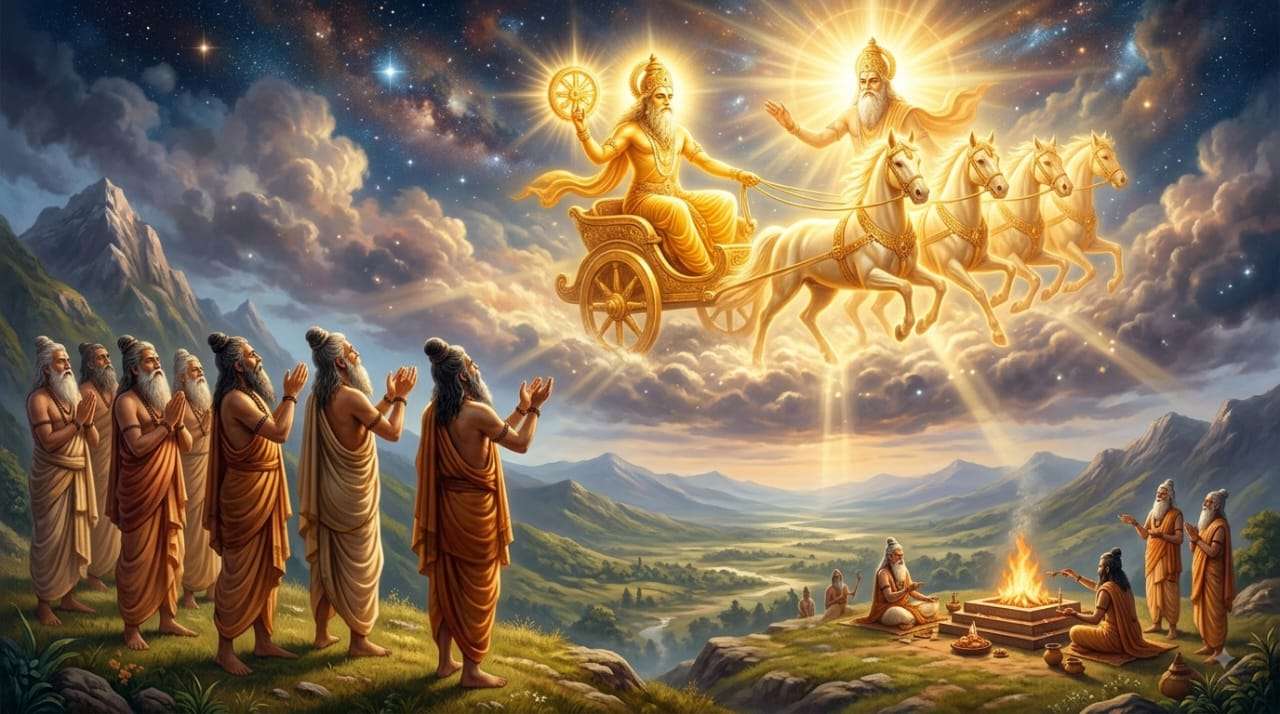
In the sacred corpus of the Rigveda, Sage Śaunaka Gṛtsamada composed a profound hymn to Savitṛ in the majestic cadence of Triṣṭubh metre. This celebrated hymn presents Savitṛ not merely as the visible Sun that illumines the heavens, but as the divine Impeller, the cosmic Messenger, and the unfailing Ordainer who sets all existence into harmonious motion. His daily rising is not an accidental event of nature, but a sacred vow faithfully performed for the welfare of all beings.
Savitṛ is the universal illuminator whose golden radiance dispels darkness from both the outer world and the inner consciousness of humanity. He awakens the sleeping earth, stirs creatures into activity, and inspires priests to commence their rituals. To the seers, he is the divine herald who brings the treasures of heaven to those who uphold sacrifice and righteousness. The patron who conducts the yajña under his auspicious influence partakes of prosperity, honour, and spiritual merit.
The hymn extols Savitṛ as the deity with long, outstretched arms—an image of his far-reaching power and benevolent grace. With these radiant hands he extends blessings across the universe, embracing all beings without distinction. His ascent fills the worlds with joy, and his light acts as an invisible force drawing life toward growth, action, and order. In a scientific sense, this imagery reflects the Sun’s energy, whose rays sustain ecosystems, regulate climate, and make all terrestrial life possible.
The sacred waters respond to Savitṛ’s command, and the winds move under his impulse. Vāyu spreads through the atmosphere, carrying life-breath to every creature. Savitṛ traverses the vast expanse of space with effortless majesty, symbolising the regular motion of celestial bodies. The Vedic seers observed that all natural phenomena—winds, waters, and the movement of planets—operate according to a hidden and intelligible order, which they revered as divine law.
When Savitṛ descends toward the western horizon, his rays gradually withdraw and activity subsides. Even the most restless traveller pauses, and ambitions are restrained. Those driven by conflict and desire lose momentum as the world turns toward repose. The setting Sun signifies the cyclical necessity of rest, reminding humanity that action must be balanced by stillness and renewal.
Night then unfolds like a skilled maiden weaving her dark garment across the sky. Thread by thread, she covers the worlds in mystery and silence. Work ceases, and even the wise who know the proper times for labour and contemplation suspend their activities. This poetic imagery reveals a subtle scientific understanding of diurnal cycles, through which living beings synchronise their behaviour with the alternation of light and darkness.
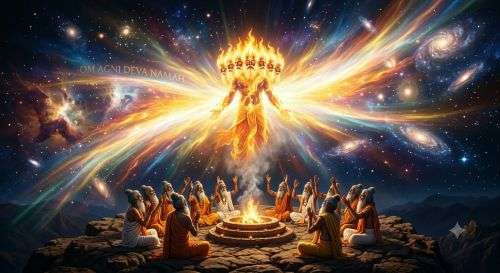
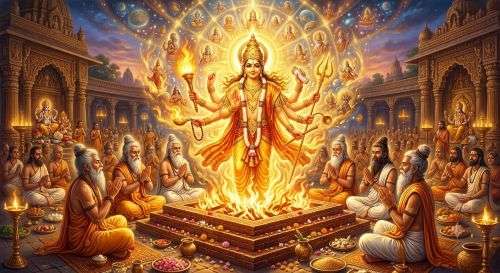
When Savitṛ rises once more, people leave their beds and resume their duties. In the house of the sacrificer, Agni blazes upon the altar, purifying offerings and carrying them to the gods. Uṣas, sanctified by the Sun’s first rays, enters the sacred precincts of the yajña, heralding a new day of worship and aspiration. Thus dawn, fire, and sunlight cooperate as visible expressions of divine harmony.
The hymn observes that when Savitṛ completes his daily course, kings return from battle, merchants cease their journeys, and labourers lay aside their tasks. All beings, regardless of rank or occupation, feel an inward call to return home. This universal impulse demonstrates the subtle authority of cosmic rhythms over human conduct, and the Vedic seers recognised in this order a profound unity between the laws of nature and the life of society.
Savitṛ is praised as the creator of reservoirs in the heavens and on earth. He makes water available in every direction and establishes trees and shrubs as refuges for birds. This insight reveals a remarkable ecological awareness: solar energy drives the water cycle, nourishes vegetation, and sustains habitats for countless creatures. The hymn thus celebrates the Sun as the architect of environmental balance and biological abundance.
No one can obstruct Savitṛ in the fulfilment of his duty. As he sets, Varuṇa grants restful abodes to all beings, ensuring security and comfort through the night. Birds return to their nests, animals to their caves, and humans to their dwellings. The Vedic sages saw in this universal return to shelter an expression of divine compassion and a testament to the orderly design of creation.
While performing his cosmic function, Savitṛ acts in perfect accord with the great deities—Indra, Varuṇa, Mitra, Aryaman, and the Rudras. His movement neither disrupts nor conflicts with theirs, for all divine powers cooperate within the same cosmic order. Even hostile forces are rendered powerless before the universal law he embodies.
The sages therefore invoke Savitṛ with reverence, chanting Vedic hymns and seeking his protection. They pray not only for themselves but for the families of the gods and for the welfare of all creation. Savitṛ is worthy of praise, meditation, and continual remembrance, for he governs countless processes visible and invisible, sustaining the worlds with effortless precision.
The worshippers ask Savitṛ to bestow wealth, cattle, and enduring prosperity. In the Vedic vision, cattle symbolise nourishment, strength, and abundance, while wealth signifies both material resources and spiritual virtues. By maintaining daily rituals and righteous conduct, the devotees seek to become beloved of Savitṛ and aligned with his beneficent will.
Finally, the hymn celebrates the unique riches granted by Savitṛ—blessings so captivating that they seem to descend from both heaven and earth. The seers pray that these auspicious gifts may enrich their lineage and future generations. Their repeated invocation expresses not greed, but a desire that divine abundance may be shared by all who honour truth, sacrifice, and cosmic order.
Thus the hymn of Sage Śaunaka Gṛtsamada to Savitṛ stands as one of the most luminous testimonies of Vedic wisdom. It unites poetic beauty, spiritual insight, ecological sensitivity, and scientific observation into a single vision of reality. Savitṛ appears as the radiant source of life, the regulator of time, the sustainer of natural law, and the divine inspirer who awakens both the universe and the human soul to purposeful existence.