



As a teacher who has spent considerable time nurturing and grooming young minds, I welcomed the Orangenews9 Editor’s invitation to share my experience of how Bharat has travelled over the last eight decades, particularly in the field of education. Education has always been close to my heart, and my interaction with successive generations of students has taught me as much as I may have taught them.
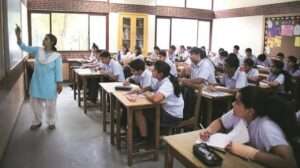
One thing I can say with confidence is that today’s students are remarkably different. They are exposed to a world far beyond the classroom. The internet, technology and global connectivity have given them an extraordinary awareness of what is happening around them. Their grasping power is quick, their curiosity is high and their willingness to learn is impressive. In many ways, the teacher associated with a undergraduate institution today is also a learner.
Yet, while celebrating the enormous progress we have made, we must honestly examine where we have fallen short.
For generations, education has been regarded as the principal instrument of social mobility and human dignity. The timeless Telugu saying, “Koti vidyalu kooti korake”—all learning ultimately helps one earn a livelihood—captures an important truth. Education provides not merely employment but also confidence, dignity, independence and the ability to participate meaningfully in society. Knowledge, after all, is one form of wealth that does not diminish when shared.
India has a long and fascinating tradition of learning. Ancient Indian education was not confined to formal classrooms. Learning took place in gurukuls, temples, village schools and through oral traditions. Children learned through observation, practice and interaction with teachers. Historical and archaeological evidence from different parts of the country also reminds us that writing and learning have deep roots in our civilisation.
Accounts of traditional village education in India even attracted the attention of British administrators during the colonial period. Indigenous systems, particularly elementary education in villages, were widespread in many parts of the country before the colonial education system gradually reshaped them.
The philosophy of education itself has evolved across civilisations. Plato spoke of education as essential to building a balanced individual; later thinkers such as Friedrich Froebel emphasised learning through play and experience, giving birth to the kindergarten concept. These ideas, in different forms, underline one fundamental principle: education must develop the whole person, not merely fill the mind with information.
That principle remains relevant today.
The journey of education in independent India has been extraordinary. In the 1950s and 1960s, even an SSLC qualification could secure a respectable white-collar job. By the 1970s, a bachelor’s degree had become the new benchmark. But expansion in education also brought a new problem into sharp focus—educated unemployment. Young graduates began appearing with certificates in their hands but without the skills that the emerging economy demanded.
The 1980s brought another significant transformation. The Middle East, particularly countries such as Dubai and Kuwait, became destinations for Indian workers, both skilled and semi-skilled, as well as professionals. By the mid-1980s, the aspiration for greener pastures expanded to the United Kingdom, Canada and the United States.
The 1990s witnessed rapid expansion of Indian universities and higher education institutions, even as opportunities abroad increased. This contributed to the much-discussed phenomenon of brain drain. By the turn of the millennium, foreign universities had become powerful magnets for Indian students seeking specialised education, international exposure and better employment prospects. Part-time employment opportunities abroad added another attraction.
That trend continues even today.
The question we must ask, however, is not whether Indian students should go abroad. There is nothing wrong with seeking global education and experience. The real question is: why should so many talented young Indians feel that their best opportunities lie elsewhere when India itself is transforming into one of the world’s major economies?
The answer takes us to the heart of our present educational dilemma.
India has expanded enormously in terms of universities, colleges, professional institutions and educational opportunities. Technology has transformed teaching and learning. Digital classrooms, online resources, artificial intelligence and global knowledge networks have placed an unprecedented amount of information within the reach of students.
But information is not the same as education—and education is not the same as employability.
Our biggest challenge today is the widening gap between what students learn and what the economy needs. Industries complain about skill shortages even while millions of young people seek employment. This paradox demands urgent attention.
We therefore need an education ecosystem that combines academic knowledge with practical and vocational skills. Skill development cannot remain an afterthought. Every student need not become a conventional graduate; every student must, however, become capable of earning a dignified livelihood.
This is where educators, educational psychologists, curriculum designers and policymakers have an enormous responsibility. We need to revisit some of the best teaching practices that placed the teacher at the centre of intellectual and moral development, without rejecting the advantages of modern technology.
Technology should be the handmaid of education, not its master.
No amount of digitisation can replace an inspiring teacher. A machine can provide information; a passionate teacher can ignite curiosity, discipline, values and imagination. The spirit of a dedicated teacher remains irreplaceable.
What Bharat needs is therefore neither a blind return to the past nor an unquestioning embrace of everything modern. We need an eclectic educational model—one that combines our civilisational values and intellectual traditions with scientific temper, technology, critical thinking, creativity and job-oriented skills.
The demographic strength of Bharat can become its greatest advantage if we educate and skill our young population properly. But if degrees continue to multiply without corresponding employable skills, the same demographic dividend can become a serious challenge.
After eight decades of Independence, we have travelled a long distance—from village schools under trees to digital classrooms connected to the world. The achievement is enormous. But the journey is far from complete.
The education of tomorrow must not merely prepare young people to pass examinations. It must prepare them to face life, create opportunities, solve problems and contribute to society.
That, in my view, is the real meaning of sound education. And that is the next great educational journey Bharat must undertake.


‘Educative’ article. Very well thought-out. Easy to read & understand. Definitely our education system has evolved & needs to be fortified.