Girija Shankar Dixit
Can there be a better illustration of the tolerance and magnanimity of the age-old Sanatan Dharma of Bharat Varsh than the manner in which Hindus have embraced a film based on the Ramayana, despite reservations about some of the personalities associated with it? It is perhaps a lesson in religious tolerance that those who lecture Hindus on secularism could do well to learn.
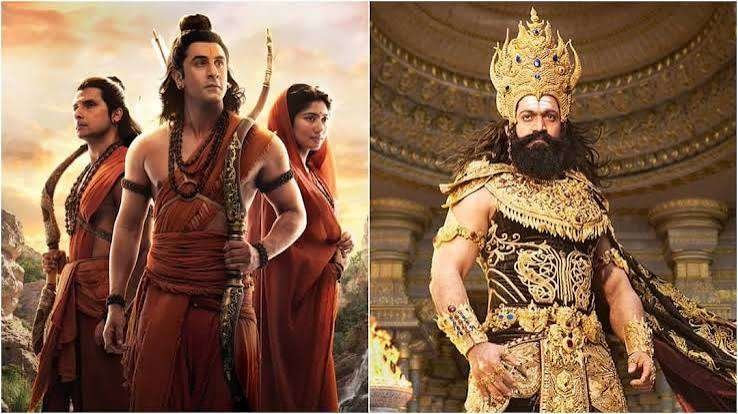
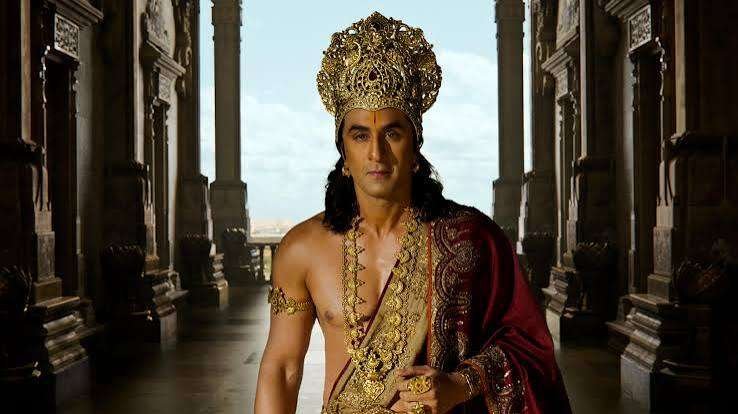
Consider the principal cast and those associated with the new Ramayana. A self-confessed beef eater playing Lord Shri Ram; Sai Pallavi, who reportedly described Indian soldiers as terrorists in a conversation with Pakistanis, portraying Maa Sita; Chinmayi Sripaada, who had reportedly made a disparaging remark about Lord Rama as a husband, associated with the film’s music; and Oscar-winning composer A.R. Rahman, who spoke about not getting opportunities and attributed it to his identity as a ‘Saab’ (Muslim). What an interesting assembly of personalities for a film celebrating one of Hinduism’s most revered epics!
One wonders whether the casting department deliberately set out to test the patience of Sanatanis or simply assumed that their devotion comes without conditions. Apparently, it does!
And the irony does not end there. The film’s director, Nitesh Tiwari, is also associated with the much-publicised success story of Dangal, whose phenomenal box-office collections in China have often been the subject of debate. Now, with reports suggesting that the Ramayana project involves an investment of around Rs 4,000 crore, one cannot help wondering whether the publicity machinery is preparing another epic – this time, in the art of box-office arithmetic!
If the reported figures are accurate, the producers owe audiences more than spectacular visuals. They owe them transparency. After all, a film’s budget and collections should not require as much faith as the epic itself.
What is even more intriguing is the apparent silence of sections of the self-proclaimed liberal intelligentsia, Leftists and Congress sympathisers. Where have their lectures on religious sensitivities and freedom of expression disappeared? Would they have maintained the same silence had similar remarks been made about figures revered by other faiths? Apparently, secularism has its own selective casting!
The larger question is whether those who have, at various times, made controversial observations about Hindu beliefs and revered personalities should be beyond criticism merely because they are now associated with a commercially successful production. Surely, artistic freedom does not mean freedom from scrutiny. Nor does a big-budget production automatically acquire immunity from questions about its ideological consistency.
There is another disturbing contradiction. While some filmmakers have previously been accused of portraying characters such as Ravana, Karna and Duryodhana through revisionist lenses, and presenting Lord Rama and Lord Krishna in ways that critics consider inconsistent with the epics, audiences are now being asked to accept every cinematic interpretation in the name of creative liberty. Why should Hindus be expected to suspend their critical faculties whenever their own religious heritage is involved?
Of course, cinema should be watched as cinema. But that convenient argument cannot become a universal shield against criticism. If audiences are entitled to applaud a film, they are equally entitled to question its casting, content, messaging and commercial claims. Appreciation need not mean surrendering one’s judgment.
The most remarkable aspect is that ordinary Hindu families are flocking to theatres, taking their children along and celebrating the film because they see it as an opportunity to reconnect with the Ramayana. They see the visuals, the scale, the performances and the presence of stars such as Yash. Their enthusiasm is understandable. But should the emotional appeal of Lord Rama’s story also prevent them from asking legitimate questions about those associated with its making?
Perhaps this is the greatest strength of Sanatan Dharma: it has room for disagreement, debate and even criticism without demanding unquestioning conformity. Unfortunately, that generosity is sometimes mistaken for weakness.
Those who believe that Hindus can be taken for granted should remember that tolerance is not the same as helplessness, and devotion is not an invitation to ridicule. Commercial success cannot be the ultimate certificate of cultural sensitivity.
In the end, one hopes that the filmmakers have done justice to the extraordinary legacy of the Ramayana. The epic deserves far more than star power, spectacular graphics and extravagant publicity. It deserves reverence, integrity and an understanding of the values it represents.
Until then, perhaps the most appropriate prayer is that Lord Shri Rama himself protects His devotees from those who seem to have discovered that there is excellent money to be made in portraying His story!