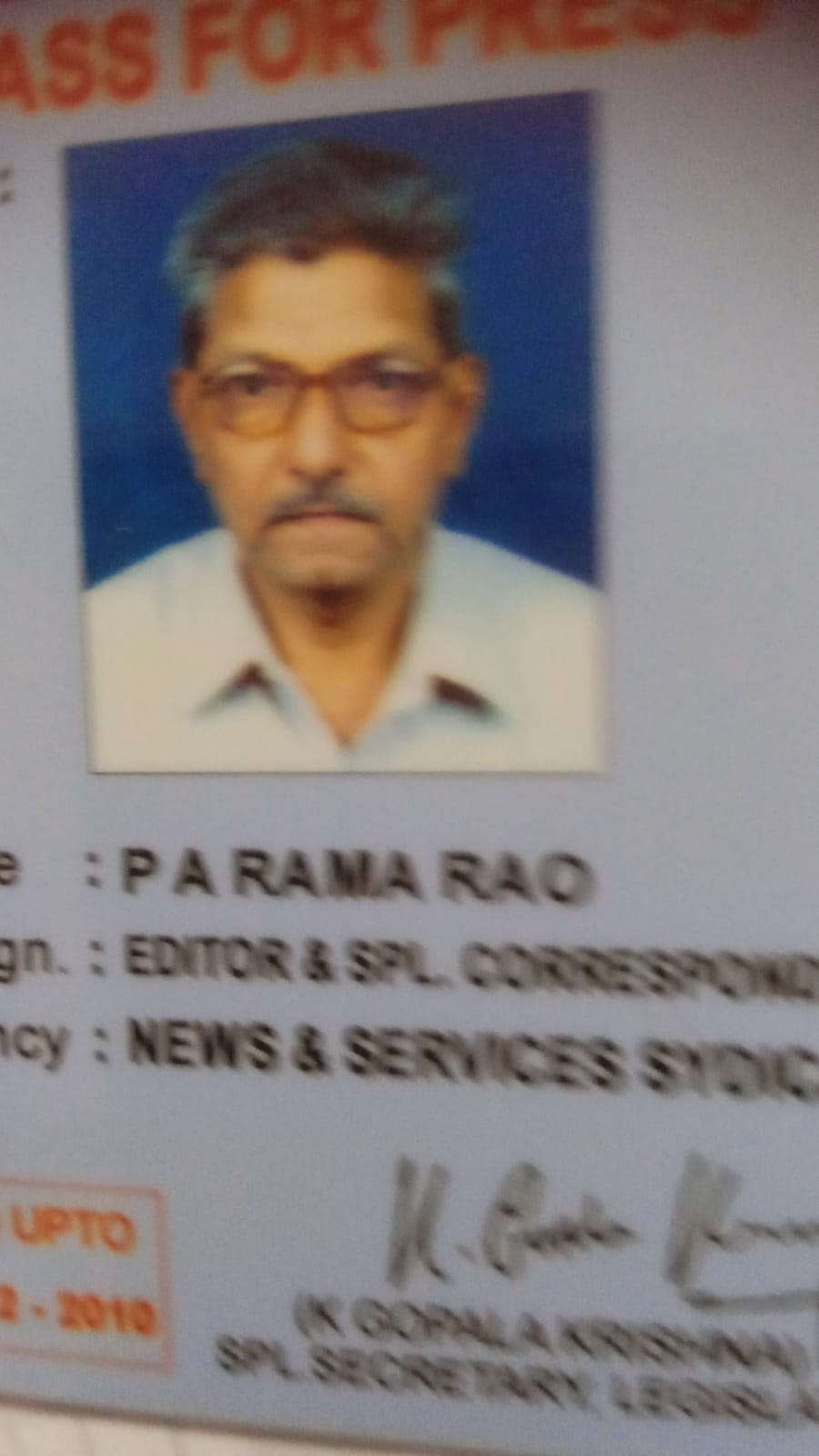
P.A. Rama Rao
My 32-year association with the Deccan Chronicle group of newspapers was, by and large, an eventful and rewarding journey, offering several memorable experiences, professional opportunities and an exciting front-row seat to history. Like any long innings, it also had its share of unpleasant and disturbing incidents. Nevertheless, journalism gave me an opportunity to witness the political, social and cultural changes that shaped our times.
I joined the Deccan Chronicle group in January 1969. Almost simultaneously, Hyderabad and the surrounding Telangana region were witnessing one of the most turbulent political movements in their history — the separate Telangana agitation.
What began as a regional political demand soon gathered tremendous momentum, spreading across towns and villages before engulfing the twin cities of Hyderabad and Secunderabad. By June 1969, the agitation had reached a volatile stage, with political organisations, student groups and separatist bodies intensifying their protests.
Bandhs, demonstrations, processions and road blockades became commonplace. Normal life was severely disrupted, posing an additional challenge for newspaper organisations: how to keep the news flowing when the city itself had virtually come to a standstill.
One such extraordinary day remains firmly etched in my memory.
The 15-kilometre ordeal
On June 3, 1969, the Telangana Praja Samithi (TPS) and other separatist organisations called for a bandh. The response was widespread. Shops and commercial establishments remained closed, roads wore a deserted look and public transport services were withdrawn to prevent damage to vehicles and public property.
Even bicycles and other two-wheelers were not spared by agitators. Movement across the city was severely restricted, making it difficult for ordinary residents to venture out.
For today’s youngsters, accustomed to mobile phones, instant communication, online news and readily available transport, it may be difficult to imagine the challenges faced by journalists in those days.
There were no mobile phones to relay developments from the field, no digital platforms to transmit reports and certainly no convenient alternatives to reach the newsroom. A newspaper had to come out, whatever the circumstances, and a reporter was expected to be where the news was happening.
Being relatively new to the profession, I was keen to reach the office and fulfil my responsibility despite the bandh. With buses, autos and local trains withdrawn from service, I had little choice but to depend on my own legs.
I began my journey from Malakpet Municipal Colony and walked towards Gowliguda Bus Depot, hoping to find some transport or an alternative route. There was none. The bandh had effectively paralysed the city’s transport network.
I retraced my steps towards Malakpet Railway Station and eventually decided to use the railway track as a route towards Secunderabad. It was hardly a conventional commute, but under the circumstances, it appeared to be the only practical option.
Thus began an exhausting walk of nearly 15 kilometres through a city that had virtually shut down. There were no buses to board, autos to hire or local trains to depend on. Walking was the only way forward.
Determined to reach the newsroom, I kept going until I finally made it to the Deccan Chronicle office in Secunderabad. For a young journalist who had entered the profession only a few months earlier, it was certainly an unusual introduction to the demands of newspaper work!
A report that survived 54 years
But the story does not end with the 15-kilometre walk.
After reaching the office, I filed a report on the bandh and the extraordinary situation prevailing in the twin cities. That report, almost forgotten over the years, has now resurfaced as a fascinating reminder of those turbulent days and my early journalistic career.
In those days, newspaper reports were typed on typewriters, generally with one original and two carbon copies. These were distributed among the Deccan Chronicle, Andhra Bhoomi and the personal files maintained by the concerned reporter.
There were no computers, email accounts or digital archives to preserve and retrieve old reports. The paper copies were often the only records available to us.
Fortunately, one copy of my report has survived.
What makes its discovery particularly fascinating is that the original white paper has changed colour with age. Its appearance has faded, bearing the unmistakable marks of more than five decades of preservation. Yet, remarkably, the typed matter remains almost intact.
Looking at it today takes me straight back to June 3, 1969 — a day when Hyderabad was virtually at a standstill and a young reporter walked nearly 15 kilometres simply to reach his workplace and file a story.
The report is not merely a record of a bandh. It is also a small piece of the city’s history, reflecting the intensity of the separate Telangana agitation and the circumstances under which newspapers continued to function.
For those of us who worked in newspaper offices during that era, journalism demanded commitment, physical effort and personal initiative. Deadlines did not disappear because the city was observing a bandh, nor could a newspaper afford to remain silent because its reporters found it difficult to reach the office.
Looking back, that long walk remains one of the most unusual experiences of my early journalistic career. At the time, it was simply something that had to be done. Today, it has become a memory worth preserving and sharing.
I am reproducing below the report I filed after reaching the office that day. Its language and presentation may belong to another era, but the facts and atmosphere captured in its opening paragraphs speak for themselves.
For elderly readers who may find it difficult to go through the entire report, the first eight paragraphs should be sufficient to understand the scale of the bandh and the disruption it caused in the twin cities.
Fifty-four years have passed. The paper has yellowed, but the memories remain fresh. And that 15-kilometre walk to the newsroom remains a journey I am unlikely to forget.