P Nagarjuna Rao
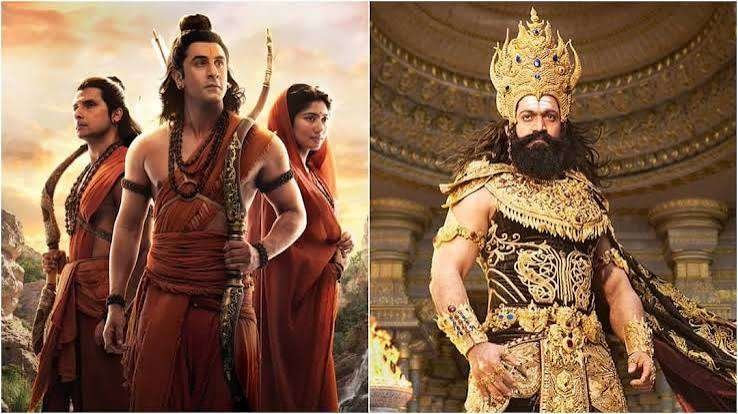
I have decided not to watch this abomination directed by ‘Nutcase’ Tiwari, with Ranbir Kapoor, Sai Pallavi and Yash in key roles. The casting alone is enough to make me stay away.
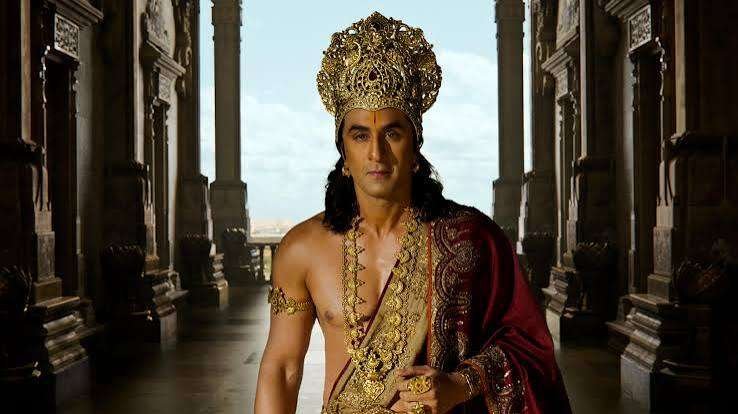
For starters, asking Ranbir Kapoor – with those horse-like nostrils – to portray Sri Ram requires an imagination considerably more adventurous than mine.
And Sai Pallavi as Sita? Her flat-tyre-like nose and toad-like wide mouth hardly help suspend disbelief.
If this is what the filmmakers believe Rama and Sita should look like, perhaps they should have spent less time on CGI and more time looking at Raja Ravi Varma’s paintings, studying the Ramayana and understanding the visual imagery that generations of Indians have associated with these revered characters.
Before putting pen to storyboard, director Nitesh Tiwari should perhaps have read Valmiki’s Ramayana and Tulsidas’ Ramcharitmanas.
Better still, he could have studied the work of Raja Ravi Varma and watched a few films featuring N.T. Rama Rao as Bhagwan Ram.
NTR understood that portraying Rama was not merely another acting assignment. There was a certain dignity, grace and majesty that the role demanded.
And this is not the first time I have decided to give a Ramayana-based film a miss.
Adipurush deja vu
Another film I refused to watch even on OTT was Om Raut’s Adipurush, the 2023 mythological action film starring Prabhas as Lord Ram. Horror of horrors was the casting of Kriti Sanon as Sita.
Perhaps I might have given the film a chance had the makers not assaulted television viewers with a succession of trailers.
The grotesque-looking characters and anachronistic CGI effects were enough for people like me to decide that the cinema hall was one place we definitely did not want to be. So here we are again.
Qawwali in Treta Yuga?
And then comes another little cinematic surprise. Imagine a qawwali in a film about the Ramayana. AR Rahman, really? A Sufi-inspired qawwali in Treta Yuga?
One can only wonder what exactly was going through the minds of the people responsible for this creative masterstroke. If the intention is to give the Ramayana a contemporary musical makeover, perhaps the next instalment can have Rama arriving in Ayodhya in a Lamborghini.
And spare a thought for the legendary Hans Zimmer, who reportedly collaborated on the project. He must be wondering whether he signed up to compose for the cinematic retelling of an ancient Indian epic or wandered into a musical experiment where Treta Yuga meets 21st-century Bollywood.
There is nothing inherently wrong with experimentation. Cinema is, after all, an art form. But experimentation becomes cultural vandalism when filmmakers take characters and narratives revered by millions, detach them from their textual and civilisational context and then expect audiences to applaud the ‘creative freedom’.
Read the original
What is particularly revealing, if reports about the disclaimer are accurate, is the statement that the filmmakers do not establish or claim that the Ramayana actually happened or that its characters were historical figures.
That may be legally prudent. But it also raises a rather obvious question: if you are making a Rs 4,000 crore spectacle based on the Ramayana while simultaneously distancing yourself from the epic’s historical or sacred claims, exactly what are you asking the audience to believe?
According to one review, the story has been twisted and reinterpreted with several incongruities and errors, taking it far away from the original text. If that assessment is accurate, the issue goes well beyond whether one likes Ranbir Kapoor, Sai Pallavi or Yash in these roles.
The Ramayana is not some obscure piece of folklore waiting for a filmmaker to discover it. It is one of the foundational texts of Indian civilisation, interpreted, retold, painted, performed and cherished across centuries.
Nobody is asking filmmakers not to be imaginative. But before reinventing Rama, Sita and the Ramayana with Rs 4,000 crore worth of technology, perhaps the first investment should be in something much cheaper: reading the original.
Because when a filmmaker forgets the epic while trying to make a spectacle out of it, all that remains is an expensive film wearing the costume of the Ramayana.