
Cricket in India has travelled a remarkable journey—from an era when representing one’s state or country was a matter of passion and pride, with little financial reward, to a modern sporting industry in which talented players can earn crores in a single season. For today’s young cricketers, accustomed to the glamour of the Indian Premier League (IPL), it is worth looking back at how this transformation unfolded and remembering those who laid its foundations.
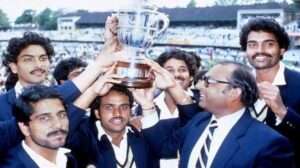
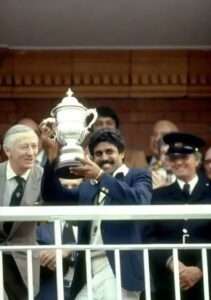
The turning point was undoubtedly India’s historic triumph in the 1983 Prudential World Cup under Kapil Dev. Few expected India to overcome the mighty West Indies, led by Clive Lloyd, who had won the first two editions in 1975 and 1979. Yet, the tournament produced a defining moment even before the final.
Against Zimbabwe, India were tottering at 17 for five when Kapil Dev produced an extraordinary unbeaten 175. His innings rescued the team from a seemingly hopeless position and demonstrated the importance of courage, leadership and self-belief. India went on to defeat the two-time champions in the final at Lord’s, announcing themselves as a force in world cricket.
But there was an irony to this triumph. While the nation celebrated its champions, the Board of Control for Cricket in India (BCCI) was not the financial powerhouse it is today. Rewarding the players appropriately was a challenge. Legendary singer Lata Mangeshkar stepped in with a benefit concert in Delhi, performed without charging a fee, helping raise funds to reward the World Cup-winning team. It remains a telling reminder of how modest the financial circumstances of Indian cricket once were.

The foundations of a more financially sustainable cricket administration had been laid over the preceding decades. M. A. Chidambaram, a prominent businessman and cricket administrator from Madras, believed that the BCCI needed to become financially self-reliant. Later, administrators such as Jagmohan Dalmiya brought commercial vision and organisational ambition to the game. N. K. P. Salve, who headed the BCCI during the 1983 triumph, helped advance India’s standing in international cricket.
The next milestone came in 1987, when India and Pakistan jointly hosted the World Cup—the first edition staged outside England. This was more than a successful tournament. It demonstrated that the subcontinent could organise cricket’s premier global event and laid the groundwork for India’s growing influence in the sport. Television, sponsorships, commercial partnerships and the expanding popularity of the game gradually changed its economic landscape.
For those of us who played domestic cricket, however, the contrast between the past and present remains striking. I recall Hyderabad cricket administrator P. R. Mansingh, who ensured that Ranji Trophy players from Hyderabad received dignified treatment even when remuneration was meagre. Players travelled first-class, stayed in good hotels and were provided proper food during tours. The match remuneration, as I remember it, could be as little as ₹50. Other state teams often travelled in third-class accommodation, sometimes under far less comfortable conditions.
How Mansingh managed to provide such facilities within limited resources remains remarkable. His contribution deserves a place in the history of Indian cricket administration. Financial prosperity may attract attention, but the commitment of administrators who cared for players when money was scarce should never be forgotten.
The arrival of the IPL in 2008, following the initiative led by Lalit Modi and backed by the BCCI, transformed the economics of the game. Bringing Indian and overseas cricketers together in a high-profile T20 competition created new opportunities for emerging talent, expanded commercial revenues and gave domestic players unprecedented exposure. A cricketer who might once have depended largely on modest match fees could now build a substantial career through franchise contracts, endorsements and performance-based rewards.
The benefits have extended beyond the biggest stars. The IPL has helped young Indian players learn from international professionals, experience pressure in front of large audiences and demonstrate their abilities to selectors. At the same time, the rapid commercialisation of cricket makes it important to preserve the values that sustained the game before the money arrived.
Today’s cricketers are fortunate to have opportunities that earlier generations could scarcely imagine. But prosperity should also bring perspective. The success of Indian cricket was not built by television contracts or franchise auctions alone. It rests on generations of players, administrators, coaches and supporters who invested their time, effort and faith in the game.
For younger generations, the real lesson is simple: money and glory may follow success, but passion, discipline, teamwork and respect for the game must come first. Indian cricket’s journey from scarcity to extraordinary wealth is a story worth celebrating—and its pioneers deserve to be remembered.