



Bharat-US relations have rarely been short of contradictions. The two democracies describe each other as important strategic partners, share concerns over the changing global order and recognise the enormous potential for cooperation in trade, energy and security. Yet, just when diplomatic engagement appears to be gathering momentum, a careless remark or an unnecessarily provocative statement threatens to cloud the relationship. The latest controversy surrounding US Secretary of State Marco Rubio’s October 2026 visit is a case in point. The immediate trigger was a remark by US Ambassador to Bharat Sergio Gor at the Bloomberg New Economy Forum. According to reports, Gor said Rubio would skip New Delhi to visit Mumbai and Jamnagar and that Washington “expected” External Affairs Minister S. Jaishankar to travel to Mumbai to meet him. The word expected proved contentious. For a country that values its strategic autonomy and insists on conducting diplomacy as an equal partner, the choice of language by a senior American representative was unfortunate. There is a difference between expressing a preference for a meeting and conveying the impression that a foreign government expects another country’s senior-most diplomat to comply with its wishes. The Ministry of External Affairs (MEA) was justified in objecting to the formulation. Diplomacy is as much about substance as it is about tone, and public statements by ambassadors carry implications beyond their immediate context. At a time when both countries have much to gain from closer cooperation, such avoidable misunderstandings serve little purpose. However, the controversy also exposed the tendency of domestic political opponents to turn every diplomatic disagreement into an indictment of the government. Congress leaders, including Rahul Gandhi and Pawan Khera, seized upon the remark to accuse the Modi government of allowing a foreign official to effectively “summon” Bharat’s top diplomat, portraying it as a surrender of foreign policy autonomy. That interpretation appears excessive. The MEA promptly rejected the suggestion that Jaishankar was being summoned, with spokesperson Randhir Jaiswal pointing out that high-level bilateral meetings outside New Delhi have been a regular feature of diplomatic engagement for more than a decade. Indeed, the venue of a meeting, by itself, does not establish whether a country has compromised its sovereignty. Ministers and visiting dignitaries routinely meet in different cities, depending on schedules, commercial engagements and the purpose of a visit. What matters is whether the meeting is mutually agreed upon and whether the interests of both countries are respected.
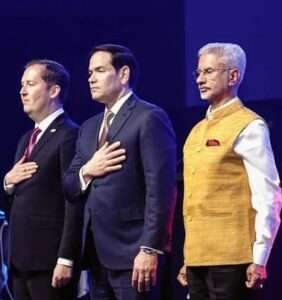
The Opposition is entitled to question the government’s handling of foreign relations. But criticism must be grounded in facts rather than political opportunism. An ambassador’s choice of words may merit a diplomatic objection without automatically implying that Bharat has surrendered its independence. There is also a larger context that deserves attention. Rubio’s visit comes amid negotiations involving trade, energy and economic cooperation. Before his departure, the US Secretary of State described Bharat as an “important ally and partner”, signalling Washington’s recognition of the relationship’s strategic significance. Equally important is the Trump administration’s approach to India’s energy requirements. President Donald Trump’s 60-day pause on proposed Russia-related energy tariffs, alongside the reported waiver of certain sanctions linked to Russian fuel sales, suggests an acknowledgement that India’s energy choices cannot be viewed in isolation from its domestic requirements. Washington has itself recognised the difficulty of shifting energy supplies overnight. For Bharat, energy security is not a bargaining chip to be surrendered to satisfy another country’s geopolitical preferences. Its decisions must reflect affordability, availability and the welfare of its population. At the same time, sustained engagement with Washington remains essential to advancing trade, investment, technology and wider strategic cooperation. This is where both governments must demonstrate maturity. Washington should recognise that partnership with Bharat requires respect for its independent decision-making, not language that can be interpreted as prescriptive. New Delhi, for its part, must remain firm on principles without allowing every verbal misstep to overshadow the larger strategic relationship. The controversy should not be exaggerated into a diplomatic crisis, nor should it be dismissed as inconsequential. It is a reminder that relationships between major powers require careful communication, mutual respect and an appreciation of each other’s sensitivities. Bharat and the United States have too much at stake to let occasional diplomatic slips derail their engagement. Strategic partnerships are tested not by the absence of disagreements, but by the ability to resolve them without compromising mutual respect. The message is simple: Washington must learn that Bharat cannot be taken for granted, while New Delhi must ensure that political point-scoring at home does not obscure the larger national interest. In a relationship that continues to blow hot and cold, both sides would do well to keep their diplomacy measured and their strategic priorities firmly in view.

