



We’re aware of the importance of keeping our homes clean, but as soon as we step outside, our sense of responsibility vanishes. Many people have developed the habit of throwing household items on the roadside, in drains, in vacant lots, or in public places. Plastic bags, polythene, vegetable peels, fruit scraps, and leftover food are routinely thrown out in the open. But this seemingly simple act of carelessness is gradually becoming a serious threat to people’s health and the environment.
Throwing garbage in the open causes it to rot and smell. The problem isn’t just an “inconvenience.” Accumulation of garbage creates filth and attracts flies, mosquitoes, stray animals, and other pests. Plastic and other waste can clog drains, leading to waterlogging during the rainy season. Lack of drainage creates breeding grounds for mosquitoes and increases the risk of disease. Negligence can lead to health problems for the entire neighborhood.
The worst part is that people in society have come to take this for granted. We see piles of garbage on the roadside, cover our noses for a moment, and move on. Very few people think about where this garbage comes from. In reality, behind every waste is someone’s convenience and negligence. If someone never throws away garbage in their home, why doesn’t they throw it in the dustbin outside? Why do the streets become garbage dumps when we’re away from home? This is more than just cleanliness—it’s a matter of civic duty and social conduct.
The use of plastic and polythene has further exacerbated the situation. Plastic does not degrade easily and persists in the environment for a long time. If discarded, it can clog drains and block water flow. Organic waste stored in plastic bags continues to rot and emit foul odors, creating unsanitary conditions. Stray animals may also ingest plastic, posing a health risk. Therefore, indiscriminate and careless disposal of plastic pollutes society, animals, and the environment.
There’s no misconception about the link between waste and disease. Open trash bins breed flies and other parasites, spreading diseases. Stagnant and stagnant water can become breeding grounds for mosquitoes. Households within walking distance of unattended garbage can be at increased risk of infections and other health problems. This monsoon season, the situation could worsen, as rainy weather can spread garbage and contaminants to surrounding areas.
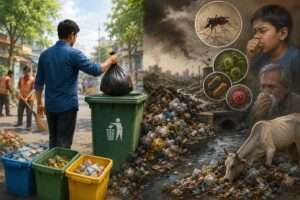
But it’s unfair to say that the problem lies solely with municipalities. Local governments play a vital role in providing the following services to the community: garbage collection, waste disposal, sewer maintenance, and public spaces cleanliness. Citizens also play an equally important role in this process. They should be responsible when disposing of waste, avoid littering, limit unnecessary plastic use, and separate wet and dry waste. However, deploying more sanitation workers won’t solve the problem if residents continue to litter in public spaces.
The need now is to move beyond treating cleanliness as a government campaign. The effectiveness of cleanliness campaigns is clearly linked to incorporating cleanliness into daily life. Children should receive lectures on cleanliness in schools, and they should also adopt practical measures to maintain cleanliness, including waste segregation, proper disposal, and minimizing the use of single-use plastic. Local monitoring systems can also be developed in communities, and residents can be made aware of the importance of collective responsibility towards their environment. While rules and punishments may be necessary, behavior change will not occur unless they recognize the importance of responsible behavior.
The politics of waste is also reflected in the political discourse on sanitation in the public sphere. Sanitation, garbage collection, drainage, and civic infrastructure are major political issues during elections. However, once the elections are over, these concerns are easily forgotten. Garbage piles up again, drains become clogged, and foul smells become commonplace again. “This cycle continues because administrative accountability is often inconsistent and public participation is low.”
It’s important to understand that garbage isn’t just a municipal problem. It’s a reflection of our daily routines, priorities, and sense of collective responsibility. Only when we start treating public streets as our responsibility as our own backyards will we begin to make a difference.
Clean streets not only look beautiful, but also symbolize a healthier and more responsible society. People need hospitals and medicines when they get sick, but it’s better to prevent harmful situations in the first place. The problem with garbage is that we need to understand that it’s not your problem. The secret to cleanliness lies not in grand announcements or government campaigns, but in a small, personal decision: Don’t litter on the street—put it in the dustbin.
By changing this small habit, we can improve these neighborhoods, our cities, and public health. Sanitation isn’t the responsibility of any one person; it’s not the responsibility of any one department, any one government, or any group of employees. It’s the responsibility of all of us, and it must start with each one of us.

