



We must go beyond the availability of grains and ensure a balanced, diverse and affordable diet, only then will a healthy and strong India be created.
The true prosperity of any nation cannot be measured solely by its economic growth rate, industrial production, or food reserves. The most important measure of a nation’s progress is the health, nutritional status, and efficiency of its citizens. India has achieved remarkable achievements in food security through food grain production and the public distribution system, but the challenge now is not just to fill the stomach, but to provide the body with essential nutrients. In this context, adequate protein intake has emerged as a central issue in India’s nutritional security. The importance of public awareness campaigns like Nutrition Month also lies in this broad approach, which emphasizes a balanced diet, diverse food intake, and improved nutritional practices.
Protein is a key nutrient required for the body’s growth, development, and repair. It plays a vital role in the formation of muscles, skin, tissues, and numerous biological structures. Protein is also required for the production of enzymes, several hormones, and components of the immune system. Therefore, its deficiency is not limited to physical impairment but can also impact a person’s overall health and quality of life.
Adequate protein is especially important for children, as childhood is a time of rapid physical and mental development. Lack of a balanced diet can impair children’s growth and increase the risk of malnutrition. Protein is also essential for pregnant women and breastfeeding mothers, as their nutritional needs increase during these periods. Adequate nutrition contributes to the mother’s health and the proper development of the baby.
Protein is not only linked to individual health but also to a nation’s productivity. Healthy citizens can participate more effectively in education, employment, and economic activities. In a country with a young population like India, human capital development is possible only when children and youth receive adequate nutrition. Thus, protein availability is fundamental to both social well-being and economic development.
The discussion of food security in India has long centered around the availability of wheat, rice, and other grains. The public distribution system has played a vital role in providing food to millions of people. However, adequate calorie intake does not necessarily mean that the body receives all the essential nutrients. Household consumption data points to this challenge. In 2023-24, cereals contributed approximately 46-47 percent of total protein intake in rural India. This clearly indicates that the source of protein in the diet of a large population depends on limited food diversity.
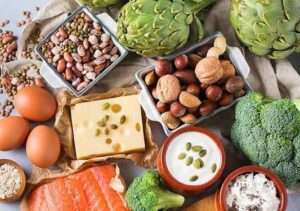
Grains also provide protein, but relying solely on them is not sufficient for balanced nutrition. Foods such as pulses, milk, yogurt, eggs, soybeans, nuts, and seeds add variety to the diet and provide different nutrients. It is important to understand that both the quantity and quality of food are important for nutritional security. If a family receives sufficient grains but cannot afford pulses, milk, fruits, vegetables, or other nutritious foods due to financial reasons, its nutritional needs may remain unmet.
One of the biggest obstacles to adequate protein consumption is inflation. The prices of pulses, milk, eggs, and other nutritious foods strain the budgets of low-income families. These families often face difficult choices between food quantity and quality. When a large portion of household income is spent on housing, education, transportation, and other necessities, ensuring a varied diet becomes challenging. Therefore, it is not appropriate to view the nutritional problem solely as a matter of personal choice or lack of awareness. It is also directly related to income, availability of food items, and their prices.
A significant aspect of this challenge is the nutrition of women and children. In many families, women’s dietary needs are not given adequate priority. Pregnant women, adolescents, and young children have special nutritional needs, but their needs can remain unmet due to poverty, social inequality, and lack of information. Lack of nutrition in children’s early years can have long-term effects on their physical development and learning ability. Therefore, it is essential to center the needs of vulnerable groups in nutrition policies.
Additionally, social stereotypes and a lack of awareness about food also exacerbate the problem. Food is often viewed solely as a means of filling the stomach or obtaining energy. The proper role of protein, fat, carbohydrates, vitamins, minerals, and fiber in a balanced diet is not adequately emphasized. On the other hand, there is a tendency to associate good sources of protein only with expensive foods. In fact, relatively affordable options such as roasted chickpeas, sattu, peanuts, various pulses, and soybeans can also increase protein availability.
To ensure adequate protein availability in India, better coordination between agricultural production and nutrition policies is essential. Special attention should be paid to increasing pulse productivity, providing improved seeds, ensuring fair prices for farmers, and strengthening storage and distribution systems. Increasing self-sufficiency in pulse production can help reduce import dependence and stabilize domestic market supply. While encouraging agricultural diversification, farmers should also be encouraged to cultivate crops that contribute to soil fertility, water conservation, and nutritional security.
Government nutrition programs also need to be strengthened in terms of food quality. Efforts to provide nutritious food to children through the Pradhan Mantri Poshan Shakti Nirman Yojana (PM-POSHAN) and Anganwadi services can be made more effective by tailoring them to local needs. Where appropriate, the inclusion of pulses, eggs, milk, and other locally available nutritious foods should be considered. It is essential to provide food options that respect the food traditions, religious-cultural variations, and local conditions of the states.
Special attention should be given to the nutrition of pregnant women, lactating mothers, and children through programs like Mission Saksham Anganwadi and Poshan 2.0. Simply distributing food is not enough; monitoring its quality, regularity, and actual access to beneficiaries is also essential. Schools and Anganwadi centers can be developed as effective vehicles for nutrition education. Introducing children to local nutritious foods and teaching families simple ways to prepare balanced meals can lead to positive behavior change.
The Indian food tradition already offers many affordable and useful sources of protein. Foods such as lentils and rice, roti and dal, idli and sambhar, khichdi, yogurt, chickpeas, and peanuts can all be part of a balanced diet. Combining grains and pulses helps improve the availability of essential amino acids. However, each individual’s nutritional needs vary depending on age, physical activity, and health status. Therefore, a varied and balanced diet should be prioritized rather than considering a single food or supplement as a panacea.
Public awareness campaigns should not be limited to mere slogans. Practical awareness can be raised during Nutrition Month through the participation of panchayats, schools, self-help groups, health workers, and local institutions. People should be informed about food variety, appropriate portions, and local alternatives, in accordance with the dietary guidelines of the National Institute of Nutrition of the Indian Council of Medical Research. Food prices, the quality of nutrition programs, and access for vulnerable groups should also be regularly assessed.
The future of India’s nutritional security will depend on how successfully the country moves beyond food availability to ensure equitable access to nutritious food. Adequate protein is not just a physical necessity, but also the foundation of a healthy childhood, empowered motherhood, productive youth, and inclusive development. The government, agriculture, educational institutions, health services, and society must work together to create a system in which nutritious food becomes a fundamental right for every citizen, not a privilege for a particular class. Only when every family has access to a variety of nutritious food, affordable and adequate, will the goal of eliminating malnutrition be strengthened, and India will be able to move forward towards becoming a truly healthy, capable, and prosperous nation.


