MV Ramanamurthy
What if the BJP’s most dependable advertising agency is not some high-priced multinational firm, but the Congress party itself? Imagine a PR agency that charges no fees, requires no contract, works round the clock and, best of all, lets its rival write the punchlines. In Indian politics, this would qualify as a revolutionary business model. And if the opposition’s public utterances are anything to go by, the BJP may have stumbled upon the most cost-effective publicity machinery in the country.
Flashback to 2014.
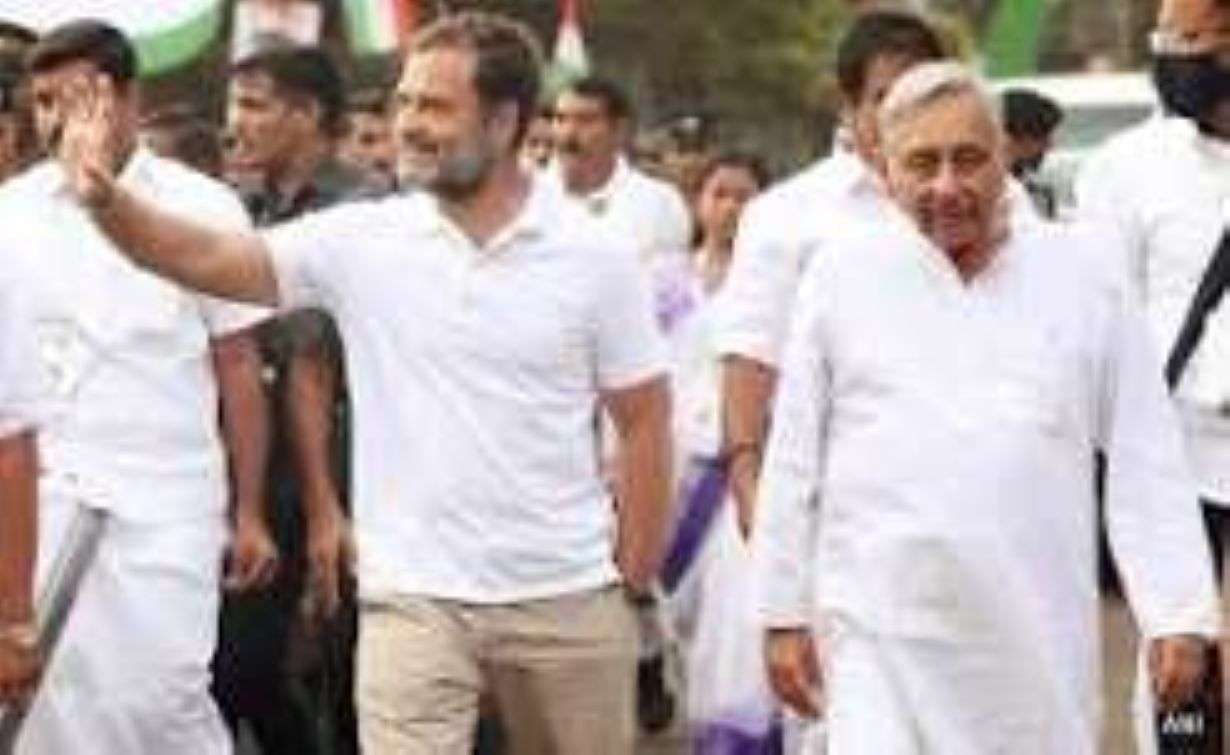
The BJP’s campaign strategists are reportedly scratching their heads. The party needs a slogan that will connect with ordinary Indians. Brainstorming sessions drag on. Ideas come and go. Then, from the opposition corner, Congress leader Mani Shankar Aiyar supplies the magic word: “Chaiwala!”
Somewhere in the BJP war room, the lights suddenly come on. Why treat the humble tea seller as an embarrassment when he can be turned into a symbol of aspiration and struggle? Before long, Chai Pe Charcha becomes a campaign theme. A political taunt is repackaged as a marketing opportunity.
One can almost imagine the BJP’s creative director sending a thank-you note to Aiyar Saab. No consultancy fee, no brainstorming bill, no late-night pizza expenses. Just one perfectly delivered line from the opposition.
Cut to 2019.
The BJP’s campaign machinery is once again looking for a memorable slogan. Enter Rahul Gandhi with “Chowkidar Chor Hai”. The accusation is intended to corner Prime Minister Narendra Modi over corruption allegations. But the BJP turns the attack into a mobilisation exercise, with Main Bhi Chowkidar becoming its counter-campaign.
The opposition supplies the vocabulary; the BJP supplies the branding. What was meant to be a political charge becomes an invitation for supporters to identify themselves with the very label used in the attack.
Some advertising agencies spend months trying to make a slogan stick. Here, the opposition does the first half of the work, while the BJP takes care of the second. It is a partnership that would leave conventional marketing professionals wondering why they ever bothered to submit invoices.
Enter 2024.
RJD supremo Lalu Prasad Yadav declares that Modi has no family. The remark opens another communication opportunity. The BJP responds with Modi Ka Parivar, turning the question of family into a political identity campaign.
Once again, an opponent’s remark becomes the raw material for a counter-message. The BJP’s communication team hardly needs to invent a theme when the opposition keeps delivering one wrapped in political provocation.
By now, the arrangement resembles a curious outsourcing contract. Congress and its allies generate the headlines; the BJP decides how to use them. The opposition may believe it is setting the agenda, but the BJP often finds a way to turn the exchange into a campaign moment.
And what about 2027?
With the Uttar Pradesh Assembly election on the horizon, one can imagine a fictional BJP war-room meeting.
“Boss, next slogan ka tender kisko dein?”
The creative team waits. The opposition has not yet delivered its next headline-grabbing line. Mallikarjun Kharge’s reported “Modi ka baap bhi jayega” remark could, in this satirical scenario, trigger another round of counter-messaging.
The imagined BJP team springs into action. “Excellent! Let’s turn this into another campaign!”
Of course, this is a comic extrapolation, not an actual BJP strategy meeting or an announced slogan. But it captures the larger political irony: provocative rhetoric can provide a rival with an unexpected opportunity to change the subject, energise supporters or recast an attack as a badge of honour.
There is a serious lesson beneath the humour. Political communication is not simply about what a leader says; it is also about how an opponent responds. A taunt can backfire when the target successfully reframes it. Equally, a clever counter-slogan cannot substitute indefinitely for answers on governance, employment, inflation or public services.
The BJP is hardly immune to communication blunders, and the Congress does not lose every political argument merely because a slogan misfires. Voters are not advertising executives waiting to approve the next campaign. They judge parties on a much wider range of issues, including performance, credibility and local concerns.
Yet the recurring spectacle invites a delicious question: is the Congress inadvertently functioning as the BJP’s unofficial PR agency?
In this imaginary corporate structure, the Congress handles product innovation, the BJP manages branding and packaging, party IT cells amplify the message, and the public decides whether the campaign has any substance.
The most remarkable feature of this arrangement is the billing system. No agency fees. No creative charges. No retainers. And apparently, no refund policy when the campaign goes in an unexpected direction.
In politics, an opponent’s mistake can be a gift. But repeatedly handing your rival the material for its next headline is an expensive habit—even when the service is entirely free.
Perhaps the BJP should send the Congress a formal letter of appreciation. Or, better still, offer it a long-term PR contract. The only condition: payment will be made in electoral slogans, and the invoice will be settled by the opposition itself. (The author is a former Hyderabad Ranji Trophy player, a retired Central Excise Department official, and a law graduate.)