



Israel’s inconclusive election has thrown its political future into uncertainty, delivering a fractured mandate that has weakened Benjamin Netanyahu’s grip on power without necessarily bringing his political career to an end. While his Likud party has emerged as the single largest faction, the opposition appears to have the numbers to challenge his leadership. Yet, as Israeli politics has repeatedly demonstrated, winning seats is one thing; stitching together a workable government is quite another.
Netanyahu continues as caretaker Prime Minister, but the real battle has only begun. With 120 seats in the Knesset and 61 required for a simple parliamentary majority, the coming weeks will test the political ingenuity, ideological flexibility and survival instincts of Israel’s political leadership. Four possible scenarios are emerging, each carrying its own complications.
A fresh election remains a distinct possibility if no political formation can muster the numbers to govern. President Isaac Herzog will consult party representatives after the final results and nominate the candidate he considers best placed to form a government. If the first nominee fails, another candidate may get an opportunity. Failure to establish a government within the prescribed constitutional timeframe could eventually send Israelis back to the polling booths.
Herzog has appealed to political parties to approach negotiations with an open mind and avoid another costly electoral exercise. But appeals for compromise cannot automatically dissolve deep ideological differences. Another election, ironically, could merely reproduce the same political deadlock, leaving voters frustrated and the country further divided.
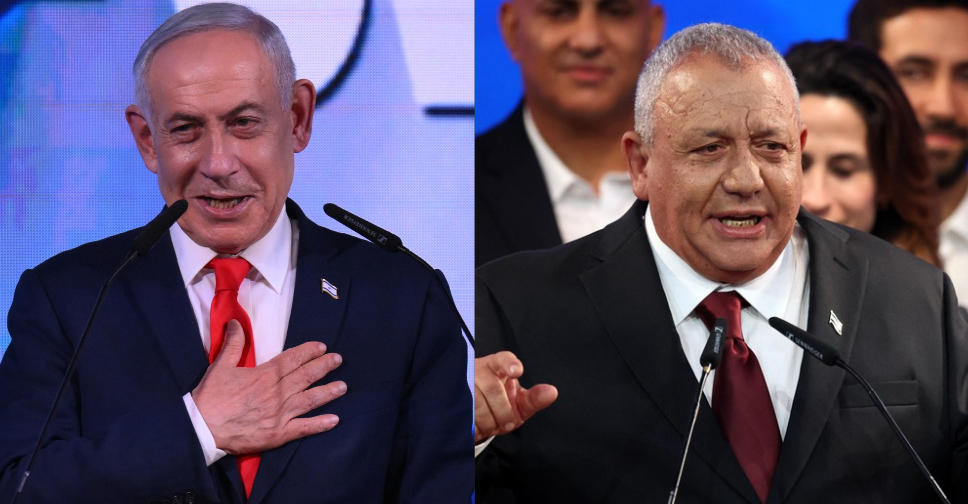
A national unity arrangement involving Likud and opposition leaders such as Gadi Eisenkot, Naftali Bennett and Avigdor Lieberman could command approximately 66 seats. Numerically, it offers a relatively straightforward route to stability.
Politically, however, it is a minefield. Netanyahu would have to abandon or distance himself from his traditional far-right and ultra-Orthodox allies. Equally, opposition leaders who campaigned on removing him would have to explain why they were now prepared to share power with him.
Such an arrangement may become attractive if prolonged negotiations produce no alternative. A renewed confrontation with Iran or another major security emergency could also compel political rivals to place national security above electoral promises. But whether Netanyahu and his adversaries can trust one another sufficiently to sustain such an arrangement is another question altogether.
Perhaps the most intriguing possibility is an administration led by Eisenkot, supported by Together, The Democrats and Israel Our Home, with parliamentary backing from the Arab parties Ra’am and the Joint List.
The three principal coalition partners reportedly command 48 seats, while the two Arab parties together account for another 19. Their combined strength of 67 would provide the necessary parliamentary support, even if the Arab parties remained outside the government.
Yet this arrangement carries enormous political baggage. Eisenkot would have to reconcile his campaign position against including Arab parties with the practical necessity of relying on their parliamentary support. Netanyahu, meanwhile, would undoubtedly question the legitimacy of an administration dependent on Arab political backing, particularly given the hardened public mood following the October 7, 2023 Hamas attacks.
Nevertheless, Ra’am has demonstrated that such cooperation is not unprecedented. Its participation in supporting Naftali Bennett’s government in 2021 marked a significant departure in Israeli coalition politics. That government survived for just 18 months, however, underlining how fragile such political experiments can be.
Writing off Netanyahu would be premature. His coalition’s strength has fallen from 64 to 53 seats, leaving him eight short of a majority. But the veteran politician has repeatedly demonstrated an extraordinary capacity for political manoeuvring, exploiting divisions among opponents and attracting defectors from rival camps.
The opposition’s biggest advantage is its collective desire to end Netanyahu’s premiership. Its greatest weakness, however, is that it comprises parties with competing ideological interests and differing political priorities. Keeping such an assortment together may prove more difficult than defeating Netanyahu at the ballot box.
Israel now faces a test that goes beyond the formation of its next government. Security challenges, relations with Iran, the Palestinian question and domestic divisions demand political stability and credible leadership. A government held together merely by the arithmetic of convenience may struggle to deliver either.
The fractured verdict has undoubtedly opened a window of opportunity for Netanyahu’s opponents. But opportunity is not victory. A unity government, an Eisenkot-led administration, Netanyahu’s political resurrection or yet another election are all possibilities.
Ultimately, the decisive question is not who has won the most seats, but who can command the confidence of 61 lawmakers and sustain it. In Israel’s unforgiving political arena, the election may be over, but the real battle for power has only just begun.

