Lakshmanrao Upadhyayula
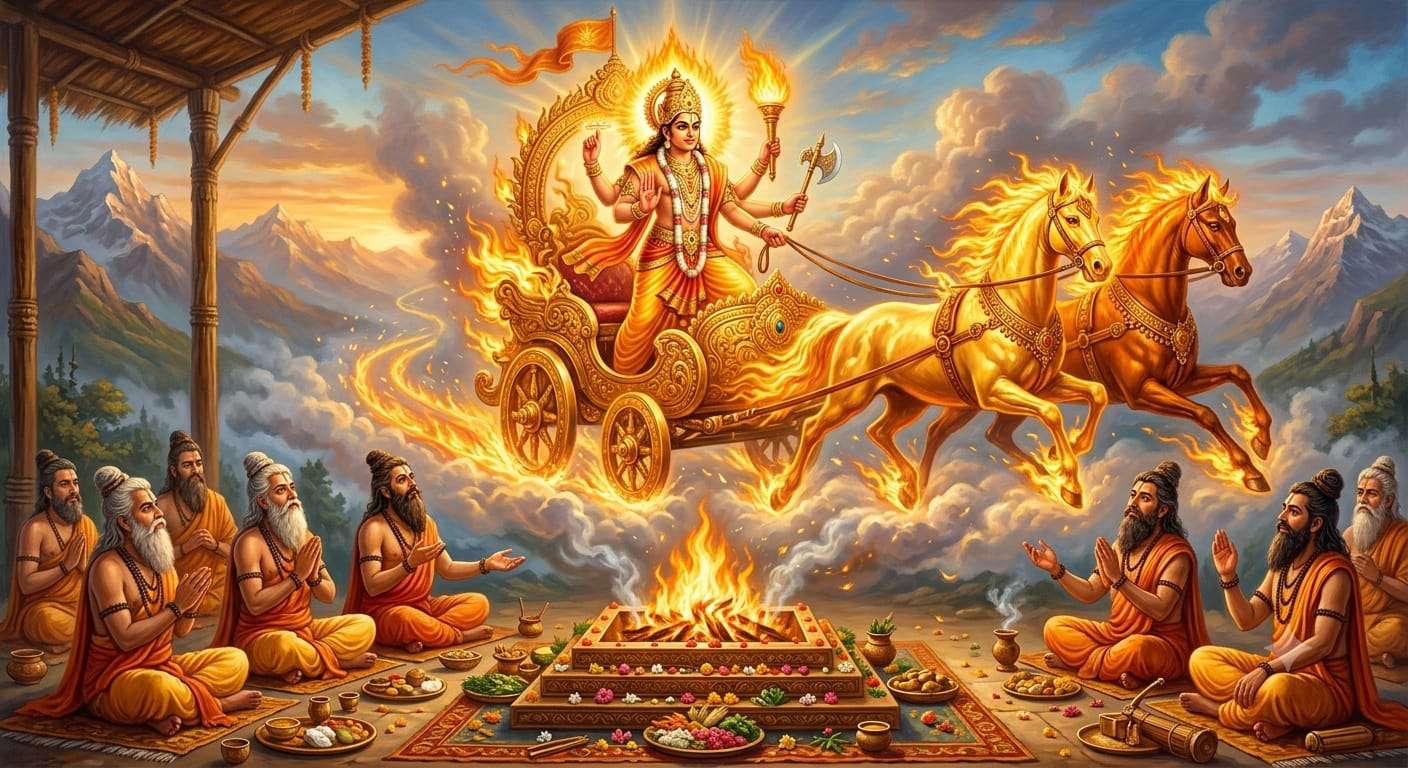
The sage Vishwamitra, chanting in the luminous Gayatri Chandas of the Rigvedic hymns, raises his voice in reverence toward Indra, the mighty guardian of cosmic order and the benefactor of noble aspirations. With deep devotion, he beholds the divine horses yoked to Indra’s celestial chariot, eager to carry their lord toward the sacred sacrificial ground. The sages have carefully prepared the Soma, purified according to Vedic injunctions and blended with nourishing milk, making it worthy of divine acceptance. With humility and faith, they invite Indra to descend into their midst, not merely as a distant deity but as a living participant in the sacred exchange between heaven and earth.
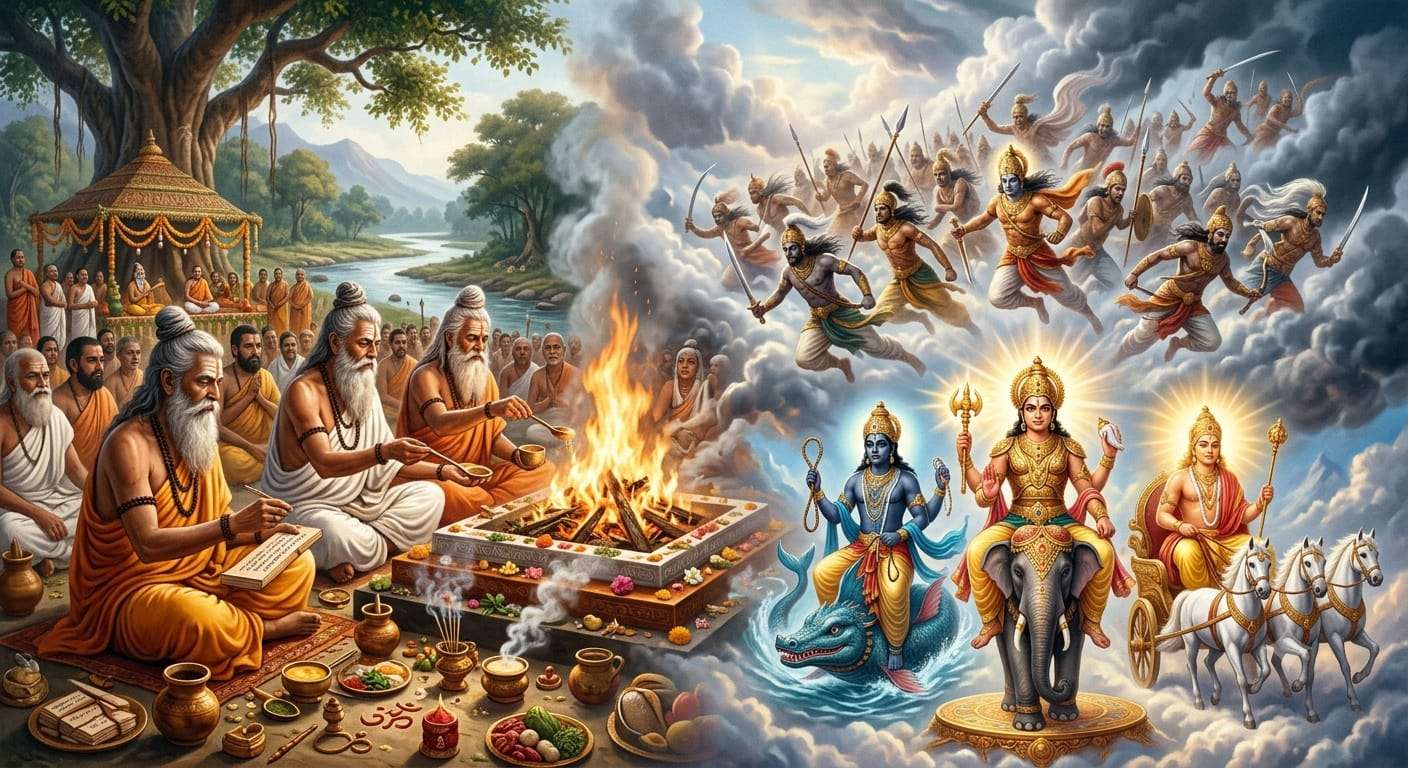
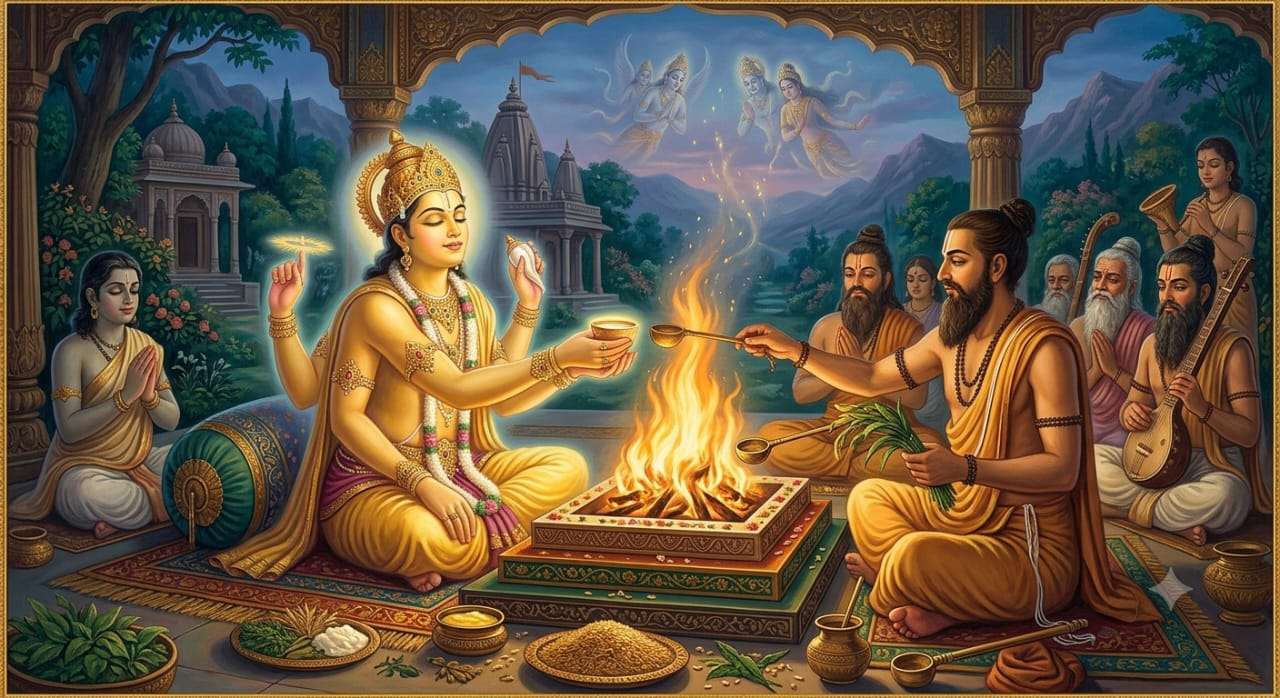
Before the holy fire lies the freshly pressed Soma, extracted through the rhythmic action of sacred stones, a process sanctified by both ritual precision and spiritual intention. The invigorating juice has been reverently placed upon consecrated Kusha grass, symbolizing purity, order, and alignment with cosmic law. The offering is not presented as an ordinary drink but as a sacred essence embodying vitality, illumination, and divine grace. The sages pray that Indra may partake of it abundantly and find satisfaction, for the acceptance of Soma signifies the successful union of human devotion and divine favor.
The hymns themselves form an offering no less sacred than the Soma. Vishwamitra declares that these words have been carefully fashioned from the depths of spiritual realization and dedicated solely to Indra. In Vedic understanding, sound possesses creative power, and the sacred mantra serves as a bridge connecting the mortal and the divine realms. Every syllable vibrates with intention, carrying the devotion of the worshippers toward the celestial regions. Though Indra receives countless invocations from many worlds and sacrificial grounds, the sages trust that their sincere praise and remembrance of his glorious deeds will reach him and draw his presence to their yajna.
Indra is celebrated as the subduer of hostile forces, the architect of victory, and the protector of righteousness. He is the power that removes obstacles standing in the path of truth and prosperity. The sages acknowledge him as the conqueror of adversaries and the bestower of wealth, not merely in the material sense but also in the form of strength, wisdom, courage, and spiritual abundance. Knowing him to be resplendent with inexhaustible riches, they seek his blessings so that harmony, prosperity, and noble virtues may flourish among the people. Their invitation arises from reverence rather than demand, reflecting the Vedic ideal that divine gifts flow naturally toward those who uphold righteousness and gratitude.
The cherished Soma has been prepared with great care, combined with substances derived from the sacred cow and enriched with barley, both symbols of nourishment and agricultural prosperity. Such ingredients reveal the Vedic appreciation for the interconnectedness of life, where spiritual worship is inseparable from the preservation of nature, livestock, and human well-being. From a scientific perspective, the meticulous preparation of offerings, the emphasis on purity, and the disciplined observance of ritual procedures demonstrate an early understanding of order, hygiene, and systematic practice. The Vedic seers approached nature not with exploitation but with profound observation, gratitude, and cooperation, recognizing that physical and spiritual welfare arise from harmony with the natural world.
The sages lovingly dedicate this Soma to Indra alone. They poetically describe his stomach as eager to receive the sacred drink and his heart as gladdened by its essence. Such imagery conveys the intimate relationship envisioned between the worshipper and the deity. Soma symbolizes far more than physical refreshment; it represents the awakening of divine consciousness, the renewal of strength, and the joy that arises when cosmic powers are honored through sincere devotion. By offering Soma, the sacrificers seek to participate in the eternal cycle of giving and receiving that sustains the universe.
Finally, the descendants of the noble Kusika lineage stand united in prayer before the sacred fire. Conscious of their dependence upon divine protection, they invoke Indra through hymns rich with faith, wisdom, and gratitude. They seek not only external prosperity but also the safeguarding of their spiritual journey. Their voices rise heavenward, inviting Indra to partake abundantly of the Soma and to bless the sacrifice with his presence. In this sacred vision, the yajna becomes a meeting place of humanity and divinity, where devotion, knowledge, nature, and cosmic order converge into a harmonious expression of Vedic spirituality, illuminating both the heart and the intellect with enduring light