Abdul El-Sayed’s victory in Michigan’s November 3 US Senate election is undoubtedly historic. By defeating Republican Mike Rogers, the 42-year-old Democrat has become the first Muslim elected to the US Senate, giving the progressive wing of the Democratic Party a significant political victory. But with the electoral celebrations behind him, the spotlight is now shifting to his political record, past associations and some controversial positions that deserve closer examination.
A politician about to assume a position of considerable influence in Washington cannot expect his public record to remain beyond scrutiny. El-Sayed’s background, particularly his associations with individuals and organisations linked to contentious political movements, has become a subject of national debate. The challenge is to distinguish legitimate questions about his political judgement from allegations that remain unsubstantiated.
One of the most significant issues concerns his 2012 endorsement of a statement supporting Egypt’s then-President Mohamed Morsi, a senior figure associated with the Muslim Brotherhood. The statement, signed by 46 Egyptian-Americans, supported Morsi’s controversial constitutional decree that temporarily placed presidential decisions beyond judicial review. More troublingly, it called upon him to purge the media and police of elements associated with the previous regime.
The timing is significant. Morsi had assumed power following Egypt’s Arab Spring uprising, promising democratic change. However, his subsequent attempt to consolidate executive authority triggered widespread protests and a constitutional crisis. The decree raised serious questions about judicial independence, institutional checks and balances, and the freedom of the press.
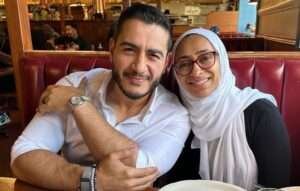
El-Sayed’s signature on the statement therefore raises a legitimate question about his understanding of democratic accountability and institutional independence. While supporters have argued that the statement reflected the political circumstances of post-Mubarak Egypt, the endorsement deserves an explanation, particularly from someone who is now entering the US Senate.
There is another dimension to the controversy. In a 2011 article, El-Sayed had argued that apprehensions about a possible Muslim Brotherhood takeover should not discourage Washington from supporting Egypt’s pro-democracy movement. That position, by itself, was an argument about democratic participation. However, when viewed alongside his subsequent support for Morsi’s controversial decree, it provides a reason to examine his political thinking more closely.
His family background has also attracted attention. His half-sister, Eman Abdelhadi, an academic at the University of Chicago, reportedly wrote on social media in 2012 that her family had long been associated with the Muslim Brotherhood. In another post, she referred to family members being jailed over their association with the organisation and spoke of their mother’s activism in the Brotherhood during the early 1970s.
These are her statements, not proof of El-Sayed’s own membership or involvement. Indeed, El-Sayed has publicly denied that he or his family has ties to the Muslim Brotherhood. Nevertheless, the reported posts have raised questions that merit clarification rather than speculation.
His father-in-law, Dr Tayeb Jukaku, is another figure mentioned in the controversy. Jukaku has served on the founders’ committee of the Islamic Society of North America (ISNA) and held leadership positions with the Council on American-Islamic Relations (CAIR) in Michigan. Both organisations were named as unindicted co-conspirators in the 2007 Holy Land Foundation terrorism-financing trial. However, neither organisation was charged with a crime in that case, a distinction that must be respected.
The larger issue is not a politician’s religion, ancestry or family relationships. Nor should an individual’s background become a substitute for evidence. The real test is his own public conduct, political judgement, commitment to constitutional institutions and willingness to answer legitimate questions.
El-Sayed has campaigned on healthcare, economic fairness and reducing corporate influence in politics. These are important domestic issues. But a seat in the US Senate carries responsibilities extending well beyond campaign promises. His positions on democratic institutions, political extremism, freedom of expression, and America’s international relationships will inevitably come under scrutiny.
A historic electoral victory deserves recognition. It does not, however, confer immunity from accountability. Washington has gained a new senator; the American public is entitled to know where he stands on the issues that matter.