

U Lakshamana Rao.
तमसो मा ज्योतिर्गमय । असतो मा सद्गमय । मृत्योर्मा अमृतं गमय ॥
ॐ शान्तिः शान्तिः शान्तिः ॥
Lead me from darkness to light, from ignorance to wisdom, from falsehood to truth, and from mortality towards immortality.
Deepavali, the magnificent festival of lights, is one of the most profound expressions of India’s ancient spiritual wisdom, cultural continuity and philosophical traditions. Its significance extends far beyond the lighting of lamps, exchanging gifts, wearing new clothes and celebrating prosperity. It represents a timeless civilisational message that the human spirit must continually strive to overcome ignorance through knowledge, hatred through compassion, selfishness through generosity, disorder through discipline, and darkness through the illumination of wisdom. The festival embodies the conviction that light is not merely a physical phenomenon but also a metaphor for consciousness, enlightenment, righteousness and the eternal pursuit of truth.
Historically, Deepavali is believed to have evolved through ancient agrarian customs, seasonal transitions and the cultural practices of communities celebrating the completion of agricultural cycles and the anticipation of renewed prosperity. In an agrarian civilisation, the changing seasons, the harvest, the availability of food and the preservation of resources were closely associated with collective well-being. The observance of festivals during these transitions provided opportunities for gratitude, social participation and the renewal of community relationships. Over centuries, these practices acquired deeper religious, philosophical and spiritual dimensions, transforming Deepavali into a magnificent celebration of wealth, righteousness, knowledge and cosmic harmony. Thus, the festival represents an extraordinary synthesis of nature, human enterprise, spiritual aspiration and social organisation.
The lighting of traditional oil lamps, particularly those made of clay, carries a profound philosophical significance. A small flame has the ability to illuminate its immediate surroundings, symbolising how even a modest act of goodness can dispel considerable darkness. The lamp teaches humanity that illumination requires a combination of essential elements: the vessel that provides stability, the oil that sustains the flame, the wick that enables its expression and the fire that radiates light. In a symbolic sense, the human body is the vessel, disciplined conduct is the sustaining substance, noble intentions are the wick, and knowledge is the illuminating flame. When these elements are brought into harmony, human existence acquires purpose and direction. The message is that enlightenment is not an accidental occurrence; it is the outcome of sustained effort, discipline and awareness.
Deepavali is celebrated through several sacred narratives, each offering a distinctive interpretation of the victory of righteousness over evil. In the Ramayana tradition, the festival is associated with the triumphant return of Lord Rama, accompanied by Sita and Lakshmana, to Ayodhya after fourteen years of exile and the defeat of Ravana, the powerful king of Lanka. The people of Ayodhya welcomed their beloved prince by illuminating their homes and streets with rows of lamps. This joyous occasion symbolises the restoration of Dharma, the fulfilment of a righteous promise and the return of moral order after a prolonged period of adversity. Rama’s victory was not merely the defeat of an individual adversary; it represented the triumph of responsibility, integrity, courage and self-restraint over arrogance, ego and the misuse of power. The deeper lesson is that greatness is measured not by authority or material strength but by one’s commitment to righteousness, even when confronted with extraordinary personal difficulties.
Another important tradition associates Deepavali with the victory of Lord Krishna and Satyabhama over Narakasura, whose oppressive rule had brought suffering and humiliation to many. The destruction of Narakasura signifies the elimination of cruelty, injustice and the abuse of power. The narrative also carries a significant philosophical message: no individual, however powerful, can claim permanent supremacy when authority is separated from morality. Power becomes destructive when it is governed by arrogance, uncontrolled desire and disregard for the dignity of others. The victory of Krishna and Satyabhama therefore reminds successive generations that the protection of justice and human dignity is a sacred responsibility.
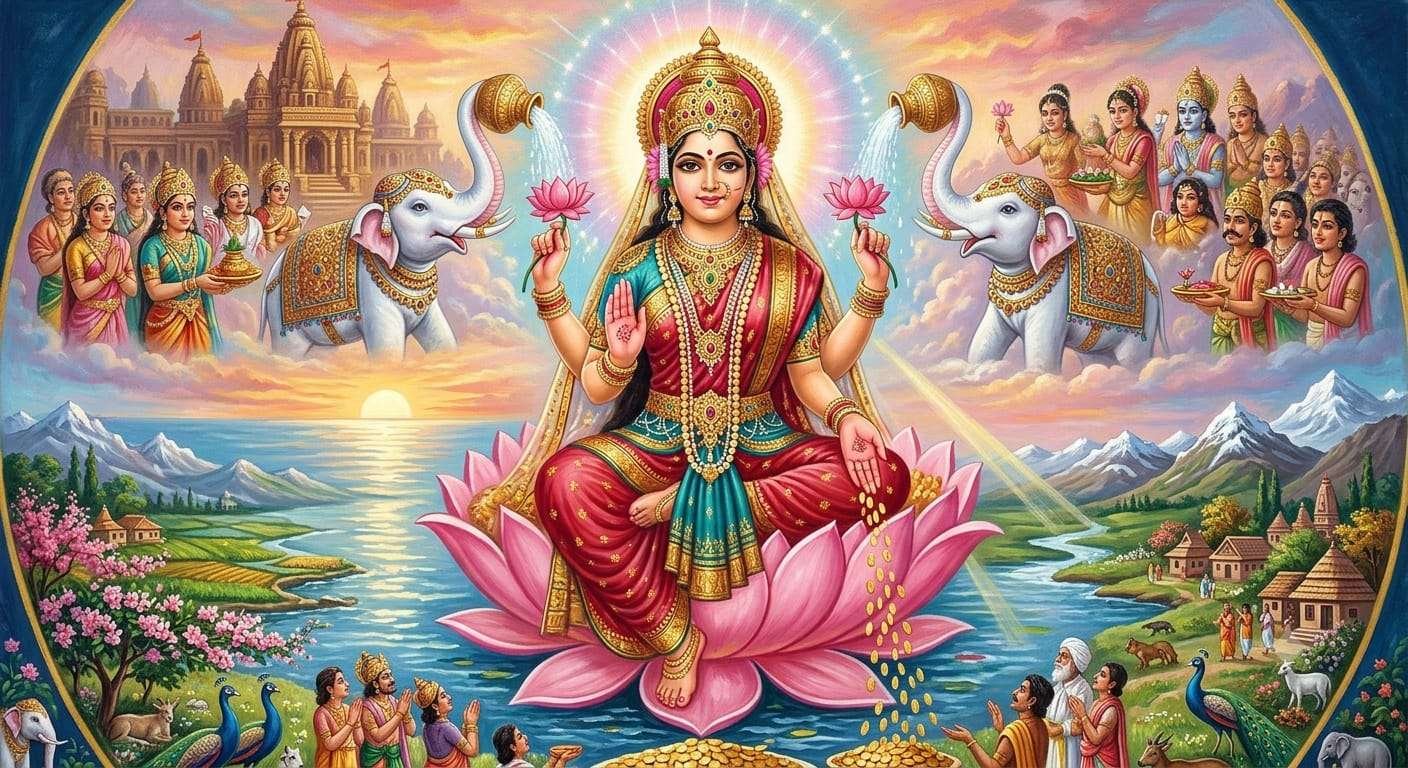
The worship of Goddess Lakshmi during Deepavali introduces another important dimension of its spiritual and social philosophy. Lakshmi represents wealth, prosperity, abundance, beauty, auspiciousness and the blessings necessary for a fulfilling life. However, the deeper understanding of Lakshmi should not be confined to the accumulation of money or material possessions. True prosperity encompasses good health, knowledge, moral character, harmonious relationships, productive work, generosity and the capacity to contribute to society. Wealth acquires its highest value when it is earned through honest means, managed responsibly and employed for constructive purposes. The spiritual tradition therefore places ethical responsibility alongside material achievement. Prosperity without righteousness may create arrogance and inequality, whereas prosperity guided by Dharma can become an instrument of collective welfare.
The association of Deepavali with Jainism offers an equally profound spiritual interpretation. For the Jain tradition, the day commemorates the attainment of Nirvana by Bhagwan Mahavira, the twenty-fourth Tirthankara. His liberation represents the ultimate triumph of spiritual discipline over attachment, ignorance and the bondage of worldly desires. His teachings of Ahimsa, Anekantavada and Aparigraha provide enduring guidance to humanity. Non-violence encourages respect for all living beings; Anekantavada teaches that truth can be approached through multiple perspectives; and Aparigraha advocates restraint in possession and attachment. These principles are particularly relevant in a world increasingly influenced by competition, materialism and conflicting opinions. They remind humanity that genuine progress must be accompanied by tolerance, compassion and intellectual humility.
In Sikhism, Deepavali is associated with Bandi Chhor Divas, commemorating the release of Guru Hargobind Sahib Ji from imprisonment at Gwalior Fort and his return to Amritsar, accompanied by the release of other political prisoners. The occasion represents freedom from oppression, courage in defending justice and compassion towards those who suffer. The significance of this observance extends beyond personal liberation. It celebrates the moral responsibility of standing up for the freedom and dignity of others. The tradition thus reinforces a universal principle: freedom acquires its noblest meaning when it is shared rather than enjoyed exclusively.
The ancient Indian understanding of Deepavali also invites us to appreciate the relationship between spirituality and scientific temperament. The traditional practice of cleaning homes, maintaining orderly surroundings, lighting lamps and preparing for the new season reflects an appreciation of cleanliness, environmental awareness and disciplined living. The agricultural background of the festival demonstrates the close relationship between human communities and natural cycles. Seasonal changes influence agricultural activity, food availability and patterns of social life. Such observances helped communities recognise their dependence on nature and encouraged gratitude for its resources. Although traditional practices should not automatically be interpreted as scientific discoveries, their underlying emphasis on cleanliness, moderation, seasonal awareness and responsible resource utilisation remains relevant to contemporary life.
The lighting of oil lamps also offers an opportunity to appreciate the scientific nature of combustion, the conversion of stored chemical energy into heat and light, and the fundamental physical principles through which illumination occurs. Yet the scientific understanding of a flame does not diminish its cultural or spiritual significance. On the contrary, science explains the physical process, while philosophy explores its symbolic meaning. The two need not contradict each other. Scientific temperament encourages observation, evidence, rational enquiry and the willingness to question assumptions, whereas spiritual reflection encourages ethical conduct, self-awareness and a search for meaning. When these dimensions complement one another, society develops a more balanced understanding of human progress.
The tradition of preparing sweets, sharing food, wearing new clothes and exchanging gifts further reflects the social philosophy of Deepavali. These customs encourage affection, hospitality, reconciliation and the strengthening of family and community relationships. Food shared among neighbours and relatives becomes an expression of goodwill; gifts become symbols of appreciation; and new clothes represent renewal and the welcoming of fresh beginnings. The festival creates an atmosphere in which differences of age, status and circumstance can momentarily give way to collective happiness. Its cultural importance lies not simply in the grandeur of celebrations but in the human relationships that those celebrations nurture.
Deepavali also has a significant economic dimension. The festival stimulates agricultural markets, traditional crafts, textiles, sweets, household industries, retail trade and numerous small businesses. Artisans who prepare clay lamps, craftsmen who produce decorative articles, farmers who supply agricultural commodities and traders who participate in seasonal commerce all become part of this wider economic cycle. In this sense, the festival demonstrates how cultural traditions can sustain livelihoods and strengthen local economic networks. However, the true spirit of prosperity must also encourage responsible consumption, financial discipline and consideration for economically disadvantaged sections of society. Celebrations become more meaningful when prosperity is shared and the dignity of every individual is respected.
The message of Deepavali is particularly significant for younger generations, who are growing up in an age of extraordinary technological advancement, intense competition and rapidly changing social relationships. Knowledge and innovation have expanded human capabilities, but they have also created new challenges involving misinformation, intolerance, environmental degradation and excessive material aspirations. The festival reminds young people that intellectual development must be accompanied by moral maturity. Education should not merely provide professional qualifications; it should cultivate independent thinking, integrity, empathy and social responsibility. Success should not be measured exclusively through wealth, position or recognition, but also through the positive influence one exercises upon the lives of others.
The philosophical depth of Deepavali becomes even more meaningful when viewed through the Upanishadic understanding of the relationship between the individual and universal consciousness. The invocation, Tamaso Ma Jyotirgamaya, is not simply a prayer for physical illumination. It is an appeal for the awakening of human intelligence and the transformation of consciousness. Darkness, in this context, represents ignorance, prejudice, greed, fear and moral confusion. Light represents discrimination between right and wrong, awareness of one’s responsibilities and the ability to recognise the interconnectedness of all existence. The prayer therefore demands an inward transformation rather than an outward display of celebration. Lighting thousands of lamps has limited significance if the human mind continues to remain imprisoned by hatred, dishonesty and intolerance.
The festival also teaches an important lesson about the cyclical nature of human existence. Life inevitably encounters uncertainty, adversity, disappointment and unexpected changes. Just as darkness gives way to dawn, difficult circumstances can be overcome through patience, determination and wisdom. The return of Rama to Ayodhya, the destruction of Narakasura, the liberation commemorated by the Sikh tradition and the attainment of Nirvana in Jainism all represent different dimensions of overcoming limitations. These narratives collectively affirm that the human journey is not defined by temporary setbacks but by the capacity to uphold values and move towards a higher purpose.
In the broader cultural landscape of Bharata Varsha, Deepavali stands as a remarkable expression of unity in diversity. Its observances may differ across regions, languages, communities and religious traditions, yet its central message remains remarkably harmonious. It accommodates different narratives while preserving a shared aspiration for prosperity, freedom, righteousness and enlightenment. This diversity is not a weakness but a reflection of India’s civilisational depth. The ability of different traditions to coexist, contribute and enrich a common cultural inheritance is one of the most enduring strengths of Indian society.
Ultimately, Deepavali should inspire us to examine the quality of light within our own lives. It is easy to illuminate houses, decorate streets and celebrate outward prosperity, but the more difficult and meaningful responsibility is to illuminate our thoughts, purify our intentions and refine our conduct. We must overcome personal prejudices, exercise restraint in our desires, respect the dignity of others, remain truthful in our commitments and extend compassion to those who need support. Wealth should be accompanied by generosity, knowledge by humility, authority by accountability and freedom by responsibility. These are not merely religious ideals; they are essential principles for building a progressive, peaceful and morally responsible society.
As generations continue to celebrate Deepavali, its message must evolve in expression without losing its eternal essence. The younger generation should inherit not merely the external customs of the festival but also the wisdom embedded in its ancient traditions. They must learn to combine scientific reasoning with spiritual sensitivity, material progress with ethical responsibility, individual achievement with social welfare, and cultural pride with universal human values.
Deepavali is therefore not confined to a particular day, a particular religious observance or a particular historical narrative. It is a continuing philosophy of life. Every act of kindness is a lamp; every truthful word is an illumination; every gesture of forgiveness removes a shadow; every effort towards justice restores light; and every contribution to the welfare of society strengthens the collective brilliance of humanity.
May the radiance of Deepavali awaken wisdom in our minds, compassion in our hearts, righteousness in our actions and harmony in our relationships. May prosperity be accompanied by integrity, knowledge by humility, and success by a sincere commitment to the welfare of all living beings.
The eternal message of Deepavali is that darkness may surround humanity from time to time, but the flame of wisdom, righteousness and compassion must never be allowed to perish.
With warm wishes for a spiritually enriching, prosperous and enlightened Deepavali.