Lakshmanrao Upadhyayula
The sacred hymns revealed to the sage Vishwamitra in the majestic metres of Tristubh, Jagati, and Gayatri stand among the most profound expressions of Vedic devotion. These metrical forms are not merely poetic structures but carefully arranged patterns of sacred sound that harmonize the human intellect with cosmic rhythm. Within the Vedic tradition, every syllable carries spiritual potency, and every hymn serves as a bridge between earthly aspiration and divine reality. Through these exalted chants, the seers invoke Indra, the mighty guardian of cosmic order, whose presence sustains both the visible and invisible dimensions of existence.
Indra is celebrated as the fulfiller of righteous desires and the compassionate sustainer of humanity. He is worthy of perpetual praise through the eternal hymns of the Vedas, for his strength, wisdom, and prosperity continually increase with every noble act performed in accordance with divine law. The priests invite him into every sacred sacrifice with reverence, recognizing that he transcends the limitations governing the mortal world. His glory is renewed daily through beautiful Vedic recitations, reminding humanity that sincere worship continually nourishes the bond between the Creator’s powers and human civilization.
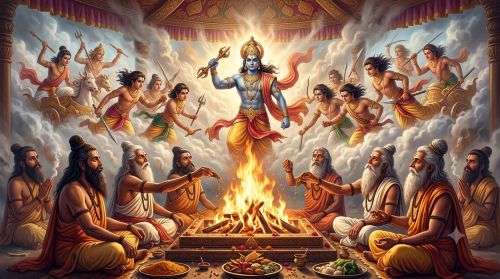
The Vedic seers proclaim that countless hymns are offered to Indra because his greatness cannot be confined within a single expression. He completed one hundred sacred yajñas, symbolizing the perfection of sacrificial discipline and unwavering dedication to cosmic harmony. As the controller of celestial waters, he governs the life-giving rains upon which all earthly existence depends. Surrounded by the radiant Maruts, the divine powers of storm and atmosphere, Indra directs the movement of clouds, releases nourishing rain, and preserves the delicate balance of nature. This imagery reflects not only spiritual truth but also an early scientific awareness that rainfall, atmosphere, winds, and seasonal cycles sustain agriculture, forests, rivers, and human life.
Indra is praised as the Lord of the worlds, the destroyer of hostile strongholds, and the swift conqueror in righteous battles. His victories represent the eternal triumph of order over chaos, light over darkness, and truth over falsehood. By shattering the fortresses of evil and releasing the imprisoned waters, he restores fertility to the earth and prosperity to all living beings. Thus, rain becomes both a physical blessing and a spiritual symbol of divine grace descending upon receptive hearts.
The Vedic hymns describe Indra as the generous bestower of wealth, courage, and heavenly attainment. He humbles the arrogant, protects the virtuous, and grants worthy souls a place among the celestial realms. The sages therefore pray that every sacred mantra may reach him without obstruction, for the efficacy of Vedic recitation lies in purity of intention, disciplined pronunciation, and unwavering devotion. The sacred sound itself becomes the vehicle through which human consciousness ascends toward divine communion.
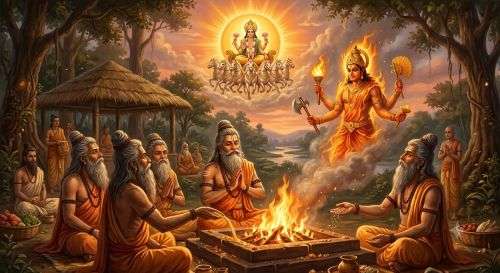
Indra is revered as the victorious slayer of enemies in battle and receives the admiration of warriors and sages alike. Yet his greatest victory is not merely external conquest but the destruction of ignorance, fear, and unrighteousness within creation. Pure and untouched by sin, he graciously manifests in the home of the generous patron who faithfully maintains the sacred household fire and performs the daily rites with devotion. There he partakes of the purified Soma, sanctifying both the sacrifice and those who participate in it with sincere hearts.
The sage Vishwamitra glorifies Indra together with the Maruts, recalling how they subdued hostile forces that threatened righteousness. The Ritvij priests, oppressed by destructive powers, sought refuge through sacred hymns and mantras, trusting completely in Indra’s divine protection. Responding to their faithful invocation, Indra accomplished the mighty task of destroying the dreadful demon Vritra, whose obstruction of the waters symbolized every force that hinders life, wisdom, and spiritual progress. Empowered by divine courage and immeasurable strength, Indra shattered every obstacle, allowing abundance and harmony to flow freely throughout creation.
The Vedas further proclaim Indra as one of the primordial divine powers who governs nourishment itself. Every form of food, vitality, and prosperity ultimately flourishes under his sustaining authority. His decree operates through countless dimensions beyond ordinary human understanding. The earth yields her treasures, heaven pours forth its blessings, herbs display their healing virtues, waters sustain all life, trees bear fruit in their seasons, and humanity prospers according to the divine order established under his sovereign command. Such descriptions beautifully express the Vedic recognition that every aspect of ecological balance functions through harmonious natural laws governed by divine intelligence.
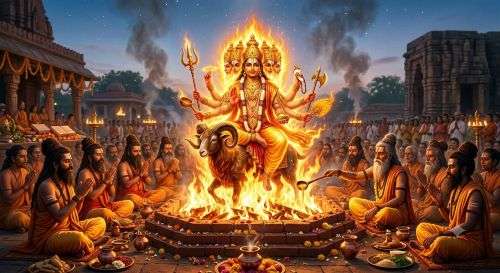
The priests offer Indra not only hymns but also the symbolic weapons of knowledge, courage, discipline, and unwavering faith. These sacred offerings signify humanity’s willingness to dedicate every strength toward righteousness. Indra, the omnipresent friend of all beings, grants secure dwelling places, social stability, and lasting protection. The freshly purified Soma prepared with reverence is presented before him so that, being pleased with the sacrifice, he may bestow abundant food, prosperity, and spiritual welfare upon the priests and the entire community.
The ancient tradition remembers how Indra, accompanied by the mighty Maruts, joyfully drank Soma during the sacred sacrifice conducted by Saryati, the noble son of Vaivasvata Manu. That sacred event established an enduring example for every future yajña. Therefore the priests invite Indra once again to partake of the purified Soma in the present sacrifice, for his divine abode is free from sorrow, pain, and imperfection. Wise men continue to serve him through yajña because sacrificial worship unites humanity with the eternal rhythm of the cosmos.
The sages lovingly invite Indra to arrive with his glorious companions, the Maruts, and drink the freshly purified Soma. At his divine birth the gods adorned him for the great cosmic struggle against the forces of darkness, recognizing his destiny as the protector of universal order. Inspired by the celestial waters, the Maruts rejoice in his companionship, and together they strengthen the powers that preserve life throughout creation. The patron’s sacred altar thus becomes a meeting place where heaven and earth are joined through sacrifice, prayer, and divine presence.
Finally, the worshippers present the Soma mixed with nourishing offerings as a sacred oblation prepared exclusively for Indra. They pray that he may gladly accept it and perform the joyful act of drinking the immortal essence. The hymns poetically describe Soma spreading throughout both the upper and lower regions of his divine being, flowing through every sinew with the accompanying mantras, signifying the complete union of sacred sound, divine energy, and spiritual vitality. On a deeper level, this imagery reflects the Vedic understanding that spiritual realization permeates every aspect of existence, just as life-giving energies circulate throughout the human body. Thus the hymn reveals both profound spiritual symbolism and remarkable insight into the unity of consciousness, nature, vitality, and cosmic law, affirming that divine wisdom sustains the universe through harmony, sacrifice, truth, and the eternal power of sacred knowledge.