Lakshmanrao Upadhyayula
The venerable seer Śaunaka Gr̥tsamāda, illumined by deep spiritual insight, composed exalted hymns to Shaunaka and the divine powers of Brihaspati, Brahmanaspati, and Indra in the majestic metres of Jagatī and Triṣṭubh preserved in the sacred Rigveda. These metres, with their measured cadence and resonant structure, were not chosen merely for poetic beauty; they were designed to align the human voice with cosmic rhythm. In the Vedic understanding, sound is creative power, and a properly intoned mantra becomes a bridge between the finite mind and the infinite intelligence governing the universe.
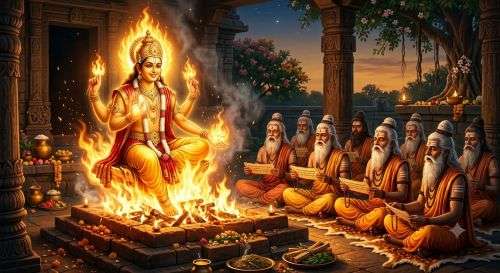
The sage begins with a heartfelt invocation to Bṛhaspati, the Lord of Sacred Speech and Divine Wisdom. “O Master of all the worlds,” he prays, “accept our noble hymns.” In the Vedic worldview, Bṛhaspati is not merely a deity but the embodiment of awakened intelligence, ethical judgment, and the luminous force that guides both gods and men. He is the divine counselor, the source of inspired thought, and the guardian of truth. The ṛṣis seek from him not material gain alone, but the inner capacity to think clearly, speak truthfully, and act righteously. Their hymns are described as refreshing and invigorating because they awaken dormant faculties within the human spirit.
Brahmaṇaspati, closely identified with Bṛhaspati, is praised as the sovereign power of mantra itself. He is the Lord of the creative Word—the unseen intelligence by which sound becomes form, thought becomes action, and intention becomes destiny. In a profound spiritual sense, Brahmaṇaspati represents the organizing principle that transforms chaos into order. In scientific terms, he may be compared to the fundamental laws that govern energy and information. Just as the universe unfolds according to intelligible patterns, so too does the mantra operate according to precise vibrational principles.
The hymns recount how Brahmaṇaspati shattered the strongholds of obstruction. He rent asunder the demon Śambara, broke open the mountain caves, and released the imprisoned waters and hidden cattle. These images are rich in symbolic significance. The demons represent forces of inertia, ignorance, and psychological resistance. The mountains symbolize hardened structures of consciousness. The cows signify rays of knowledge, and the waters represent dynamic energies of life and inspiration. Thus, Brahmaṇaspati is the liberator who breaks through internal barriers and restores the free flow of insight and vitality.
The destruction of darkness and the revelation of the Sun is one of the most powerful motifs in Vedic symbolism. When Brahmaṇaspati dispels the obscurity of night and reveals the solar radiance, the imagery points to the awakening of higher consciousness. Spiritually, the Sun signifies the light of pure awareness; scientifically, it is the indispensable source of energy that sustains life on Earth. The Vedic seers recognized this correspondence and saw no division between physical illumination and spiritual enlightenment. To reveal the Sun is to uncover the principle of truth upon which all existence depends.
The cloud, described as stone-faced and holding within it delicious waters, symbolizes latent abundance concealed within apparent resistance. Brahmaṇaspati cleaves this hard exterior and releases the nourishing rains. This image reflects both meteorological observation and spiritual metaphor. Rain sustains agriculture and life, while inwardly it signifies the descent of grace, insight, and creative inspiration. The Vedic mind perceived natural phenomena as visible expressions of deeper truths operating within consciousness.
The hymns declare that Brahmaṇaspati opened the gates of the waters through the cycles of month and year. This subtle reference reveals the Vedic awareness of periodicity and cosmic order. The movement of seasons, lunar phases, and solar cycles was understood as an expression of ṛta, the universal principle of harmony and law. By opening the waters according to time, Brahmaṇaspati maintains the balance between heaven and earth, ensuring the continuity of life and the rhythm of creation.
The Angirasa sages are extolled as fearless seekers of truth. They searched in every direction and discovered hidden treasures in subterranean caves, only to be confronted by the illusions cast by demonic powers. This allegory mirrors the journey of the human intellect. Even the wise may lose their way in the labyrinth of appearances. Yet by perseverance, disciplined inquiry, and devotion to truth, they return to the central path. Their discovery of fire and their casting of it upon the mountains symbolize the deliberate application of awakened intelligence to dissolve ignorance and transform the world.
Brahmaṇaspati is depicted as an archer whose bow is truth, whose string is steadfastness, and whose arrow never fails. This imagery expresses the focused power of disciplined thought. The arrow represents intention guided by knowledge; its origin in hearing emphasizes the Vedic doctrine that wisdom begins with attentive listening—śruti. In both spiritual practice and scientific investigation, progress depends upon careful observation, receptivity, and the precise transmission of insight.
As the divine priest, Brahmaṇaspati possesses the subtle skill to separate and recombine the elements of existence. He discriminates, purifies, and harmonizes. This role mirrors the work of a scientist who analyzes matter into components and synthesizes them into meaningful structures. The Vedic seers understood that the same intelligence operating in ritual also governs the transformations of nature. The dawn rises, nourished by the solar power he reveals, and all beings are sustained by the food and wealth that flow from his beneficent activity.
Bṛhaspati is praised as the source of rain and the distributor of riches extending in all four directions. Wealth in the Vedic sense encompasses more than material prosperity; it includes wisdom, health, harmony, and noble descendants. Such abundance is visible and tangible, yet its true source lies in alignment with truth. When patrons and priests partake of this wealth with peaceful minds, prosperity becomes an instrument of social and spiritual upliftment rather than mere possession.
The hymns emphasize that truth is the unfailing possession of Bṛhaspati. His sacred oath never declines, and his strength protects both the sacrificer and the priest. He is celebrated as the representative of the gods, renowned because he sustains all forms of life. This ideal teaches that real authority rests upon integrity. A being established in truth becomes a channel through which divine power operates for the welfare of all.
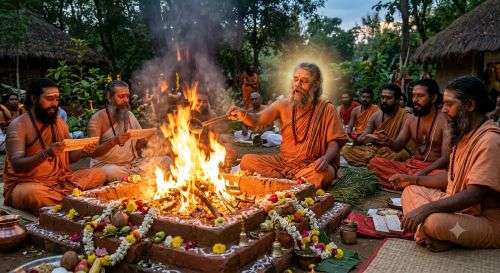
The seer then invokes Indra and Brahmaṇaspati together. Their swift horses, eager for nourishment, rush toward the oblation just as enlightened faculties hasten toward wisdom. The melodious chants of the Adhvaryu priest, performed with discipline and devotion, attract the presence of these powers. In battle, whether external or internal, Brahmaṇaspati grants strength, clarity, and victory over the forces that oppose truth.
When Brahmaṇaspati undertakes his exalted work, his sanctified hymns unfailingly accomplish their purpose. He releases the cows, symbols of radiant knowledge, and causes the great prayer to ascend to heaven. This ascent signifies that sincere aspiration, empowered by truth, rises beyond the limitations of the finite mind and reaches the universal consciousness from which all blessings descend.
In conclusion, the sage offers a prayer of enduring relevance: “O Lord of all beings, enrich us through the steadfast principles of truth. Grant us children and grandchildren, nourish our lineage, and accept our offerings.” The Vedic aspiration is not for isolated success but for the flourishing of generations under divine protection. A life rooted in sacred speech, ethical conduct, and reverence for cosmic law becomes a blessing to family, society, and the world.
Thus, the hymns of Śaunaka Gr̥tsamāda reveal Bṛhaspati and Brahmaṇaspati as the luminous intelligence that breaks through darkness, releases hidden potential, and harmonizes the universe. They unite spiritual symbolism with keen observation of nature and the disciplined pursuit of truth. For the modern mind, these ancient verses remain a timeless reminder that wisdom, like rain released from the cloud and light emerging from the dawn, descends when speech, thought, and action are aligned with the eternal order of reality.