

India has always been known as the land of saints, sages, and spiritual wisdom. For centuries, holy men and women have inspired others to live lives of compassion, truth, self-discipline, and service. The principles of various reformers and saints have profoundly influenced Indian society, inspiring people to rise above ignorance, superstition, and social constraints. Faith holds a paramount place in the lives of millions of Indians, for it is purity that is the ultimate reality.
But the country has seen the rise of individuals who exploit religious sentiments to satisfy their personal needs, labeled “religious gurus.” They leverage so-called “spiritual language” to establish empires of wealth, influence, and unquestioned power. In numerous cases in India, such women have been accused or convicted of serious crimes such as sexual exploitation, defrauding property owners, illegal land acquisition, intimidation, and other crimes. This not only makes these practices illegal but also tarnishes the reputation of those who practice spiritual practices religiously.
Therefore, any action taken by any authority against someone who uses religion as a cover for criminal acts should be considered part of justice and the rule of law, not an act of persecution against someone’s religion. In a constitutional democracy, no citizen is above the law. There should be no free rein for wrongdoing, and no one should be exempt from the law based on their religious identity.
The Constitution of India recognizes the right of all its citizens to practice religious faith, religious customs, and their propagation as a privilege. This freedom is also subject to other constitutionally recognized limitations of public order, morality, and health. The Constitution provides for religious freedom, but does not permit criminal activities under the guise of religion. Therefore, the government has a constitutional duty, not an obligation, to ban the activities of most unauthorized spiritual leaders, self-proclaimed or “spiritual” leaders, and to investigate cases of financial irregularities or other illegal conduct in their activities.
Religious exploitation poses one of the greatest threats to people by hypocritical religious leaders. Suffering from serious illnesses, struggling with emotional or mental stress, or facing financial hardship, unsuspecting individuals are drawn to charismatic figures who promise miraculous cures, sudden wealth, and miraculous, supernatural solutions to life’s problems. This exploitation can result in financial loss, emotional distress, or worse, lifelong suffering for victims and their families.
Unfortunately, people aren’t the only ones who spread superstition. Society, in fact, is also responsible for fostering a reluctance to question and think critically. Faith is not opposed to reason. True spirituality fosters humility, empathy, and introspection, while blind obedience stifles critical thinking. The problem with a healthy democracy is that it requires citizens who are discerning when it comes to spiritual guidance and manipulation.
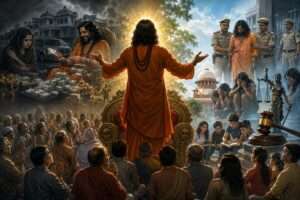
This has become even more difficult with modern technology. Nowadays, a self-proclaimed religious leader can garner millions of followers on social media, who fall prey to carefully crafted stories, emotional manipulation, and absurd claims. Many people equate popularity with credibility. Videos, testimonials, and sensational content can create the illusion of divinity without any evidence or testimony. Therefore, digital literacy, along with traditional education, is becoming increasingly important to protect citizens from being fooled.
The media bears a tremendous responsibility. Over the past few years, investigative journalism has played a crucial role in exposing several high-profile cases of abuse of power by self-proclaimed spiritual leaders. At the same time, media organizations must exercise extreme caution in presenting fair, balanced, and emotion-free reporting. When journalism is based on evidence rather than speculation, it further strengthens public trust.
The police must also be impartial and neutral. All allegations must be investigated, and every accused has the right to due process of law. Public pressure and politics should not influence action; it should be based only on credible evidence. Similarly, innocent religious leaders and religious institutions should not be attacked or harassed simply because of their beliefs and popularity. There must be a balance between punishing the guilty and protecting the innocent.
It is also noteworthy that thousands of religious and spiritual organizations in India are doing commendable work in areas such as education, healthcare, disaster management, environmental protection, and helping the underprivileged. They have established schools, hospitals, community kitchens, and charitable programs that benefit millions. These are valuable contributions and deserve recognition. This is not a fight against religion or spirituality—it is a fight against crime and exploitation in the name of religion or spirituality.
Schools have a significant responsibility to inculcate scientific temper, constitutional values, and moral values in children. Indonesia and India have included scientific temper as one of the fundamental duties of citizens in their respective constitutions. Encouraging critical thinking does not cast doubt on any religion; rather, it increases sensitivity to selfish and distorted individuals who misuse religion for their own selfish ends.
Civil society organizations, responsible spiritual teachers, religious scholars, community leaders, and others can also play a vital role in ensuring greater transparency, accountability, and integrity in spiritual organizations. Greater openness, better regulation, and increased income will increase trust and maintain the authenticity of genuine spiritual organizations.
In any case, the problem is not limited to hypocritical “religious leaders.” It is a broader issue involving faith, freedom, accountability, and the rule of law. A tolerant and constitutionally conscious society is better, broader, and stronger. On the other hand, if crime is fueled by the spiritual activities of believers and these believers are allowed to become criminals, both democracy and faith are weakened.
India’s spiritual heritage has endured for ages because it is based on truth, compassion, and moral accountability, not fear, deceit, and cult of personality. Preserving this heritage is essential, and it requires the courage to challenge those who derive personal power from the misuse of sacred symbols.
Its purpose should never be to destroy faith, but rather to preserve its sanctity. This is nothing to be proud of or afraid of, as legitimate investigations are never appropriate for a true saint or spiritual leader. On the contrary, strict action should be taken against fraudulent individuals, thereby protecting the authenticity of religious traditions and giving religious institutions credibility among the public.
A healthy democracy must not only make it clear to the public that their religion is held in the highest regard, but also clearly communicate to them that the rule of law must prevail. In a just society, where everyone is treated equally regardless of social status, political power, or religious belief, both democracy and spirituality will flourish. Therefore, India must continue on this journey.