Special Correspondent
Merit sidelined, parents allege; SMC must answer
The Hyderabad Cricket Association’s (HCA) selection of its Women’s U-23 T20 squad has triggered a storm of allegations from aggrieved parents, who question whether merit, transparency and accountability have survived the latest exercise. Their daughters, they contend, have justifiable performance records but have been overlooked, while the selection of certain players and the appointment of the vice-captain have raised serious questions about the criteria applied.
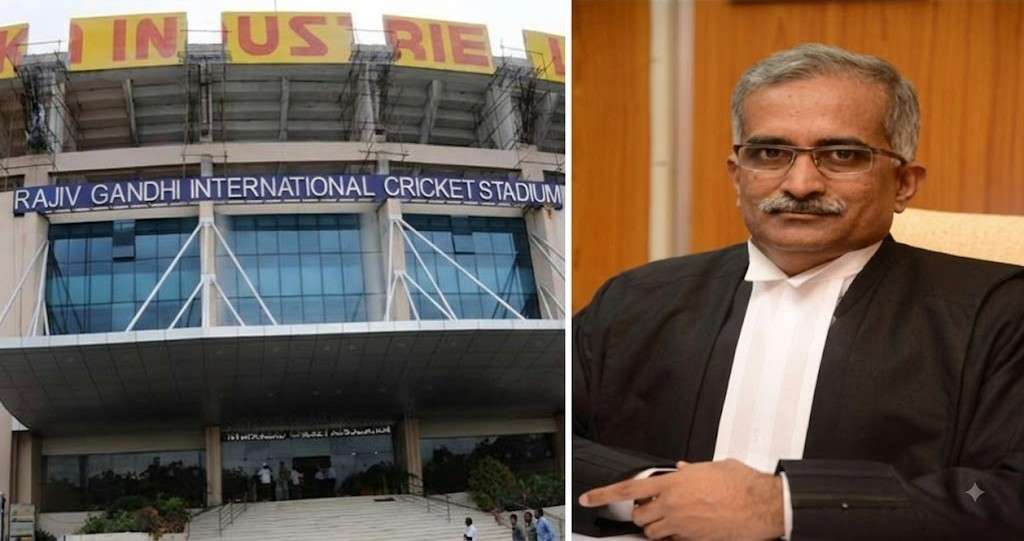
The parents, who chose to remain anonymous for fear of repercussions against their daughters’ cricketing prospects, have approached Orangenews9 with complaints, alleging that no other media house was willing to provide them space to air their grievances. Their concerns go beyond disappointment over individual selections. They allege that the system continues to favour influence over performance, despite the Telangana High Court-appointed Special Management Committee (SMC), headed by Justice P. Naveen Rao, assuming responsibility after the elected Apex Council’s term ended on October 20.
Their pointed question is whether a change in administrative oversight has brought any meaningful change to the selection culture—or merely changed the custodians of a system they believe remains beyond scrutiny.
The controversy erupted following the announcement of Hyderabad’s squad of 15 players and five stand-byes for the opening three matches of the BCCI Women’s U-23 T20 Trophy Elite 2026–27, scheduled to begin in Raipur on November 14.
Where were the trials?
At the heart of the parents’ complaint is a fundamental question: were formal selection trials, probable matches or structured comparative assessments conducted before the squad was finalised?
They allege that no transparent, demonstrable evaluation process was evident and demand that HCA disclose precisely how the selectors arrived at their decisions. If trials were conducted, the association should identify when and where they took place, who supervised them and what performance benchmarks were applied. If an alternative method was adopted, that too deserves an explanation.
A state jersey is not an administrative favour. It is earned through performance, consistency, fitness, discipline and the ability to deliver under match conditions. Without a transparent selection framework, even a genuinely deserving selection can become vulnerable to suspicion.
Questions over individual selections
The aggrieved parents have specifically questioned the selection of Kunchala Niteesha as vice-captain, seeking evidence that her recent performances justify the responsibility in a demanding T20 competition.
They have also called for scrutiny of the recent records of Drithi Kesari, particularly her wicket-taking returns; Sandhya Gora’s recent performances and T20 suitability; Kranthi Reddy Nalla’s consistency over the past three seasons; and Eddla Srujana’s wicket-taking record in previous seasons of state representation.
Questions have additionally been raised about whether Eddla Darshini’s recent U-19 performances justify her elevation to the U-23 squad, and what documented performance benchmarks supported Ediga Meha Laxmi’s inclusion, given the parents’ contention that she lacks an established record at the U-15, U-19 or U-23 state level.
These are allegations and questions, not established findings of wrongdoing. Their validity must be tested against official scorecards, season-wise statistics, match footage and the same selection standards applied consistently to every player. The named cricketers must not be condemned on the strength of parental complaints alone.
But neither should legitimate questions about merit be brushed aside merely because they concern selected players.
The parents also cite Hyderabad’s recent U-19 campaign, in which the team reportedly won only two of five matches before elimination, asking whether lessons from that performance have informed the present selection exercise. The relevance of that record to individual U-23 selections, however, must be assessed on cricketing grounds rather than assumed.
The shadow of alleged influence
More disturbing are the parents’ allegations about brokers, intermediaries and powerful individuals allegedly influencing HCA decisions. They claim that concerns involving financial inducements and inappropriate personal favours warrant investigation.
These serious allegations have not been independently substantiated and must not be presented as facts. Nevertheless, if credible evidence exists, the appropriate authorities should examine it independently and fairly.
Questions have also been raised about the alleged influence of individuals, including Naveen Rao and Chamundeshwarnath. Any suggestion of their involvement requires documentary evidence, and those concerned must have a fair opportunity to respond.
The larger issue is institutional: what safeguards prevent recommendations, conflicts of interest or improper considerations from influencing team selection? An association entrusted with young players’ futures cannot expect public confidence without demonstrating that such safeguards exist.
Justice must mean accountability
The parents’ frustration is sharpened by the expectation that judicial oversight would restore credibility. They question whether the SMC has adequately scrutinised the selection process and insist that a committee operating under court-appointed supervision should set higher standards of transparency, not lower them.
Judicial oversight does not automatically establish that every administrative decision is fair. Equally, allegations against the selection process do not establish that the SMC or any individual has acted improperly. The answer lies in records, evidence and an impartial examination—not insinuations or silence.
HCA must clarify whether trials were held, publish the selection methodology, explain the basis for the captaincy and vice-captaincy appointments, and disclose how the five stand-byes were evaluated. If credible evidence of manipulation is submitted, an independent review would be appropriate.
A jersey must be earned
The selected players deserve a fair opportunity to compete, and their performances should be judged on the field. Predicting failure before the tournament would be premature. But the right to play carries no exemption for administrators from answering legitimate questions about how the team was assembled.
Behind every aspiring woman cricketer are years of training, family sacrifice and financial commitment. If parents believe that performance cannot secure opportunity, the damage extends beyond one squad: it threatens confidence in the entire system.
The complainants fear that, unless the selection process is made demonstrably fair, Hyderabad cricket risks normalising a ‘pay-to-play’ culture rather than rebuilding its past glory. That remains their allegation, not an established conclusion.
The decisive question for HCA and the SMC is straightforward: can they demonstrate, with verifiable records, that merit—not influence—determined the composition of this squad?
Until they do, the controversy will persist. A state jersey must be earned on the field, not secured through influence behind closed doors.