
Special Correspondent
The Court appointed an SMC to supervise HCA, not to run behind its office bearers. Did the Apex Council ever formally seek approval for an AGM, an Electoral Officer or the election of a President? If it did, where is the paper trail? If it did not, what was it waiting for?
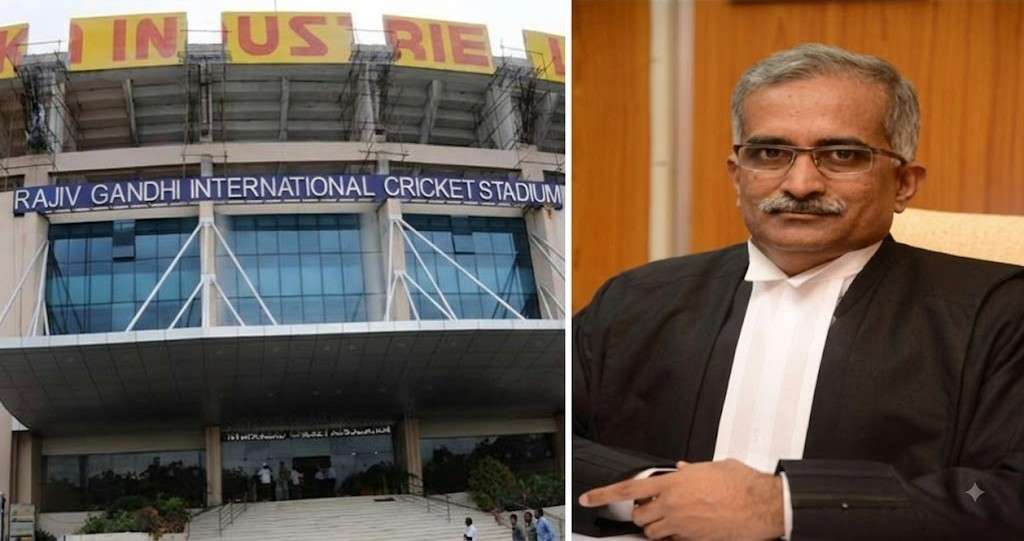
Hyderabad cricket is without an elected council, while the court-appointed Single Member Committee (SMC), headed by Justice P. Naveen Rao, holds the reins. This four-part series examines where the Hyderabad Cricket Association (HCA) stands today. Part 1 deals with the governance vacuum; Part 2 examines the Court’s mandate and the shortfalls; Part 3 focuses on the game, particularly selections and the districts; and the concluding Part 4 examines integrity, money and the questions the SMC must answer.
Justice P. Naveen Rao did not walk into the Hyderabad Cricket Association by choice. The High Court sent him there after years of administrative chaos, repeated interventions and committees that failed to put the house in order. The Court found HCA’s functioning “in shambles” and stepped in to restore order.
But here is the crucial distinction: the Court did not abolish the elected Apex Council. It expected the council to function under supervision.
The judgment of April 24, 2026, was explicit: “The Apex Council … shall function under the supervision of Justice P. Naveen Rao.” It further directed that the council “shall obtain approval to all decisions and seek guidance from SMC in all matters”.
Supervision was not a licence for inaction. Nor was it an invitation for elected office bearers to surrender responsibility and wait for someone else to do their work.
The council remained responsible for running the association, convening meetings, placing accounts before members and initiating the electoral process. If approval or guidance was required, the route was clear: make a proper proposal, pass a valid resolution and place it before the SMC.
The Court provided the framework. The rulebook provided the procedure. What, then, prevented the council from acting?
The rulebook was not optional
HCA’s Rules leave little room for confusion about the obligations of its office bearers.
The AGM: Rule 8(1) requires the Annual General Meeting to be held every year by September 30, at a place and time fixed by the President. Under Rule 7(3)(d), the Secretary convenes the meeting with the President’s concurrence.
The accounts: The Secretary must circulate the statement of accounts prepared by the Treasurer to members, and the AGM must adopt the audited accounts.
The elections: Rule 8(2) provides for elections every three years at the AGM. Rule 33(1) requires the Apex Council to appoint an Electoral Officer, a former member of the Election Commission of India, at least four weeks before the AGM.
The President: On June 8, 2026, the High Court directed the Secretary to convene a Special General Body meeting within 45 days to elect a President.
These were not optional tasks to be undertaken when convenient. They were obligations arising from the association’s own Rules and the Court’s directions.
Each required action by the office bearers and, where applicable, the SMC’s approval. A stray letter, an informal conversation or a WhatsApp message cannot automatically substitute for a properly documented proposal supported by a valid council resolution passed at a meeting with the required quorum.
Members have not been shown such proposals concerning the AGM, accounts, appointment of an Electoral Officer or election of a President.
If they exist, publish them. If they do not, explain why they were never made.
That leaves two uncomfortable but unavoidable questions. Did the Apex Council follow the Rules and submit proper proposals to the SMC? If it did, did the SMC fail to act on them?
If the council never made the necessary requests, responsibility cannot simply be shifted to the supervisor. If it did make them and they remained pending, the reasons for the delay must be placed on record.
Either way, the paper trail matters. Accountability cannot operate on whispers, assumptions or selective recollections.
A President without an election
The President’s post offers the clearest illustration of the administrative paralysis.
After the elected President was arrested in July 2025, the post remained unfilled through an election. In February 2026, the then Ombudsman issued an order declaring a person President. The High Court subsequently noted that the individual had neither been elected by the General Body nor held the position of Vice President.
On June 8, 2026, the High Court set aside that arrangement and directed the Secretary to convene a meeting within 45 days to elect a President.
The deadline expired in July. Yet, according to the record available to members, no such meeting was convened.
Was the direction stayed or modified in appeal? If so, the relevant order should settle the question. If not, why was the High Court’s direction not implemented?
There is an especially troubling contrast here. Office bearers found time to pursue litigation against one another, with the Secretary filing a contempt case against the Acting President. But where was the same urgency in convening the meeting required to elect a President?
When litigation moves faster than administration, something is seriously wrong with the priorities.
The point is not to deny anyone the right to approach a court. It is to ask why energy spent fighting over authority did not translate into the lawful process required to fill the vacant post.
Running down the clock
The Apex Council’s three-year tenure was prescribed under Rules 6(2) and 14(4). Its expiry was not an unforeseen event. The date was knowable from the day the council was elected.
Yet the tenure ran out without an AGM, without accounts being placed before members, without an Electoral Officer being appointed and without elections being called.
The calendar was predictable. The consequences were avoidable.
Some may argue that the accounts could not be finalised because they had been frozen during the CID inquiry, or that internal disputes made decisions difficult. Those circumstances, if established, deserve consideration. But neither administrative difficulty nor factional conflict automatically suspends the Rules.
The council had a straightforward option: approach the SMC formally, explain the obstacles and seek directions. If necessary, the SMC could seek further orders from the High Court.
A difficulty is a reason to seek guidance, not an excuse for indefinite inaction.
The result is a governance vacuum. Under Rule 14(10), the Apex Council is HCA’s governing body under the Societies Registration Act. Its term has expired, leaving members entitled to ask who now exercises authority, under what legal arrangement and with what safeguards.
It would be premature to declare why the vacuum was allowed to develop without examining the complete record. But the consequences are plain: no elected council means diminished accountability to members, uncertainty over decision-making and further delay in restoring normal governance.
An election produces a verdict. A vacuum postpones one. That is precisely why the circumstances surrounding the delay deserve full transparency.
Ghosts in the cabins
Members have reported that some outgoing office bearers continued to use cabins at the Uppal stadium and chair meetings even after their tenure ended. They also say that name boards remained on office doors.
These claims require verification. If the cabins have been vacated and the name boards removed, the matter should be put to rest. If not, the SMC must clarify the position.
The questions are straightforward: Do former office bearers retain any authority after their tenure has expired? If they do, under which order or provision? If they do not, on what basis are they continuing to occupy official spaces or chair meetings?
The concern is heightened by the High Court’s recorded observation about the council’s “non-cooperative approach and attitude” and its finding of a prima facie case of contempt against two office bearers.
A prima facie finding is not a final determination of guilt. But it is certainly not a licence to ignore the Court’s concerns.
HCA cannot be expected to restore institutional discipline if the distinction between holding office and having held office becomes blurred. An expired term cannot be extended by a name board, an occupied cabin or a chairperson’s claim to authority.
What members expect from the SMC
The High Court entrusted the SMC with substantial powers to monitor HCA’s administration in accordance with its orders, undertake structural reforms, establish systems and procedures, and seek further directions whenever necessary.
With the Apex Council’s term over, the need for decisive action has become even more pressing.
First, the SMC must establish whether the June 8 direction to elect a President was complied with, stayed or modified. If it remains operative and unfulfilled, the matter should be placed before the High Court for appropriate directions.
Second, the SMC should seek clarity from the Court on interim governance and a time-bound electoral roadmap. HCA cannot be left indefinitely between an expired council and an unfinished reform process.
Third, structural reforms must move beyond declarations of intent. An effective anti-corruption mechanism and a functioning Prevention of Sexual Harassment (POSH) framework are among the systems that require serious attention.
Fourth, members deserve written updates on decisions taken, proposals received, pending matters and the steps planned to restore elected governance.
The SMC must not merely occupy the space left by the council. Its mandate is to help rebuild an institution capable of functioning transparently, lawfully and independently.
The appointment of Justice Naveen Rao initially raised hopes among members who had watched HCA’s administrative troubles drag on for years. That confidence must be protected through visible action, clear communication and measurable progress.
Hope cannot become another casualty of HCA’s governance crisis.
Put the right people in the right chairs
The next phase is as important as the election itself. Who administers HCA in the interim, and who sits on its committees, will determine whether reform takes root or old patterns return under new arrangements.
Interim appointments must be based on competence, independence and integrity. Anyone with a potential conflict of interest should be assessed transparently. Those connected to clubs or academies whose interests they may be required to adjudicate should not be placed in positions where impartiality could reasonably be questioned.
The same principle applies to electoral ambitions. Anyone intending to contest the next election must not be allowed to use an interim administrative position to gain an unfair advantage.
This is not about excluding people merely because they are familiar faces. It is about establishing clear safeguards against favouritism, conflicts of interest and the misuse of institutional positions.
Every appointment sends a message. Appointing people whose interests may be affected by their decisions will invite suspicion. Choosing competent, independent professionals and former cricketers with demonstrable integrity will offer a credible signal that the culture is changing.
Reform must not merely be announced. It must be visible in who is appointed, how decisions are made and whether the same standards apply to everyone.
What must happen now
The way forward is neither complicated nor obscure.
- Publish the paper trail. The outgoing office bearers should disclose every valid proposal and council resolution submitted to the SMC concerning the AGM, accounts, Electoral Officer and President’s election, along with the decisions or responses received.
- Return to the High Court where necessary. The SMC should place the expiry of the council’s term and the unresolved governance questions before the Court and seek clear directions on interim administration and an election timetable.
- End ambiguity over authority. The SMC should clarify who may exercise administrative powers after the council’s term has expired. No former office bearer should exercise authority unless supported by a valid legal basis or a specific Court direction.
- Make interim appointments credible. Committee members and administrators must meet transparent standards of competence, independence and freedom from conflicts of interest.
- Publish a reform roadmap. Members should know which reforms will be implemented, who is responsible for them and when progress can be expected.
These are not demands for confrontation. They are the minimum requirements of responsible administration.
The Court gave HCA a referee. It did not take the bat away from the elected council. The council was expected to play by the Rules, seek approval where required and discharge its responsibilities. If it failed to do so, that failure must not disappear behind the convenient claim that the supervisor was in charge.
At the same time, supervision carries its own responsibility. Where proposals were properly submitted, their fate must be explained. Where the Court’s directions remain unimplemented, the SMC must act within its mandate and seek further judicial guidance when necessary.
The objective is not to trade one set of unanswered questions for another. It is to restore a system in which decisions are documented, authority is lawful, members are informed and elections are held on time.
HCA does not need another round of blame-shifting. It needs answers, accountability and an election roadmap. The Rules were always there. The question is why those entrusted with upholding them failed to deliver—and what will now be done to ensure that the same failure is not repeated.