Special Correspondent
The expiry of the Hyderabad Cricket Association (HCA) Apex Council’s term on October 20 appears to have triggered anxiety and a fresh debate among club secretaries over the Association’s future. After years of controversies, litigation and administrative disputes, stakeholders are once again debating what went wrong, who should be held accountable and what needs to change. Yet, the timing of these voices raises an equally important question: why did some of these concerns surface only when the term was drawing to a close?
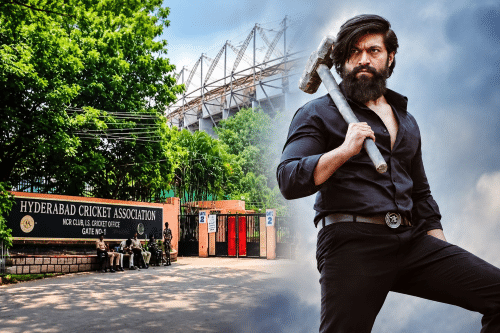
And while the arguments raged, the corridors served up a twist straight out of KGF, the blockbuster movie about rival gangs battling for control of the Kolar Gold Fields: rival camps that spent three years fighting each other, it is said, have suddenly found common cause.
The debate began with what one club secretary described as a “wolf call”—an appeal for collective responsibility and better governance among club secretaries. Interestingly, his own club is under scrutiny. He argued that electing two representatives from each panel could have ensured balanced representation, encouraged collective decision-making and served the interests of Hyderabad cricket and its members. That expectation, he suggested, had not materialised.
He also raised concerns over important decisions allegedly taken without adequate deliberation by the Apex Council. These included appointments of academy coaches and other staff, reportedly without public advertisements in newspapers or on the HCA website, as well as an increase in two-day and three-day teams without clearly defined criteria or the council’s formal concurrence.
If established, such practices would raise legitimate questions about transparency, equal opportunity and compliance with institutional procedures. Major administrative decisions cannot be reduced to the preferences of individuals; they must be supported by clear rules, documented deliberations and accountability.
However, the appeal for reform was met with an equally pointed counterargument from another club secretary: where were these voices when the controversies first emerged?
He cited the episode in which a president was declared elected without an election, a decision subsequently struck down by the High Court; questions surrounding fund withdrawals; the non-circulation of the 87th AGM minutes; and an allegedly irregular adjourned AGM convened on three days’ notice, without a quorum and with 57 clubs kept out, which ended up in court. He also questioned why the amendments associated with Justice Nageswara Rao, accepted at the 86th AGM, had not been implemented.
The counterargument went further. If the appointment of coaches and expansion of teams were concerns now, why had they not prompted the same degree of protest when those decisions were being taken? Speaking up at the end of a council’s tenure, the secretary argued, could not erase years of silence among members who had witnessed the developments.
There is also a third view, quieter but sharper, doing the rounds in members’ circles. It asks why the spotlight has fallen only on those who were arrested, when others who sat at the same table for three years remain untouched. Some of them, members point out, are already under the cloud of contempt proceedings. Many feel accountability must be equal, and that time will show who was shielding whom.
But a contempt case is about obeying a court’s orders; it is not proof of wrongdoing. Who else shares the blame is for the Special Investigation Team ordered by the High Court, and ultimately the criminal courts, to decide. If there is a hidden hand, members should demand that the investigation finds it, and that it reaches everyone, whatever post they held. Equal justice is worth fighting for; it must also be justice by evidence.
That brings us back to the KGF twist. Leaders of three groups, the talk goes, have written to the SMC seeking an AGM and elections to the Apex Council. If true, it reads like a KGF script: warring camps of the gold fields who could not sit in one room for three years now march together to the gate, not to clean up the mine, but to decide who gets the gold. And as in any good gangster saga, it is whispered that part of the gang runs its operations from overseas, pulling strings in Hyderabad by remote control.
The irony is hard to miss. The AGM due by September 30 was never called while these camps were in the saddle, and the minutes of the last one never reached members. Now, with the term over and the SMC in charge, the same voices want an AGM in a hurry.
An election held in a hurry, on the same disputed voters’ list and the same unreformed rules, would hand the gold fields back to the same hands for another three years. In KGF, the throne goes to whoever is strongest. HCA cannot afford that ending. Its members need a clean roll and clear rules first; only then a vote.
This exchange exposes a deeper problem within HCA: accountability cannot be selective or conveniently timed. Those who exercised authority must explain their decisions, but members who had opportunities to question questionable practices must also examine their own role. The responsibility for institutional decline, if established, cannot automatically be attributed to one individual or one council alone.
The dispute also highlights the need to distinguish allegations from established findings. Every charge concerning elections, finances, appointments or meetings must be examined against documentary evidence, court orders and the Association’s rules. Personal accusations will not repair HCA; verifiable facts and enforceable reforms might.
The suggested way forward is to support the High Court-appointed Member Committee (SMC), which has been involved in the reform process, and prioritise institutional corrections before holding fresh elections. A clean and legally defensible voters’ list, transparent procedures, time-bound reform measures and regular updates to members should be central to that exercise.
Elections are essential, but elections alone cannot guarantee good governance. Without credible electoral rolls, clearly defined powers, collective decision-making and financial transparency, a change of office-bearers could merely reproduce familiar disputes.
Hyderabad cricket deserves better than recurring courtroom battles and exchanges of accusations after the damage has been done. The present debate should therefore become an opportunity for genuine introspection—not another contest over who remained silent and who spoke last.
The ultimate test is not who occupies the HCA’s offices next, but whether its stakeholders can place the game above personal interests, respect institutional procedures and ensure that accountability applies equally to office-bearers and members. Reform must come first; elections must follow on a clean and credible foundation.