Lakshmanrao Upadhyayula
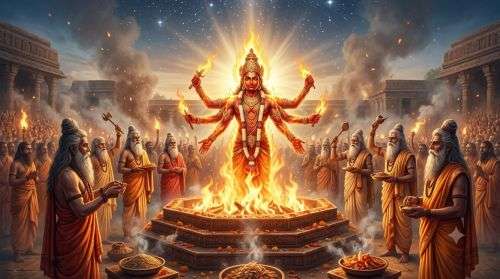
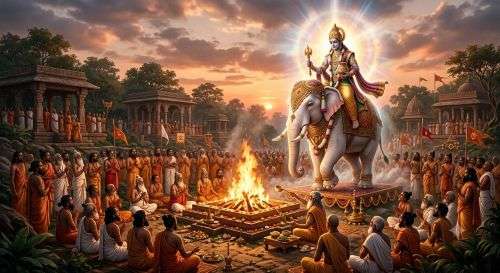
In the Br̥hatī meter of the ancient Rigveda, the sage Vishwamitra raises a profound invocation to Indra, the divine guardian of strength, courage, and celestial order. His prayer is not merely a request for material blessings but a sacred dialogue between humanity and the cosmic forces that sustain existence. The hymn envisions Indra approaching the sacrificial ground in splendor, drawn by magnificent horses whose flowing manes shimmer like the radiant feathers of a peacock. Their beauty symbolizes vitality, speed, and the harmonious movement of natural energies that connect heaven and earth. The arrival of the deity upon such noble steeds signifies the descent of divine power into the sphere of human aspiration and worship.
The sage prays that no obstacle may hinder Indra’s journey to the holy yajna. Just as a bird flying through the sky may encounter the hunter’s snare, so too can noble endeavors face unseen impediments. Therefore, Vishwamitra beseeches the deity to transcend every obstruction and arrive unhindered. The imagery expands further through the comparison of a traveler crossing a vast desert. Such a traveler endures heat, fatigue, and uncertainty before reaching the desired destination. Likewise, the divine force is invoked to pass beyond all barriers and enter the sacred precincts where the offerings of devotion await. This reflects a profound spiritual truth: the sincere seeker must persevere through difficulties until divine grace manifests within the heart.
Indra is celebrated as the destroyer of Vṛtra, the cosmic adversary who restrained the life-giving waters. In Vedic thought, this victory represents the triumph of order over stagnation, light over darkness, and movement over obstruction. By breaking the clouds and releasing the rains, Indra becomes the sustainer of agriculture, fertility, and prosperity. From a scientific perspective, the hymn reflects the deep observation of natural cycles by Vedic seers. Rainfall, rivers, and seasonal renewal were recognized as essential to civilization, and the forces governing these phenomena were revered through sacred symbolism. Thus, Indra’s conquest signifies both a spiritual liberation and the natural release of atmospheric waters that nourish the earth.
The hymn further praises Indra as the conqueror who shatters enemy fortresses and removes forces that threaten harmony. Mounted upon his chariot and guiding his powerful horses, he advances toward the sacrificial assembly as the protector of righteous communities. The chariot symbolizes directed energy, disciplined action, and purposeful movement. In the Vedic worldview, divine strength is not exercised for destruction alone but for the preservation of truth, justice, and collective well-being. Indra’s power is therefore understood as the force that overcomes chaos and establishes stability in both the physical and moral realms.
For cows, which symbolized abundance and sustenance, and for gentle and virtuous people, Indra provides nourishment in the form of barley, milk, fruits, and prosperity. These gifts reflect the agricultural foundation of Vedic society, where human flourishing depended upon the harmonious interaction of rainfall, fertile soil, livestock, and diligent labor. The hymn recognizes that prosperity is not merely accumulated wealth but the abundance necessary for the flourishing of families and communities. Indra strengthens the weak, sustains the righteous, and enriches those who live in accordance with sacred principles.
The seer proclaims that Indra causes the boundless oceans to flourish and fulfills the aspirations of those who faithfully conduct yajnas. The oceans, vast and immeasurable, symbolize the reservoirs of cosmic potential from which life emerges. In spiritual understanding, they represent the infinite depths of divine wisdom and abundance. The yajna itself is more than ritual performance; it is a sacred act of reciprocity between humanity and the universe. Through gratitude, discipline, and offering, human beings align themselves with the rhythms of cosmic order and, in return, receive blessings that sustain life and spiritual growth.
Vishwamitra compares the abundance of soma awaiting Indra to herds of cattle finding rich grasslands, refreshing ponds, and expansive lakes. This imagery evokes the fullness of nature’s generosity. Just as cattle thrive when supplied with water and nourishment, divine energies are joyfully welcomed through sincere worship and sacred offering. Soma symbolizes inspiration, illumination, and the blissful communion between the mortal and the divine. The hymn thereby expresses the mutual relationship between devotion and divine presence, where reverence invites spiritual enrichment.
The sage then draws on the image of a father entrusting wealth to a mature son capable of managing the household’s responsibilities. This comparison reveals a profound Vedic principle: blessings are most meaningful when accompanied by wisdom and strength. Therefore, Indra is asked to grant descendants who are courageous, victorious over adversity, and endowed with prosperity. Such a request extends beyond personal gain, emphasizing the continuity of virtue, responsibility, and noble character across generations.
Another vivid image portrays hungry people shaking trees so that ripe fruits may fall to satisfy their needs. In the same spirit, the worshippers pray that Indra may release the treasures of abundance and provide the riches necessary to fulfill righteous desires. This metaphor reflects the Vedic understanding that effort and divine grace work together. Human beings must act diligently, yet ultimate fulfillment flows from the benevolent powers that govern creation.
The hymn concludes with reverence for Indra as the possessor of inexhaustible strength, nourishment, and wealth. The deity is invoked to flourish in might and to share the abundance of rich foods, vitality, and prosperity with those who seek his blessings. Beneath its poetic imagery lies a profound vision of existence: divine power sustains natural order, nourishes life, removes obstacles, and rewards sincere effort. Through this sacred prayer, Vishwamitra expresses the timeless aspiration of humanity—to live in harmony with cosmic law, to receive the gifts of nature with gratitude, and to participate consciously in the divine order that upholds the universe.