
Lakshmanrao Upadhyayula
In the Rigvedic tradition, Sage Vāmadeva offers this profound prayer to Lord Indra in the majestic Trishtubh metre, one of the most celebrated poetic forms of the Vedas. The hymn is not merely an invocation for material prosperity but a comprehensive spiritual dialogue between humanity and the cosmic guardian who preserves righteousness, courage, and universal order. Every verse reflects the Vedic understanding that divine grace becomes accessible through truth, disciplined worship, and noble action.
The sage reverently addresses Indra as the beloved of all beings and the supreme master whose greatness is acknowledged even by adversaries. Such recognition symbolizes an eternal principle that genuine power commands respect beyond the boundaries of friendship and hostility. Indra’s wealth is described as truth itself, suggesting that the highest prosperity is inseparable from righteousness. In Vedic philosophy, truth (Satya) is the sustaining force of creation, and the one established in truth naturally becomes the source of abundance and protection.
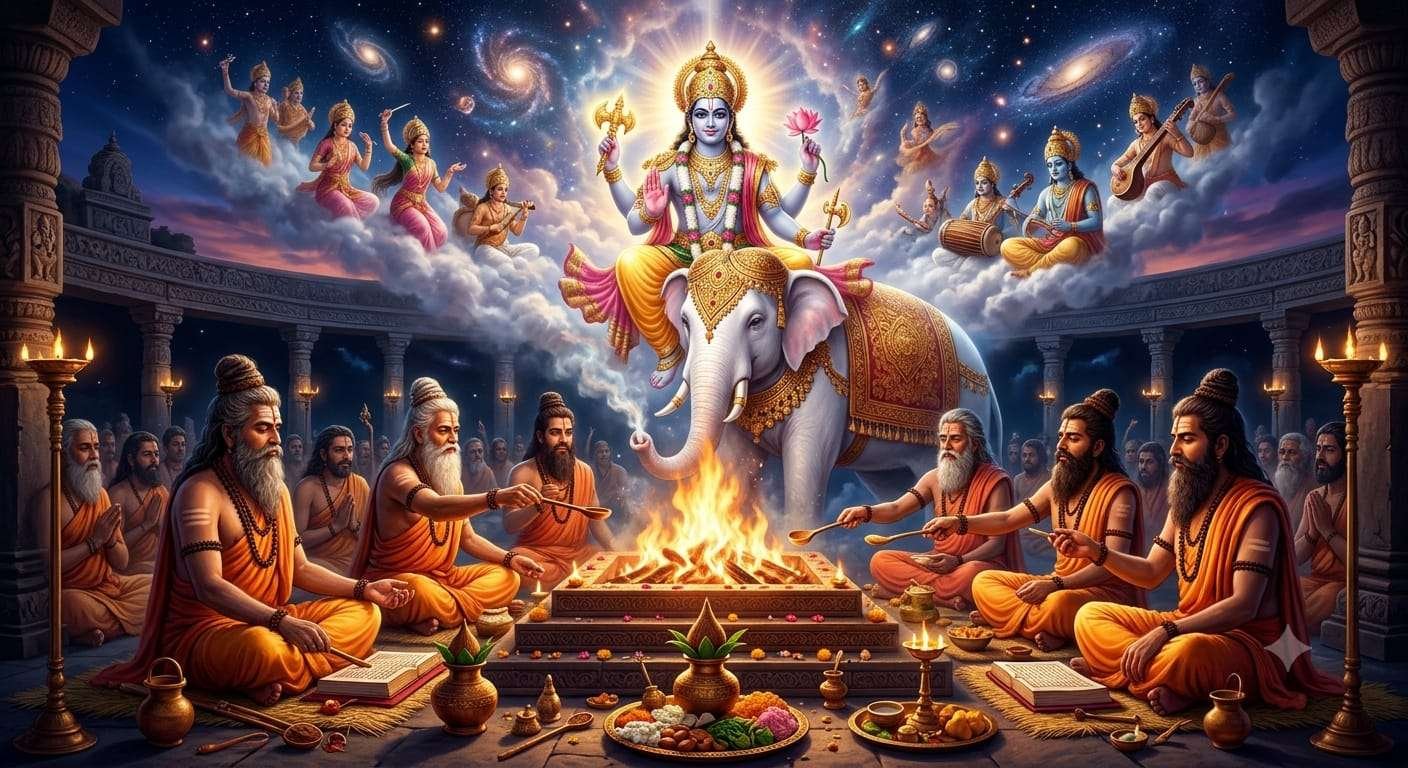
The devotees pray to Indra to nourish them with food, strength, and noble vitality while arriving at every yajña accompanied by swift and radiant horses. In Vedic symbolism, horses represent energy, dynamism, disciplined senses, and the unstoppable movement of life. The yajña signifies not merely a ritual fire but the continuous offering of human effort for the welfare of the universe. Thus, the prayer seeks the harmonious union of divine energy with human dedication.
Indra is praised as the benefactor of humanity, the all-knowing guardian endowed with beautiful horses, boundless courage, and unwavering fearlessness. His omniscience reflects the Vedic vision of an intelligence that perceives both the visible and invisible dimensions of existence. Fearlessness is celebrated as the natural expression of wisdom, for one who upholds cosmic order remains undisturbed by uncertainty or adversity.
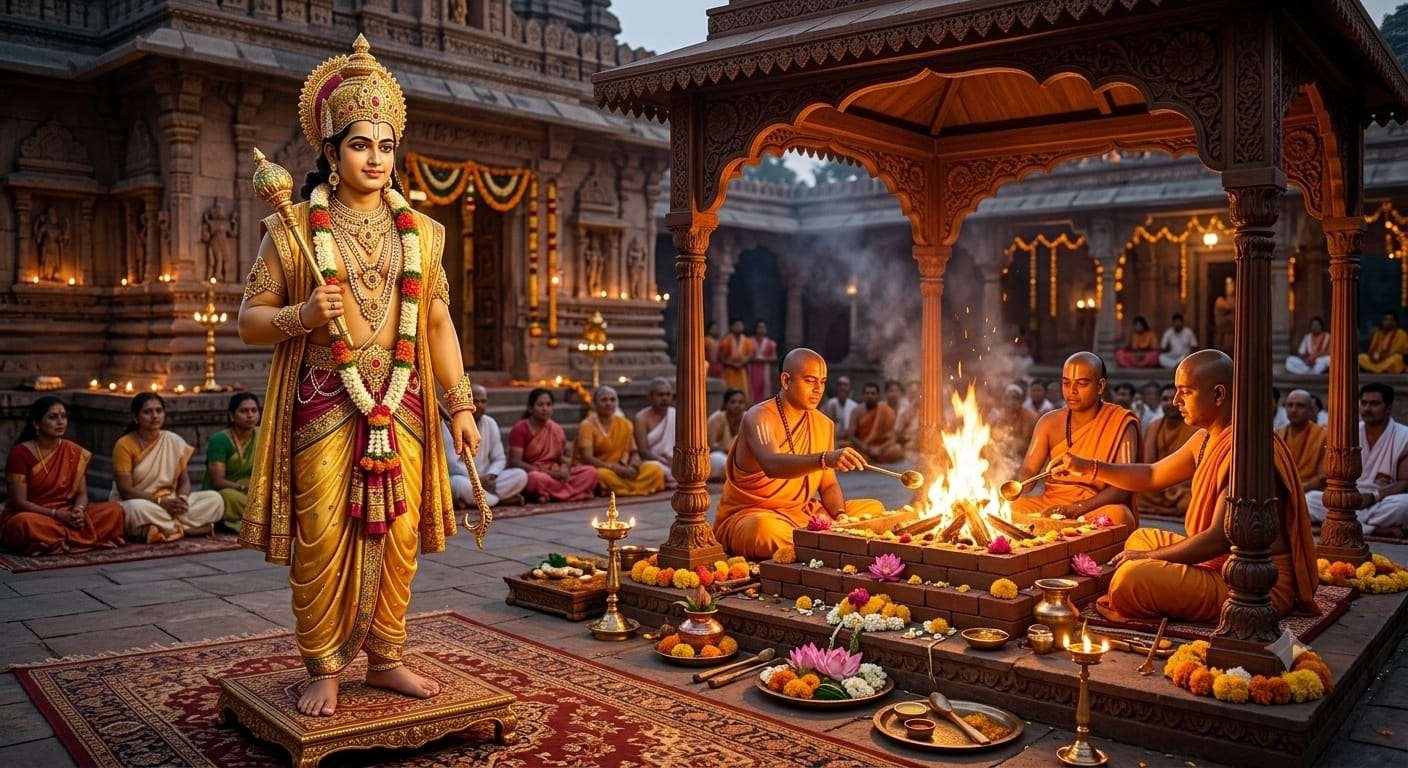
The Soma purifiers invoke Indra with devotion, inviting him into the sanctified sacrificial enclosure through sacred chants. Soma represents the refinement of consciousness, spiritual delight, and the elevation of human awareness rather than merely a ritual offering. The repeated chanting of Vedic hymns creates an atmosphere where disciplined sound vibrations harmonize the mind, intellect, and environment. Modern scientific studies on rhythmic recitation and controlled breathing also suggest their beneficial influence on concentration, emotional balance, and mental well-being, echoing the ancient Vedic appreciation of the transformative power of sacred sound.
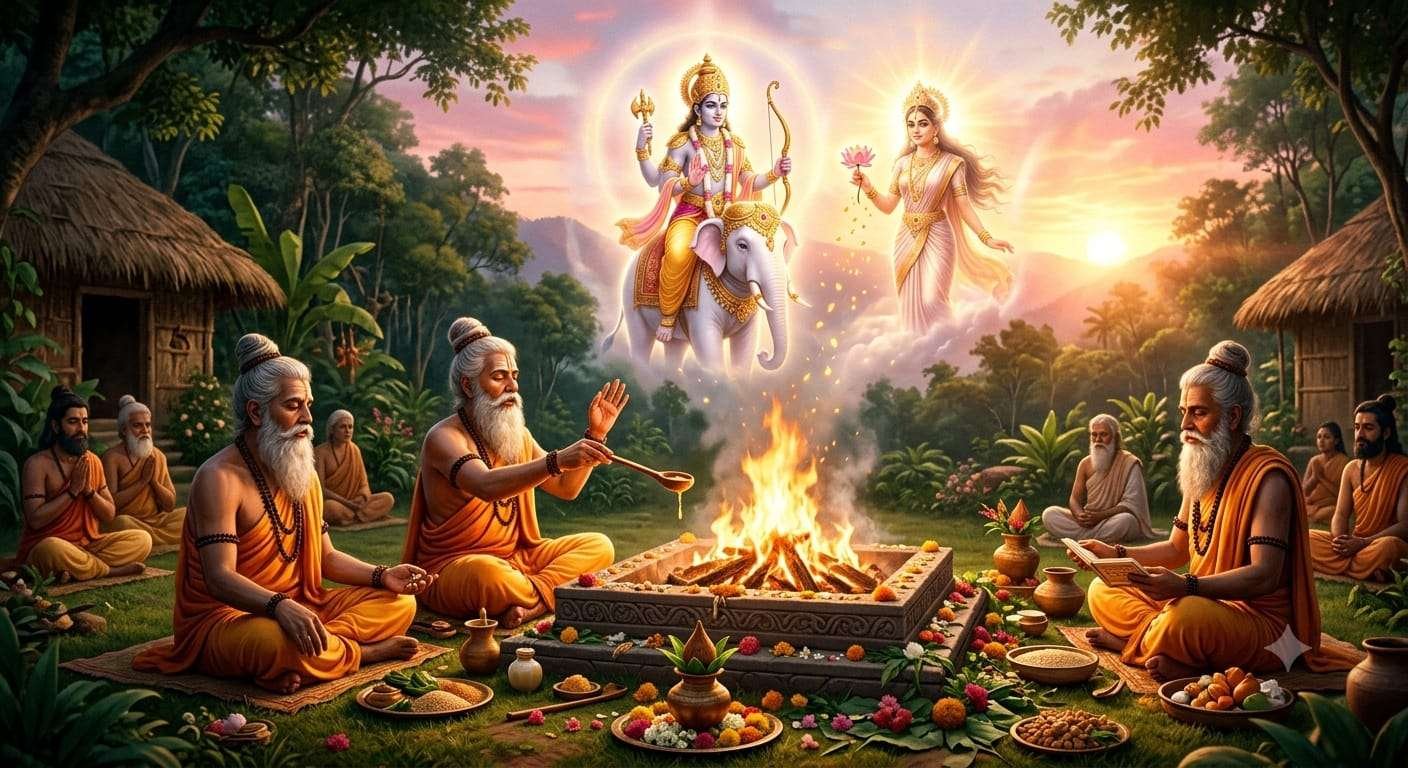
Indra is envisioned arriving with the valiant Maruts, the dynamic deities representing the life-giving forces of nature. Their companionship illustrates the intimate relationship between divine intelligence and the energetic movements of the natural world. The hymn beautifully portrays cosmic harmony in which wind, rain, thunder, vitality, and spiritual aspiration function together to sustain life and prosperity.
The priests declare their resolve to glorify and satisfy Indra through sincere worship and unwavering devotion. This does not imply enlarging the divine but expanding human receptivity to divine consciousness. Every hymn, every offering, and every act of selfless dedication refines the inner being, making the worshipper capable of receiving higher wisdom and greater blessings.
The prayer seeks Indra’s attentive hearing of these sacred hymns so that, delighted by the Soma offering, he may bestow abundant wealth, courage, and lasting security. The aspiration that holy places remain free from fear reflects a timeless Vedic ideal where spiritual centres become sanctuaries of peace, learning, compassion, and social harmony. Such protection is both physical and moral, preserving sacred values across generations.
As the wielder of the mighty Vajra, Indra embodies decisive strength guided by wisdom. The Vajra symbolizes the irresistible power of enlightened knowledge that destroys ignorance and falsehood. The hymn further describes countless horses under Indra’s command, always prepared to draw his celestial chariot. These horses represent inexhaustible cosmic energies that respond to divine purpose with perfect discipline and precision.
The seeker of knowledge, the intelligent thinker, the performer of sacred worship, the generous patron, and every sincere aspirant are assured of Indra’s protection. The Vedic worldview consistently links divine grace with noble conduct, disciplined effort, generosity, and the pursuit of wisdom. Prosperity is therefore viewed not merely as possession but as the fruit of ethical living harmonized with universal law.
The hymn concludes with an intimate expression of surrender and gratitude. Indra is praised as uniquely radiant, immensely wealthy, and the inexhaustible source of sustaining nourishment. The priests acknowledge themselves as his devoted servants living under his divine protection. With humility they pray that whenever Indra distributes riches and blessings, he may remember them as worthy recipients. This closing sentiment beautifully unites devotion with aspiration, teaching that true wealth is received by those who combine wisdom, humility, righteous action, and unwavering faith. Through this sublime hymn, Sage Vāmadeva presents Indra not merely as the god of thunder but as the eternal guardian of truth, courage, knowledge, prosperity, and the harmonious balance of the cosmos.