Washington: President Donald Trump and Prime Minister Narendra Modi will resolve the issue arising out of the threat of US tariffs on India’s purchase of Russian oil, a senior White House advisor said on Tuesday.
The remarks by White House Trade Adviser Peter Navarro came days after the US Senate passed a bill authorising the US President to impose 100 per cent tariffs on the top five purchasers of Russian oil, contending that such business directly financed the Ukraine war.
Navarro said India was not involved in the oil trade with Russia before the Ukraine war broke out in 2022, but got involved later.
Navarro was responding to a question by news agency ANI about the Lindsey Graham bill, which could give Trump the authority to impose tariffs of up to 100 per cent on goods from countries that continue buying Russian oil and gas. His remarks follow ongoing India-US efforts to deepen ties while navigating differences over trade, energy and other key areas.
The proposed tariffs have emerged as a particularly sensitive issue because India remains one of the world’s major buyers of Russian crude.
The Trump aide also spoke about India’s growing purchases of Russian oil after the Ukraine war began. He referred to an opinion article he wrote for the Financial Times around six to eight months ago.
Navarro said he had argued that India was not involved in the Russian oil trade before Moscow’s invasion of Ukraine. He said India’s involvement increased significantly after the war began.
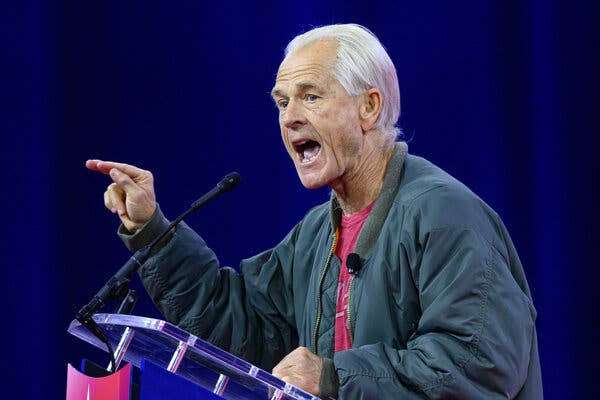
“During the Ukraine-Russia war…6-8 months ago, I think I wrote wrote an op-ed in the Financial Times, which absolutely, factually, correctly, pointed out that before the Russian invasion of Ukraine, India was not involved in the oil trade with Russia, but afterwards it got heavily involved and was selling a lot of refined products on behalf of Russia, which helped feed the war machine,” Navarro said.
He claimed that the issue had since been resolved.
“And that issue has been resolved. Maybe I had a little bit to do with that op-ed,” he added.
Navarro also recalled the strong reaction his comments triggered online in India.
“But I can tell you, I got actually firebombed by the Indian continent on the internet,” he said.
He then cautioned against such responses.
“All I would say to you, don’t do that. That’s not how we resolve problems here in America,” Navarro said.
The US Senate on August 7 passed a bipartisan bill that could authorise the US President to impose tariffs of up to 100 per cent on goods from countries that continue importing Russian oil and gas. The Senate approved the Lindsey O Graham Sanctioning Russia and Iran Act of 2026 by an 86-11 vote.
The legislation is aimed at increasing economic pressure on Russia and Iran. It also seeks to target countries that maintain major energy trade with Moscow.
Under the proposed legislation, the US President would have discretionary authority to impose tariffs of up to 100 per cent on imports from the world’s five largest buyers of Russian crude oil or natural gas. India and China are among the biggest buyers of Russian crude.
The measure would effectively put pressure on major energy-importing countries to choose between continuing to purchase Russian energy and maintaining access to the lucrative US market. The bill also proposes additional sanctions targeting Russian President Vladimir Putin, senior political and military officials, financial institutions and energy-related entities linked to Moscow’s war effort.
It further seeks to extend sanctions to older and reflagged oil tankers allegedly used by Russia to bypass international restrictions and maintain its energy export revenues.
India significantly increased its purchases of discounted Russian crude after the Russia-Ukraine conflict began in 2022. It helped Indian refiners secure relatively cheaper crude at a time when global energy markets were facing major disruptions.
Russia had not traditionally been one of India’s main crude suppliers. The availability of discounted Russian oil changed that equation after the war began. Indian refiners were able to use the cheaper crude to manage input costs and maintain domestic fuel supplies amid volatility in international markets.
The shift also became a source of tension with Washington and its allies, who have argued that purchases of Russian energy provide Moscow with revenues that can support its war effort.
India, meanwhile, has defended its energy purchasing decisions as being driven by national interests and the need to secure supplies for its large domestic market.
The proposed US legislation has therefore put the issue back under the spotlight.