MS Sparsha
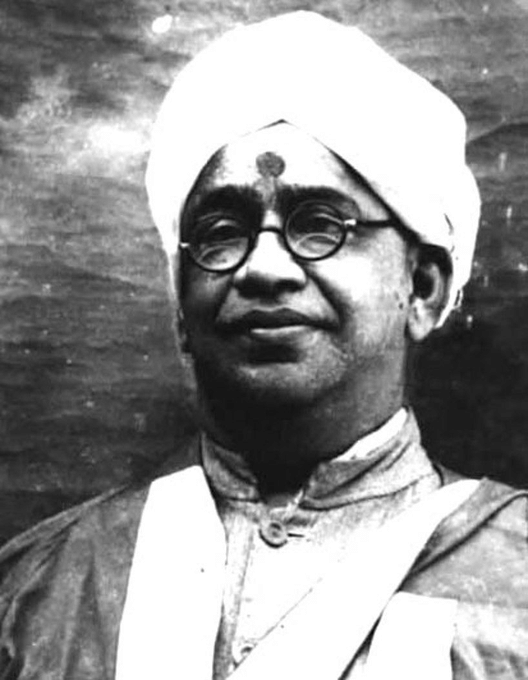
Venkatesh Bapuji Ketkar: The forgotten genius who looked beyond Neptune, challenged convention and lived largely outside the spotlight
What if an Indian schoolteacher, struggling to make ends meet, calculated the possible existence of a planet beyond Neptune nearly two decades before Pluto was discovered? What if he named it Brahma, only for the world to recognise the celestial body under another name years later?
This is not a work of fiction. It is part of the remarkable story of Venkatesh Bapuji Ketkar (1854–1930), an Indian astronomer and mathematician whose achievements deserve to be rescued from the shadows of history.
Ketkar’s journey began with an extraordinary encounter with the heavens. In 1868, at the age of 14, he witnessed a total solar eclipse. What might have remained a fleeting childhood memory became a lifelong fascination with astronomy and the mathematics governing celestial movements.
But life offered him little comfort. He lost his father, himself a practitioner of traditional astronomy, when he was just 16. Financial hardship forced Ketkar to shoulder family responsibilities early. Accounts of his life describe a young man living on meagre means, sometimes finding shelter on other people’s verandahs. Formal education could not take him far enough; his intellectual ambitions, however, refused to be confined by circumstance.
He became largely self-taught, studying traditional Indian astronomical texts such as the Surya Siddhanta alongside Western mathematical and astronomical works. He went on to produce scholarly writings, including Jyotirganita, and pursued a question that bridged two intellectual traditions: how could astronomical calculations be made more accurate?
The answer, for Ketkar, lay partly in questioning inherited conventions.
For centuries, many Indian almanacs had relied on older computational systems. Ketkar believed accumulated discrepancies needed correction. He developed his own methods and promoted the Ketaki Panchang, seeking greater precision in calculating planetary positions, eclipses and calendrical events.
His convictions brought him into debate with Lokmanya Bal Gangadhar Tilak over ayanamsha—the reference used to calculate the difference between tropical and sidereal longitudes. Tilak favoured the Revati-based approach, while Ketkar advocated the Chitra-based system. Their disagreement was not merely academic; it concerned the foundations on which astronomical calculations and traditional calendars rested.
Ketkar was prepared to defend his conclusions, even against a towering national figure. Yet intellectual disagreement did not necessarily mean personal hostility: accounts suggest Tilak encouraged him to put his arguments into a book.
His most intriguing claim emerged in 1911. In a paper published in the Bulletin de la Société astronomique de France, Ketkar calculated the possible existence of two trans-Neptunian planets, naming them Brahma and Vishnu. For Brahma, he estimated a mean distance of 38.95 astronomical units from the Sun.
On February 18, 1930, American astronomer Clyde Tombaugh discovered Pluto. Its average distance from the Sun is about 39.5 astronomical units—a striking numerical proximity to Ketkar’s estimate.
The comparison is fascinating, but it calls for scientific caution. Other astronomers had also predicted an undiscovered planet beyond Neptune, and Pluto’s eventual discovery did not validate every element of Ketkar’s calculations. Pluto is now classified as a dwarf planet, not one of the eight major planets. Nor does this episode establish astrology as a predictive science. Ketkar’s calculations are best appreciated as an intriguing chapter in the history of astronomy.
Recognition, meanwhile, remained elusive. Accounts of his life recount disappointments over academic opportunities and a professorship reportedly offered by Banaras Hindu University in 1918 that he could not take up following his mother’s death. In his final years, illness reportedly affected his memory. One account preserves his defiant response when urged to accept another committee’s preferred ayanamsha: “It is mine, not yours.”
Ketkar died on August 3, 1930, barely six months after Pluto’s discovery.
There is something deeply human about his story: a man who pursued knowledge despite poverty, challenged established authorities and held fast to his intellectual convictions, yet never received the recognition his work might have brought him.
History does not owe every forgotten scholar a claim to greatness. But it does owe serious inquiry to those whose documented work has been overlooked.
Venkatesh Bapuji Ketkar deserves that inquiry—not because he can be declared the undisputed discoverer of Pluto, but because his calculations, scholarship and determination reveal an Indian mind willing to look beyond the accepted limits of its time.
Sometimes, the most compelling human stories are not about those who conquered the world, but about those who saw something worth pursuing and refused to stop looking.