Lakshmanrao Upadhyayula
The sage Vāmadeva, in a hymn composed in the majestic Triṣṭubh metre of the Ṛgveda, invokes Indra and Varuṇa as divine powers who sustain both the visible and invisible dimensions of existence. The hymn is not merely a petition for material prosperity; it is an expression of a profound Vedic vision in which human life, nature, moral order, courage, nourishment and divine protection are interconnected. Through carefully chosen images of fire, rain, cattle, Soma, battle, fertility and kinship, the sage presents a world governed by order, reciprocity and responsibility.
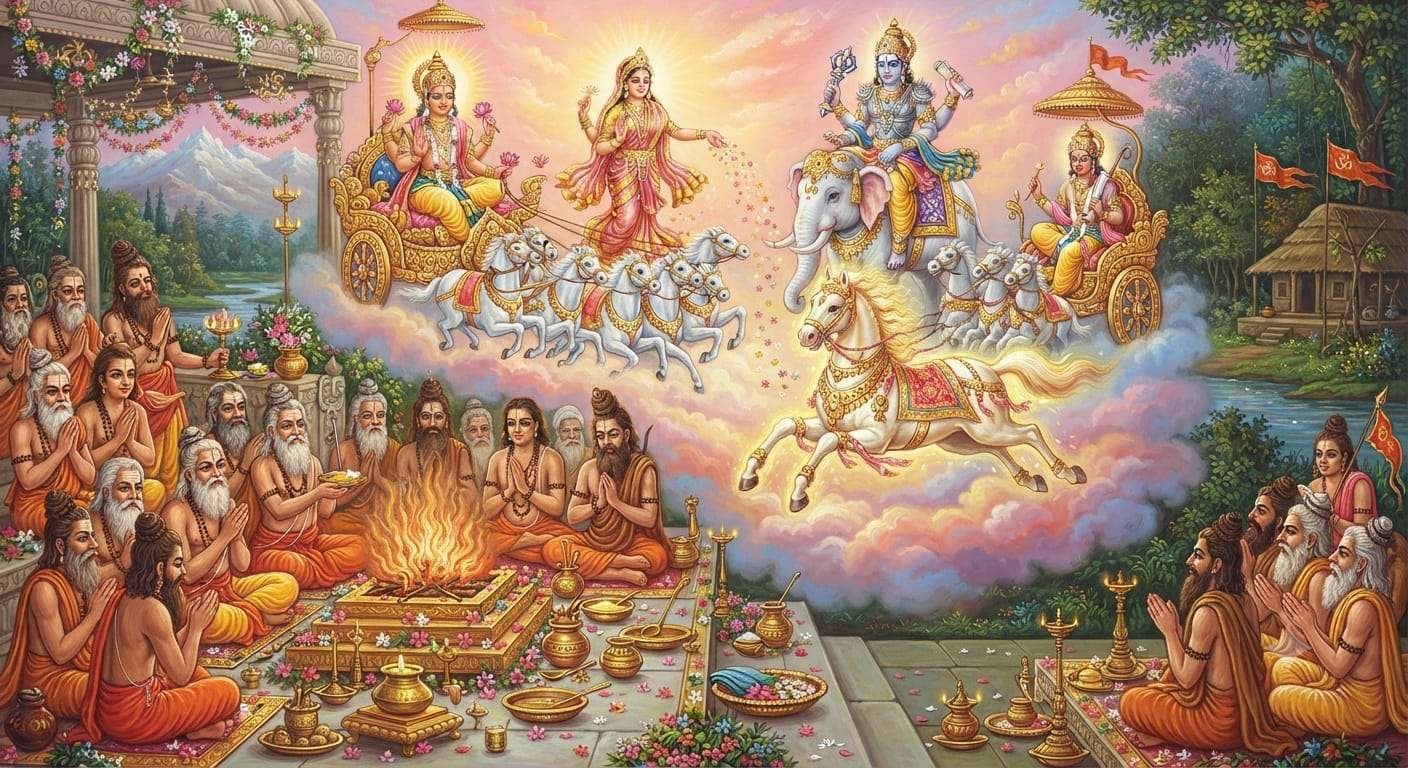
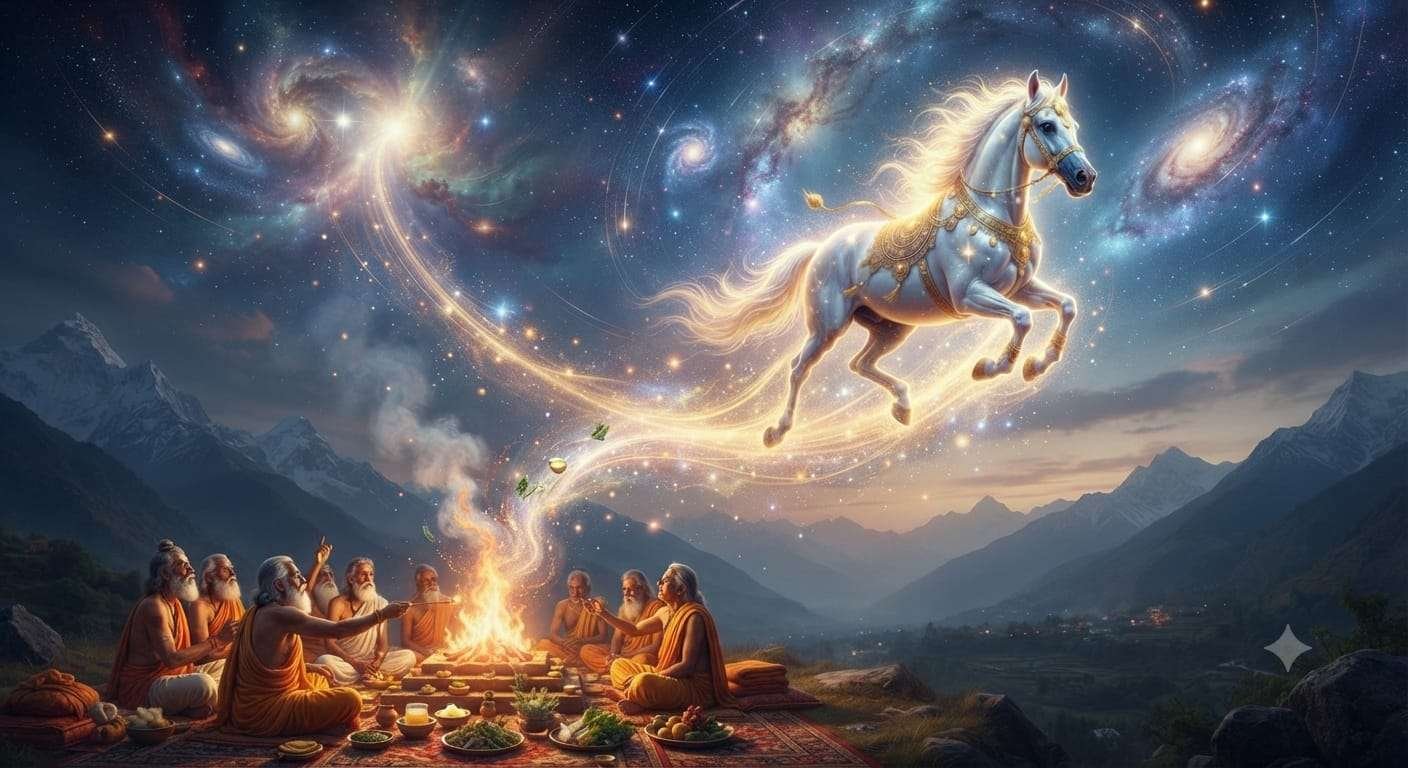
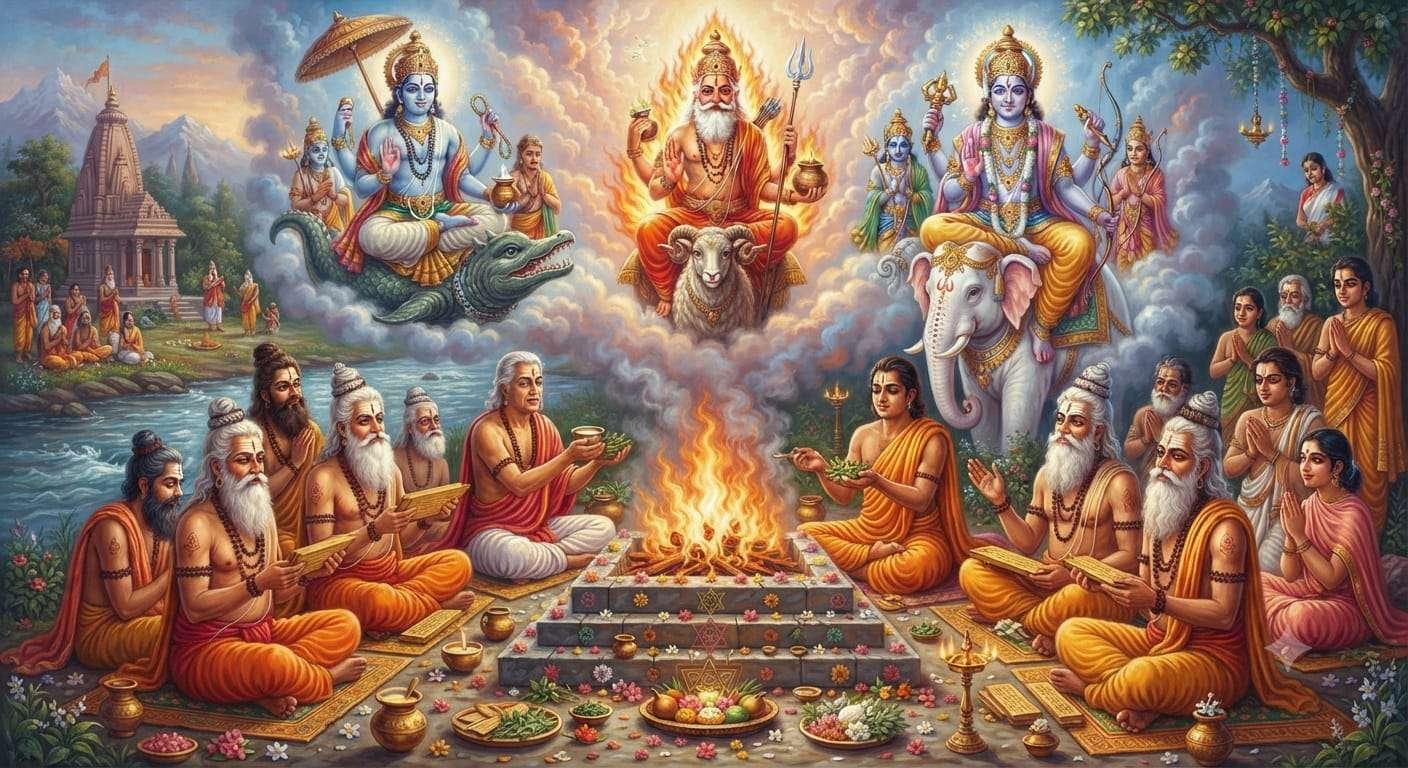
Agni, the perpetual divine messenger and invoking priest, occupies a central place in the sacrificial imagination. Through Agni, the prayers of human beings rise towards the divine, while the offerings made with sincerity become symbols of gratitude and participation in the cosmic order. Vāmadeva asks: who is better suited than Agni to carry the hymns of praise and the sacred oblations to Indra and Varuṇa? The offering is therefore not simply a physical substance placed in fire; it represents disciplined intention, devotion and the transformation of human effort into a higher purpose.
Indra and Varuṇa are celebrated as powerful and renowned guardians of ṛta—the principle of truth, order and harmony that sustains the universe. The person who approaches them with reverence and makes offerings in the spirit of righteousness is described as being freed from sin and protected from destructive forces. In the Vedic imagination, sin is not merely a theological offence; it can also be understood as a deviation from the order that sustains individual and collective life. The hymn therefore connects spiritual purity with ethical conduct and social responsibility.
The sage then turns towards the uncertainties of conflict. He prays that enemies who threaten the community may be overcome and that the righteous person may gain honour through divine protection. Indra represents courage, strength and the decisive power required to confront disorder, while Varuṇa embodies sovereignty, moral restraint and the unseen law that binds existence together. Their combined presence suggests that strength without justice can become destructive, while justice without strength may be unable to defend itself.
Vāmadeva portrays Indra and Varuṇa as generous benefactors of those who maintain the sacred relationship between humanity and the divine. He invites them to accept the purified Soma offered with devotion and to bless the worshippers with nourishment, prosperity and joy. Soma, within the Vedic ritual world, is simultaneously a sacred offering, a source of inspiration and a symbol of heightened consciousness. The ritual exchange expresses a fundamental Vedic principle: human beings offer their labour, gratitude and devotion, while nature and the divine order return nourishment, vitality and prosperity.
The imagery becomes particularly powerful when the sage invokes the Vajra of Indra. He asks the divine warrior to direct his brilliant, forceful weapon against the harsh and uncontrollable enemy. The Vajra may be understood within the mythic framework as the thunderbolt of Indra, but its deeper symbolism reaches beyond warfare. It represents concentrated power capable of breaking resistance and restoring balance. In natural terms, the thunderbolt evokes the immense energy of the storm; in psychological terms, it represents decisive intelligence and courage; and in spiritual terms, it signifies the power that destroys ignorance, arrogance and destructive tendencies.
The hymn then turns from conflict to one of the most enduring symbols of Vedic culture—the cow. Just as the ox contributes to the well-being of the cow and the cow gives nourishing milk, so the hymn itself is expected to nourish those who receive it. The comparison reveals the Vedic understanding of knowledge as a living source of sustenance. A genuine hymn should not merely delight the ear; it should nourish the mind, strengthen character and fulfil worthy aspirations. The cow therefore becomes more than an economic resource: she becomes an emblem of nourishment, generosity and the productive relationship between nature and human society.
The prayer for protection during the night is equally significant. Night represents a period of uncertainty when human beings become vulnerable to unseen dangers. Vāmadeva asks Indra and Varuṇa to remain vigilant and to overcome the forces that threaten the community. At the same time, he asks for fertile land, healthy children and grandchildren, long life and the strength necessary to care for future generations. The prayer thus extends beyond the individual. True prosperity, in the Vedic sense, includes the continuity of family, community, agriculture and knowledge across generations.
The repeated request for cattle, horses, chariots, strength and stable wealth reflects the socioeconomic realities of the early Vedic world. Cattle represented nourishment and economic security; horses represented mobility and strength; chariots were associated with warfare, prestige and technological capability. Yet these requests should not be reduced to a simple desire for material accumulation. Wealth was meaningful when it supported the household, protected the community, enabled generosity and strengthened social stability. Prosperity carried an obligation to use resources wisely.
Vāmadeva addresses Indra and Varuṇa with the intimacy of a child approaching a father. He asks them for comfort, companionship and closeness, revealing an important dimension of Vedic spirituality: the divine is not perceived merely as a distant cosmic force but as a source of protection with whom a relationship can be cultivated. Reverence and intimacy coexist. The worshipper approaches the divine with awe, yet also with trust, much as a child approaches a loving and protective parent.
The hymn’s desire for auspicious fruits is closely connected with the Vedic understanding of phala—the consequence or fruit of one’s actions. Prosperity is not presented as arbitrary fortune. The prayer seeks the beneficial results that emerge when human endeavour is aligned with divine and natural order. The warrior may desire victory in battle, while the hymn itself seeks to reach the divine presence. Both aspirations are placed within the larger framework of protection, discipline and righteous action.
The image of the cow remaining near Soma and providing milk and butter brings the theme of nourishment back to the centre of the hymn. Milk, butter and Soma belong to a ritual and agricultural world in which human survival depends upon the productive interaction of animals, land, water, labour and seasonal cycles. From a scientific temperament, these images can be appreciated as observations rooted in ecological reality: fertile land sustains grass; grass sustains cattle; cattle provide nourishment; human beings cultivate and protect the environment that sustains them. The ritual language transforms this material interdependence into sacred consciousness.
The prayer for horses, chariots, strength and enduring wealth also reveals the technological dimension of the Vedic age. The chariot was not merely a ceremonial object; it represented engineering skill, animal management, mobility and military organisation. Thus, the hymn’s vision of prosperity combines spiritual aspiration with practical capability. A flourishing society requires courage, resources, technology, agriculture, social cooperation and ethical discipline.
The invocation of Indra and Varuṇa finally gathers these diverse themes into a single vision. The sage asks the noble gods to come with powerful protection and grant nourishment and victory in the struggle of life. The battle imagery can be understood at several levels: as the literal conflict faced by ancient communities, as the struggle against natural and social dangers, and as the inner battle against fear, weakness, disorder and ignorance. Victory therefore becomes meaningful only when it contributes to the restoration of harmony.
Viewed through a scientific temperament, the hymn does not require its natural imagery to be treated as primitive speculation. The Vedic seers observed the forces around them—storms, rain, fire, fertility, animal life, seasons, agriculture, human conflict and the rhythms of nature—and expressed those observations through a sophisticated symbolic language. Indra can be approached as the personification of atmospheric power and the liberating force of the storm; Varuṇa as an embodiment of cosmic and moral order; Agni as the transformative power of fire; Soma as a ritual substance associated with vitality and heightened awareness; and the cow as a profound symbol of ecological and economic nourishment. Myth and observation coexist within the poetic structure.
At its deepest level, Vāmadeva’s prayer is a meditation on interdependence. Human beings need nature, nature requires responsible stewardship, society needs courage and justice, prosperity requires productive labour, and spiritual life requires disciplined thought and gratitude. The hymn therefore moves effortlessly from the battlefield to the pasture, from the sacrificial fire to the household, from the protection of the present generation to the longevity of descendants.
Indra and Varuṇa emerge as complementary dimensions of the Vedic ideal: power governed by order, courage guided by wisdom, prosperity restrained by responsibility and human ambition harmonised with the larger rhythms of existence. Vāmadeva does not seek wealth merely for possession, victory merely for domination, or divine favour merely for personal gain. He seeks protection so that life may flourish, nourishment so that generations may endure, strength so that justice may prevail, and wisdom so that humanity may remain aligned with the larger order of creation.
The enduring beauty of the hymn lies precisely in this synthesis. It transforms the immediate concerns of an ancient community—food, cattle, rain, children, protection, strength and victory—into a universal meditation on human aspiration. Beneath its ritual vocabulary is a remarkably integrated vision of life: strength must serve order, wealth must sustain society, knowledge must nourish the mind, nature must be respected, and human beings must live in harmony with the greater order that sustains them.