
Lakshmanrao Upadhyayula
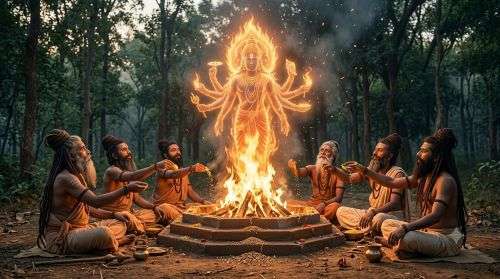
The venerable sage Śaunaka Gr̥tsamada, invoking the majesty of Indra through the resonant cadence of the Triṣṭubh metre in the ancient Rigveda, offers a hymn of profound spiritual and cosmic significance. This sacred composition is not merely an act of praise, but a carefully structured invocation in which human aspiration, ritual precision, and divine response converge. The hymn reveals the enduring Vedic insight that the universe is sustained through a living relationship between the sacrificer and the gods, mediated by mantra, devotion, and the sacrificial fire.
The Soma elixir, purified with meticulous care, is prepared by devoted patrons and priests as an offering of nourishment and delight for Indra. Though often described in symbolic language as intoxicating, Soma represents far more than a physical substance. It embodies the refined essence of life, the concentrated energy of consciousness, and the bliss that arises when matter is transformed through sacred discipline. When offered with reverence, Soma becomes a bridge between the human and divine realms. The hymn declares that this nourishment is ancient and eternal, the very sustenance in which Indra rejoices and through which he manifests his strength.
This sacred nourishment also serves as the dwelling place of divine and human forces alike. In Soma abide the chanting priests, the melodious hymns, and the living presence of Indra himself. The Vedic seers understood that consciousness is shaped by what it consumes, whether in the form of food, thought, or sound. Thus, Soma signifies the purification of all forms of nourishment, elevating them into vehicles of spiritual power. Scientifically viewed, this reflects the principle that energy is transformed through ordered processes; spiritually viewed, it reveals that intention and sacred action can transmute ordinary substances into carriers of higher awareness.
Having consumed the invigorating Soma, Indra is filled with joy and divine potency. He takes up the Vajra; the thunderbolt forged from concentrated power and unwavering resolve. Armed with this celestial weapon, he slays Ahi or Vṛtra, the serpent of obstruction who imprisons the waters of life. This dramatic act symbolizes the dissolution of all that restrains the free movement of energy, whether in nature, society, or the human psyche. The release of the waters portrays the restoration of balance, creativity, and abundance. As rivers rush to the ocean like birds returning to their nests, the cosmos re-enters its natural rhythm.
Indra’s victory over Vṛtra is among the most celebrated themes of the Rigveda. In meteorological terms, it mirrors the release of rain after atmospheric tension is broken by thunder and lightning. In psychological terms, it represents the breakthrough of clarity after inner conflict. In spiritual terms, it signifies the destruction of ignorance and the liberation of the soul from constriction. The Vedic sages perceived no division between natural phenomena and metaphysical truths; the storm in the heavens and the awakening within the heart were expressions of the same cosmic law.
As the slayer of Ahi, Indra directs the liberated waters toward the ocean, nourishes the seas, and creates vast space for life to flourish. He releases the hidden cows, symbols of rays of light, wisdom, and prosperity concealed by darkness. He illuminates the days with his brilliance, restoring vision and order to the world. These actions depict Indra not merely as a warrior deity, but as a cosmic architect who re-establishes harmony and opens the pathways through which life and knowledge may flow.
Indra is also celebrated as the generous bestower of wealth upon patrons and priests. In the Vedic worldview, wealth encompasses not only material abundance but vitality, insight, moral strength, and social stability. The yajamāna, or sacrificer, supports the ritual and in return receives divine favour that extends to family and community. This reciprocal relationship illustrates a fundamental Vedic principle: prosperity arises when human beings align their actions with cosmic order and dedicate their resources to the welfare of the whole.
The hymn recalls how Indra sheltered priests who differed in their approaches while seeking the grace of Surya. This image reveals the inclusiveness of Vedic spirituality. Diverse paths and interpretations are not condemned when they are rooted in sincerity and the search for truth. Indra, as protector and unifier, grants refuge to all who pursue divine light. This lesson remains timeless, affirming that genuine wisdom embraces diversity while preserving a shared aspiration toward illumination.
The sage Yethasa is remembered as one who offered Soma oblations with devotion. Pleased by his worship, Indra invited Surya to bless him. Symbolically, this indicates that disciplined effort and heartfelt prayer lead to the revelation of inner light. When the mind is purified and strengthened, the radiance of consciousness naturally dawns. The Vedic tradition consistently portrays ritual not as an end in itself, but as a means of awakening the solar brilliance latent within every being.
The royal seer Kutsa also earned Indra’s favour through devotion and courage. With Indra’s aid, he overcame hostile powers and subdued forces that opposed righteousness. Likewise, Indra destroyed the ninety-nine fortresses of Śambara for the noble king Divodāsa. These fortresses symbolize entrenched patterns of ignorance, fear, and resistance. Their destruction illustrates the repeated intervention of divine power in support of those who uphold truth and order. Historically, such hymns may echo struggles among early communities; spiritually, they portray the conquest of inner limitations.
The sages declare that through the preparation of sacred food, the chanting of hymns, and the offering of Soma, they themselves strengthen Indra. This remarkable statement reflects a central Vedic insight: the gods are nourished by human devotion just as humans are empowered by divine grace. Sacred relationship is reciprocal. The phrase likening this bond to the seven steps of friendship evokes the enduring sanctity of saptapadī, the seven steps that establish unbreakable companionship. In this context, it signifies a covenant of trust between the worshipper and the deity.
The prayer calls upon Indra to hurl his Vajra against Peyu and all forces that defy divine order. These hostile powers represent selfishness, arrogance, and those tendencies that obstruct collective welfare. The sages compare their work to that of a traveller who removes stones and thorns from a path. In the same manner, the Gr̥tsamada seers compose melodious hymns that clear obstacles from the inner journey, making the way toward truth smooth and accessible.
Indra is praised as eternally fresh and ever new. Though invoked since the earliest times, his power does not diminish. This poetic expression reflects the regenerative nature of consciousness itself. Every dawn, every insight, and every act of courage renews the presence of the divine in human life. The ancient hymns remain perpetually relevant because they speak to universal processes that continue to unfold in nature and in the soul.
The Gr̥tsamada sages conclude with a heartfelt prayer for food, nourishment, strength, comfort, shelter, and wealth. They seek not luxury, but sufficiency and well-being for themselves, their children, and their grandchildren. Their aspiration is that future generations may continue to chant the sacred hymns within the sanctified precincts of yajña. This vision reveals the Vedic understanding that true prosperity is intergenerational and rooted in continuity of wisdom, gratitude, and righteous living.
Thus, the hymn of Śaunaka Gr̥tsamada stands as a luminous testament to the unity of science, spirituality, and poetic insight in the Vedic tradition. Soma represents transformed energy, the Vajra symbolizes focused power, Vṛtra embodies obstruction, and the released waters signify the restored flow of life. Through sacred speech and disciplined offering, the human being participates consciously in the cosmic process. In praising Indra, the seers affirm that divine strength descends wherever devotion, knowledge, and action are harmonized in the service of truth.