



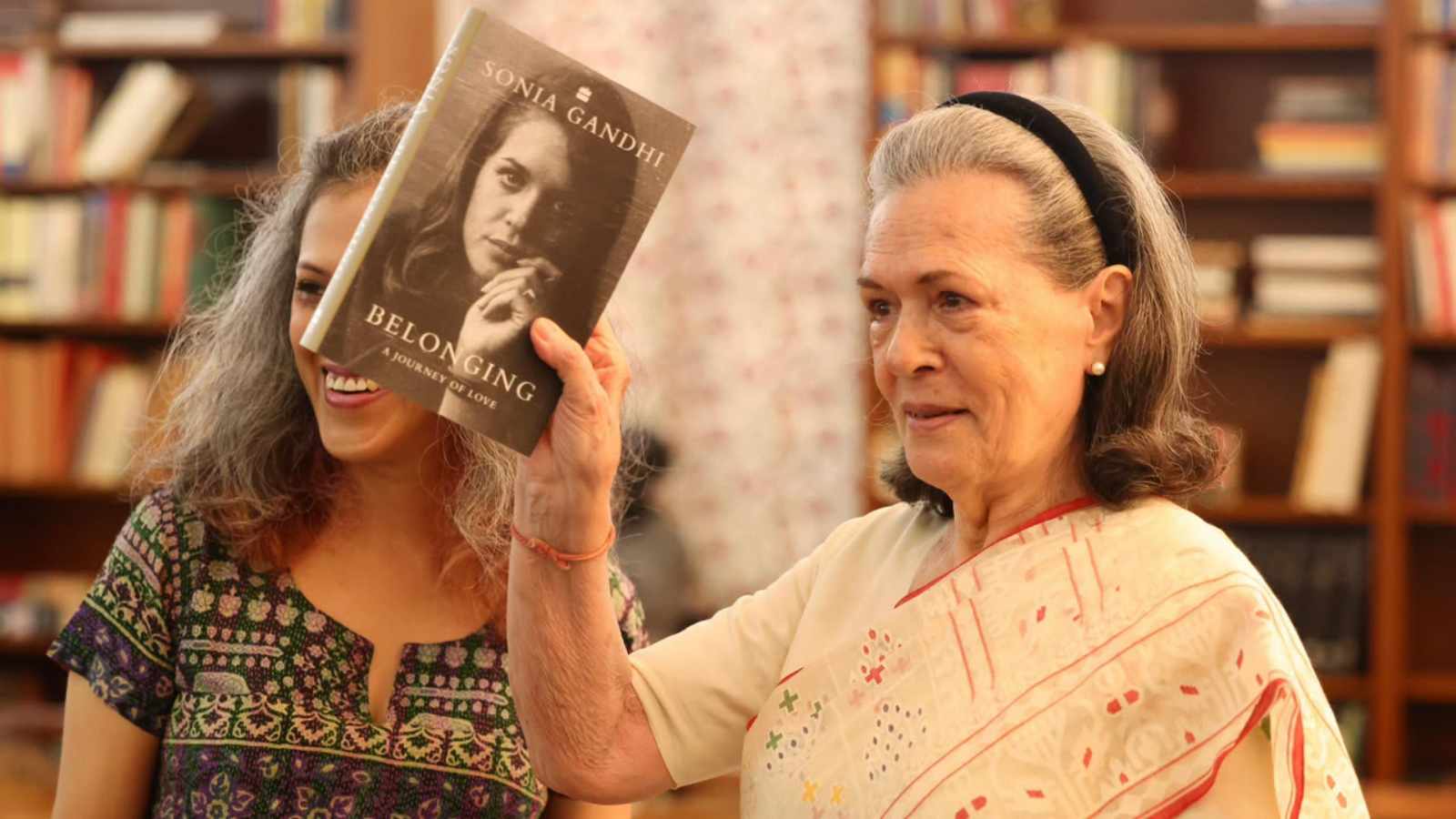
There is absolutely nothing wrong with an individual writing memoirs. In fact, the memoirs of political leaders can offer valuable insights into events, decisions and personalities that shaped a nation. But there is a fundamental difference between recording personal memories and attempting to reinterpret established historical facts to suit one’s political convenience. Sonia Gandhi’s much-publicised memoir, Belonging: A Journey of Love, appears to have run into precisely this problem. What was expected to be a candid account of her journey into Bharat’s most powerful political family has instead triggered questions about historical accuracy, selective recollection and an apparent attempt to soften the legacy of the Nehru-Gandhi dynasty.
Sonia Gandhi is entitled to narrate her personal experiences, her relationship with Indira Gandhi and Rajiv Gandhi, and the tragedies that shaped her life. Nobody disputes that. But when she ventures into Bharat’s political history, she cannot expect readers to accept every recollection as historical truth, particularly when documentary evidence and established public records tell a different story. The controversy is not simply about political opponents finding fault with a book. Several factual discrepancies have already been highlighted, including the incorrect founding year of the RSS, the death year of Ahmed Patel, the chronology of Anna Hazare’s anti-corruption movement and even the constitutional process of electing Rajya Sabha members. An examination has reportedly flagged 55 factual and contextual issues. These are not insignificant editorial oversights in a memoir by someone who occupied the highest echelons of Bharatiya political power for decades.
More importantly, the politically sensitive chapters deserve much closer scrutiny. Consider Operation Blue Star in June 1984. Sonia’s account emphasises Indira Gandhi’s alleged anguish and tears after witnessing the destruction at the Golden Temple. While the human tragedy and the emotional consequences cannot be dismissed, the larger question remains: who was responsible for allowing Punjab’s situation to deteriorate to such an explosive stage that military intervention inside the holiest Sikh shrine became inevitable? The consequences were catastrophic, culminating in Indira Gandhi’s assassination. Personal anguish cannot substitute for political accountability.
The subsequent anti-Sikh massacre in November 1984 remains an even darker chapter. Thousands of innocent Sikhs were killed, their homes and businesses destroyed, and justice delayed for decades. Sonia describes the violence as a shameful national tragedy and acknowledges the failure of governance. Yet, her emphatic defence of Rajiv Gandhi against allegations surrounding the violence cannot settle questions that have remained alive through investigations, testimonies and judicial proceedings. His infamous observation that when a big tree falls, the earth shakes has also remained an enduring reminder of the political insensitivity that followed the assassination. The victims deserve justice, not merely sympathetic recollections.
The Shah Bano controversy presents another uncomfortable chapter. Rajiv Gandhi’s government overturned the practical effect of a landmark Supreme Court judgment through the Muslim Women (Protection of Rights on Divorce) Act, 1986, triggering a nationwide debate over gender justice, constitutional principles and minority appeasement. Sonia now offers a justification for the compromise, arguing that it balanced religious sensitivities with women’s rights. But can a retrospective explanation erase the political consequences of that decision? The question remains whether the government defended constitutional gender equality or surrendered to conservative pressure for electoral considerations.
Similarly, the 2002 Gujarat riots and the Godhra train burning cannot be reduced to selective recollections. The burning of coach S-6 of the Sabarmati Express, in which 59 people were killed, was the immediate trigger for the horrific violence that followed. Both the crime and the subsequent communal killings deserve an honest, comprehensive account, without selective emphasis or political sanitisation.
A memoir is not a judicial verdict, nor is it a substitute for independent historical research. Its author can offer a personal perspective, but readers have every right to question omissions, contradictions and inaccuracies. The same scrutiny must apply to the political legacy of every party, irrespective of ideology.
Ultimately, Sonia Gandhi’s nationality, Italian origins or personal journey into the Nehru-Gandhi family are irrelevant to the debate. Her political record, however, is very much open to public scrutiny. Having exercised enormous influence over the Congress and the UPA governments, she cannot seek the privileges of a public figure when exercising power and the protection of a private individual when confronted with uncomfortable questions.
Bharat does not need politically convenient recollections masquerading as definitive history. It needs honesty, accountability and an unvarnished acknowledgment of past mistakes. If memoirs are intended to preserve memories for posterity, they must not become instruments for polishing political legacies. History is not a family heirloom that can be rearranged to suit its inheritors.


